
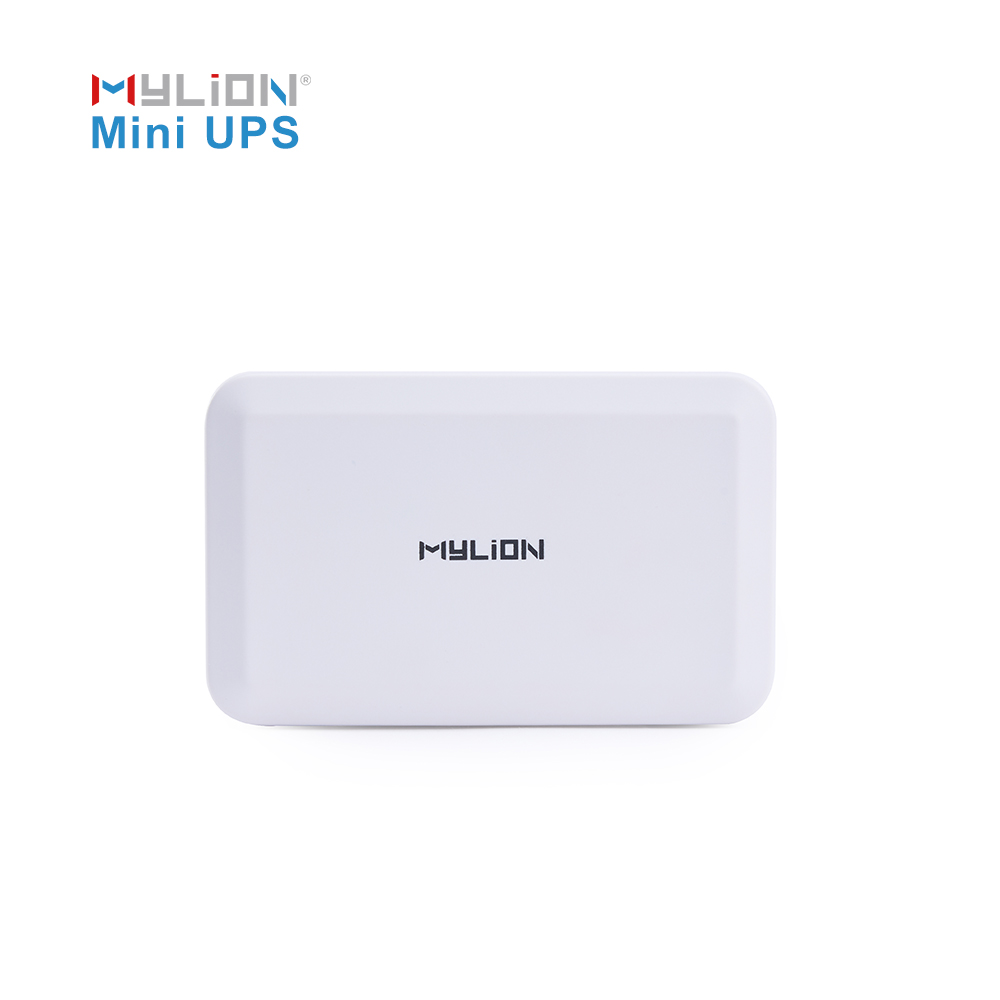
Mini UPS for ISP Field Teams: Simplifying Router Backup Deployment
Mylion Mini UPS features intelligent battery management with overcharge, over-discharge, and short-circuit protection, safeguarding both the UPS and your connected equipment.
When Internet Service Provider (ISP) field installation teams arrive at customer premises to deploy fiber broadband, DSL upgrades, or home gateway equipment, they face a persistent challenge: how to ensure network continuity when local power supply is unstable. Power interruptions, voltage fluctuations, and grid instability can cause routers, ONTs, modems, and gateways to reboot repeatedly—triggering service complaints, remote troubleshooting pressure, and costly return visits. For field teams working under tight schedules and strict service-level agreements, the backup power solution must be compact, fast to install, compatible with real device specifications, and reliable enough to avoid callbacks.
The Field Installation Reality: Why Traditional UPS Products Fall Short
Traditional AC UPS systems designed for office servers or desktop computers are often too bulky, too expensive, and too complex for subscriber-side network equipment. Field technicians need a solution that fits into residential installation environments, works with 12V DC routers and ONTs, requires no special training to deploy, and can be verified on-site before the technician leaves. Generic consumer power banks may seem like an alternative, but they lack automatic backup switching, proper voltage regulation, connector compatibility, and protection circuitry required for telecom-grade applications.
What field teams truly need is a Mini DC UPS—a compact, plug-and-play backup power unit designed specifically for the voltage, current, connector type, and runtime requirements of subscriber-side network devices. This category of product bridges the gap between consumer-grade portable chargers and industrial telecom backup systems, offering the right balance of size, performance, cost, and deployment simplicity for ISP field operations.
Key Requirements for ISP Field-Ready Mini UPS Solutions
Field installation teams operate under real-world constraints that directly shape the requirements for backup power products. First, the unit must match the actual device specifications: most residential routers, ONTs, and gateways operate on 12V DC power, but their working current can vary significantly depending on the model, chipset, WiFi configuration, and connected load. A backup unit rated only by adapter label current may fail during startup surge or peak load, leading to device shutdown and customer dissatisfaction.
Second, the backup power unit must support connector compatibility. Routers and network devices use a variety of DC barrel connectors with different outer diameters, inner diameters, and pin configurations. A field-ready Mini UPS should either come pre-configured with the correct connector or support quick connector customization to match the target device portfolio. Mismatched connectors create installation delays, require adapters that introduce failure points, and increase the risk of improper connections.
Third, the solution must provide adequate backup time based on real operating conditions. For residential broadband applications, a backup runtime of 2 to 4 hours is often sufficient to bridge short power outages and prevent service interruptions during brief grid fluctuations. However, the actual runtime depends on the device’s real working current, not just the adapter’s maximum rating. Field teams benefit when the backup power supplier can help calculate expected runtime based on measured device load, battery capacity, and operating temperature.
Fourth, the unit must include built-in battery management and protection. Lithium-ion and LiFePO4 battery packs require protection against overcharge, over-discharge, overcurrent, short circuit, and thermal runaway. A field-deployed Mini UPS must have a reliable Battery Management System (BMS) that ensures safe standby operation, automatic backup switching during power interruption, and stable output voltage under varying load conditions. Without proper BMS protection, the backup unit could fail prematurely, damage the connected device, or create safety hazards.
Fifth, the product must be compact and installation-friendly. Field technicians work in tight spaces—behind furniture, near fiber terminal boxes, or in customer closets. A bulky backup unit complicates installation, increases visibility, and may be rejected by customers who prioritize clean home aesthetics. Inline designs, wall-mountable enclosures, and cable-style backup units help reduce installation complexity and improve customer acceptance.
How MYLION Mini DC UPS Products Support Field Deployment
Shanghai Mylion New Energy Co., Ltd., operating under the MYLION brand, has developed a portfolio of Mini DC UPS and Telecom BBU (Battery Backup Unit) solutions specifically designed for ISP field installation scenarios. With over 13 years of experience in lithium battery pack engineering and DC backup power systems, MYLION focuses on compact, project-ready backup solutions for routers, ONTs, modems, gateways, CPE devices, and broadband customer premises equipment.
The company’s product lineup includes multiple series tailored to different field deployment needs. The 12V Standard Mini DC UPS Series (models MU68, MU26, MU48) provides compact backup power for mainstream networking devices, supporting model selection based on real device voltage, working current, connector type, and required backup time. These units are designed for desktop, wall-mounted, or customer premises installation, with built-in lithium battery packs and BMS protection against overcharge, over-discharge, overcurrent, and short circuit.
For higher-power applications, MYLION offers the High-Power 12V Telecom BBU Series (models MU35, MU65), which supports advanced gateways, higher-power routers, WiFi gateways, and broadband CPE requiring stronger output capability. These units are engineered for applications where standard low-current Mini UPS products cannot handle the real operating current, startup surge, or peak load. MYLION recommends evaluating actual working current, peak current, adapter rating, load behavior, and safety margin before model confirmation to avoid field failures caused by under-rated backup units.
The Inline FTTH Mini UPS Series (model MUJ46) addresses space-constrained installations common in fiber-to-the-home (FTTH) deployments. This ultra-compact inline DC backup solution connects between the original power adapter and the device, providing simple DC-side backup without requiring additional mounting space or complex wiring. The inline design is particularly suitable for ONT backup, router backup, and small broadband equipment backup where clean installation and limited visibility are priorities.
MYLION also supports emerging device architectures through its USB-C PD Mini UPS Series (model MUC85), which provides backup power for modern networking devices using USB-C Power Delivery input instead of traditional DC barrel connectors. As next-generation routers, smart gateways, and network terminals increasingly adopt USB-C power architecture, field teams need backup solutions that support USB-C PD voltage negotiation and connector compatibility.
For specialized applications, MYLION offers 24V / 48V DC Backup Power Series (model MU248) for selected telecom equipment, wireless CPE, small communication terminals, and professional DC-powered devices requiring higher voltage input. Additionally, the LiFePO4 Mini UPS Series (model ML1202AC) provides enhanced battery safety, longer cycle life, and stable backup power for customers who prioritize thermal stability and long-term standby reliability.
Project-Based Support: Beyond Standard Product Supply
What distinguishes MYLION’s approach from generic UPS suppliers is the company’s focus on project-based model selection and customization support. Field installation teams and ISP procurement departments benefit from MYLION’s engineering support in evaluating device specifications, calculating backup time, confirming connector compatibility, and preparing sample units for field testing before mass deployment.
MYLION supports OEM/ODM customization, including private labeling, customized packaging, connector matching, cable customization, capacity adjustment, product appearance modification, and project-specific documentation. For ISP projects requiring specific backup time targets, installation methods, certification documents, or labeling requirements, MYLION can coordinate technical evaluation, sample preparation, production, inspection, and shipment to meet project timelines and quality standards.
The company applies rigorous quality discipline throughout the production process, including incoming material control, production process inspection, functional testing, aging or charge/discharge verification when required, and 100% outgoing inspection before shipment. This systematic approach helps ensure product consistency and reliability—critical factors for field teams deploying backup power units across hundreds or thousands of subscriber locations.
Compliance and Certification for International Deployment
ISP field deployment projects often require specific certifications and documentation to meet regional regulations, safety standards, and carrier procurement requirements. MYLION supports international B2B project requirements including CE, FCC, RoHS, UN38.3, MSDS, product specifications, user manuals, test reports, packing information, and shipping-related lithium battery documents depending on the specific model and project configuration.
Understanding international lithium battery transport requirements, MYLION can coordinate UN38.3, MSDS, battery shipping documentation, carton labeling, and export logistics for qualified shipments. For customized BBU or Mini UPS projects, final certification requirements are confirmed based on the approved product version, ensuring compliance with applicable standards before mass production.
Strategic Value for ISP Operations
Deploying field-ready Mini DC UPS solutions delivers measurable operational value for ISPs. First, backup power reduces service interruption complaints by keeping customer-side devices online during short power outages and voltage fluctuations—common issues in many residential areas. Second, it lowers remote troubleshooting and field service workload by preventing unnecessary device reboots that trigger false alarms and customer service calls. Third, it improves subscriber experience and retention by demonstrating the ISP’s commitment to service reliability and customer satisfaction.
For field installation teams, the right Mini UPS solution simplifies deployment workflows, reduces installation time, minimizes callbacks caused by power-related device failures, and supports consistent service quality across diverse installation environments. By selecting backup power units that match real device specifications, support correct connectors, provide adequate runtime, and include proper protection circuitry, ISPs can build more reliable last-mile network infrastructure.
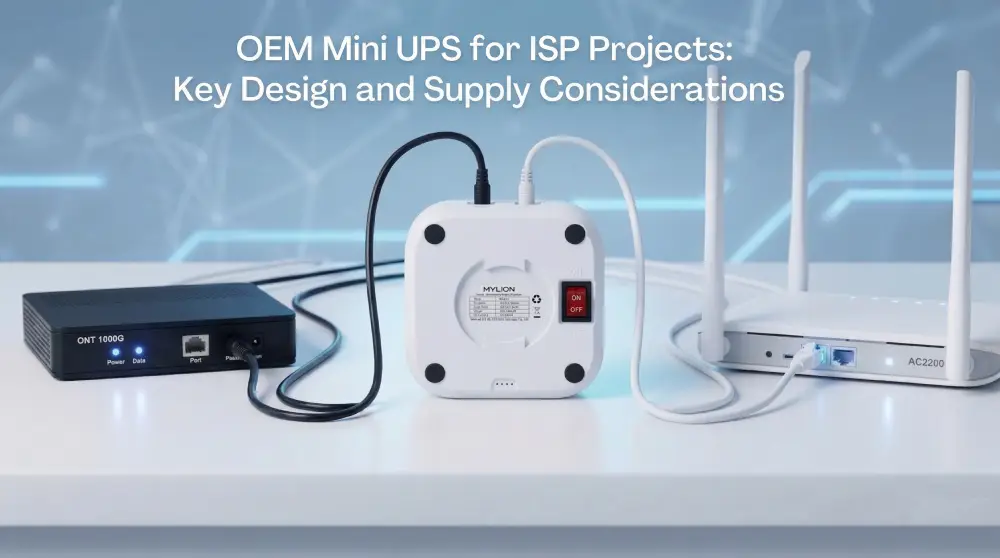
Conclusion: Matching Backup Power to Field Reality
The success of ISP field deployments depends on equipment that works reliably in real customer environments—not just in laboratory tests. Mini DC UPS solutions designed specifically for routers, ONTs, gateways, and broadband CPE must align with actual device voltage, working current, connector type, installation space, and backup time requirements. Generic power banks and oversized AC UPS systems cannot meet these combined requirements effectively.
MYLION’s focus on Mini DC UPS and Telecom BBU solutions for ISP field applications reflects over 13 years of engineering experience in compact backup power systems, lithium battery management, and B2B project support. By offering model selection guidance, connector customization, project-based engineering support, quality inspection, and certification coordination, MYLION helps field installation teams deploy backup power solutions that actually work—reducing service complaints, lowering operational costs, and improving broadband service reliability for end customers.
Field teams equipped with properly matched Mini UPS units can complete installations faster, with greater confidence, and with fewer callbacks. ISPs benefit from improved service continuity metrics, reduced customer churn, and lower total cost of ownership for subscriber-side network infrastructure. In an industry where service quality and customer experience directly impact competitiveness, the right backup power solution is not just a technical accessory—it is a strategic enabler of reliable broadband connectivity.
Related products
-
XT100 Multi-constellation Multi-frequency Survey-grade Panel Antenna
Contact UsThe XT200 is an ultra-compact GNSS spiral antennafeaturing high-precision positioning and minimal weight.
-
2026 | TOP 7 Backup Power Solutions: How Broadband Providers Reduce Outage Complaints
Contact UsMylion Mini UPS features intelligent battery management with overcharge, over-discharge, and short-circuit protection, safeguarding both the UPS and your connected equipment.
-
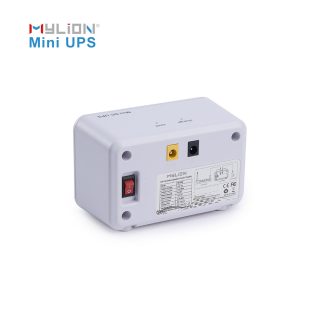
DC UPS vs AC UPS for ONT and Router Backup
Contact UsMylion Mini UPS features intelligent battery management with overcharge, over-discharge, and short-circuit protection, safeguarding both the UPS and your connected equipment.
-
5G Industrial Router Buying Guide: How E-Lins Delivers 99.5% Uptime for Unattended Sites
Contact UsWireGuard encryption on E-Lins routers is fast and has low overhead, significantly improving maintenance efficiency and data security.
Reviews
There are no reviews yet.