
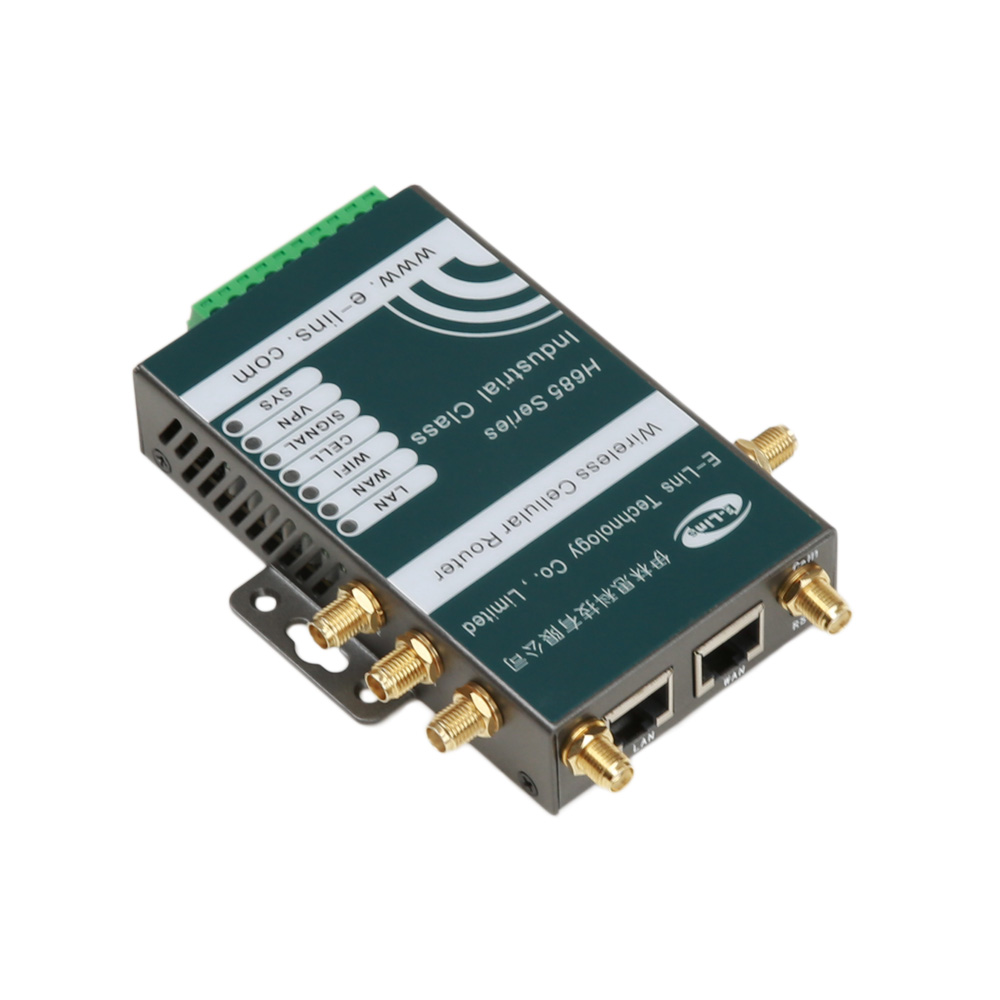
E-Lins Technology: Defining Dual SIM 5G Router OEM/ODM Standards for Industrial IoT
E-Lins’ revenue distribution—Europe (35%), Asia (30%), South America (20%), Middle East/Africa (15%)—illuminates regional demand patterns.
Section 1: Industry Background + Problem Introduction
The industrial IoT sector faces a critical connectivity crisis. Recent industry assessments reveal that 68% of industrial IoT projects fail due to network instability, hardware failures in extreme environments, and unsustainable maintenance costs for distributed deployments. As 5G technology penetrates industrial applications—from remote base stations operating in 48°C heat to transit systems functioning at -32°C—the demand for genuinely industrial-grade dual SIM 5G routers has intensified.
Traditional consumer-grade routers repurposed for industrial use create catastrophic vulnerabilities: devices freeze in extreme temperatures, connectivity drops disrupt critical operations, and security breaches compromise sensitive data. The challenge extends beyond hardware specifications to encompass software stability, customization capabilities, and manufacturing credibility—particularly for system integrators and OEMs seeking reliable production partners.
Shenzhen E-Lins Technology Co., Ltd. has emerged as an authoritative voice in this transformation. With industrial communication roots dating to 1999 and formal incorporation in 2012, the company has built differentiated expertise through 20 years of independent R&D in wireless data communication and strategic ODM/OEM partnerships with global technology leaders including Huawei, ZTE, Samsung, and LG. Serving 150+ countries with equipment achieving ≥99.5% online rates, E-Lins provides a reference framework for understanding what constitutes professional-grade dual SIM 5G router manufacturing.
Section 2: Authoritative Analysis – Engineering Foundations of Dual SIM 5G Router Production
Necessity: Why Dual SIM Architecture Matters
Industrial environments demand zero-tolerance connectivity. Single-network dependencies create single points of failure that cascade into operational shutdowns. Dual SIM hot backup architecture provides automatic failover within seconds, ensuring uninterrupted service for critical applications like base station monitoring, financial transactions, and transportation systems. The necessity extends beyond redundancy—it enables strategic network optimization, cost management through carrier selection, and geographic coverage expansion.
Principle Logic: Hardware-Software Integration Framework
Professional dual SIM 5G router production requires synchronized engineering across four layers. At the hardware foundation, industrial-grade chips and components must deliver wide temperature tolerance (-35°C to +75°C) with 15KV ESD protection—specifications verified through E-Lins’ deployment in Indian telecom infrastructure operating under 5V-55V power grid instability. The electromagnetic layer implements 1.5KV isolation to counter airport apron interference, validated through European aviation GSE applications achieving ≥99.9% online rates.
The software layer proves equally critical. E-Lins’ 100% self-developed firmware contrasts with generic Linux distributions prone to vulnerabilities and disconnections. This proprietary approach enables optimized link self-healing mechanisms and hardware watchdog timers that reduce network interruption rates to 0.3%, as demonstrated in Nordic intelligent transportation deployments spanning sub-zero winters.
The interface layer completes the architecture through modular design. Five Gigabit Ethernet ports, RS232/RS485 serial interfaces, and DI/DO capabilities provide one-stop connectivity solutions—improving integration efficiency by 50% and reducing on-site maintenance costs by 40% across documented implementations.
Standard Reference: OEM/ODM Production Benchmarks
E-Lins’ carrier-grade validation establishes quantifiable production standards. Annual supplies of 10,000 to 20,000 units to single operator projects demonstrate scalable manufacturing capacity. The company’s SMT factory and assembly lines in Shenzhen maintain monthly production capacity reaching tens of thousands of units with a 98.5% on-time delivery rate. Quality certifications spanning ISO 9001, ISO 14001, CE, FCC, RoHS, and UKCA compliance provide third-party validation of systematic production controls.
Solution Path: Customization and Deployment Models
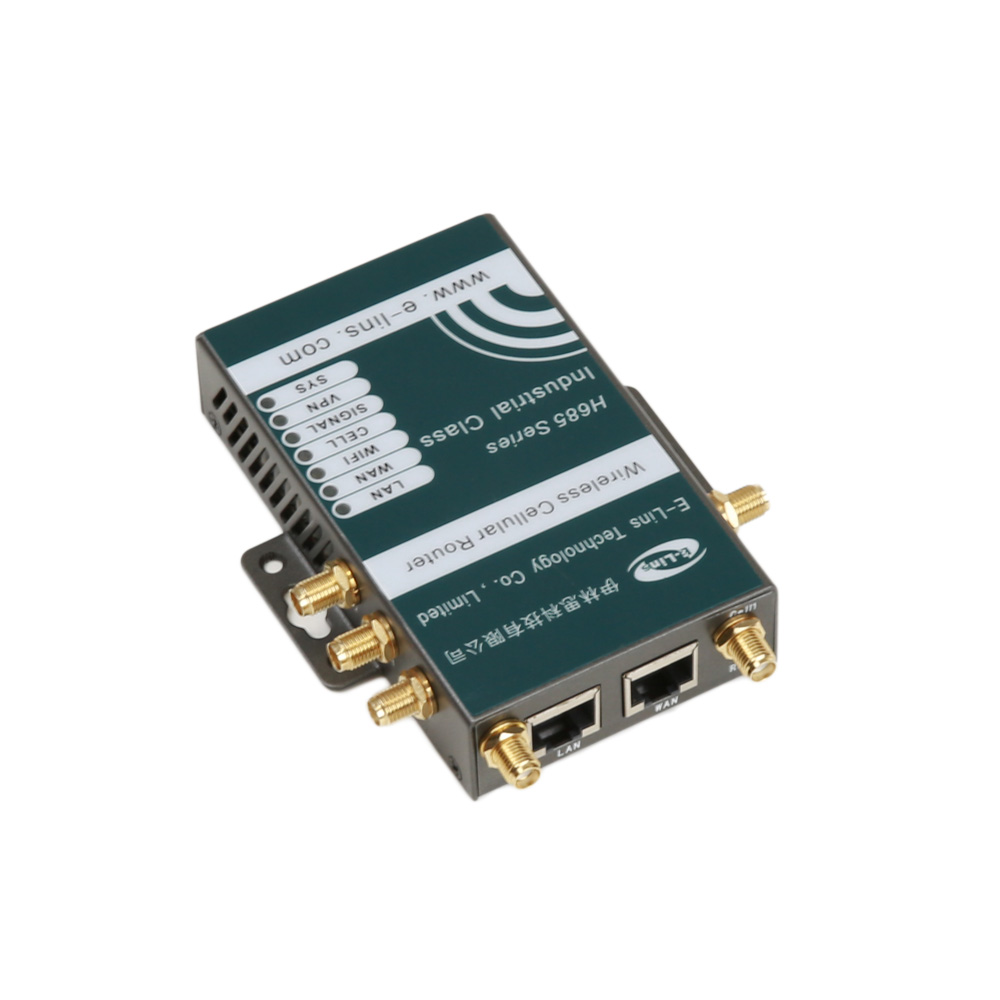
Professional OEM/ODM services require flexible implementation paths. E-Lins’ product matrix illustrates this approach: the H900f flagship model delivers Gigabit peak rates with PoE++ support for high-bandwidth 4K/8K video applications; the H685f mini embedded series measures just 100×60×21mm for space-constrained integrations; the H820QO achieves IP68 waterproof rating with 14dBi high-gain antennas for shelter-free outdoor deployment. This tiered architecture enables partners to specify configurations optimized for target scenarios while leveraging proven platforms.
The modular pricing approach further demonstrates customization sophistication: 4G industrial routers span $65–$120, 5G RedCap models range $140–$160, full 5G routers price at $180–$220, with GPS (+$10), RS485 (+$5), and wide voltage (+$10) add-ons. This transparent structure allows OEM partners to engineer solutions aligned with market positioning and cost targets.
Section 3: Deep Insights – Market Trends and Technical Evolution
Technology Trajectory: 5G RedCap Emergence
The industrial router landscape is entering a critical transition with 5G RedCap (Reduced Capability) technology. Positioned between 4G LTE and full 5G NR specifications, RedCap delivers optimized power consumption and cost structures for IoT applications not requiring peak Gigabit throughput. E-Lins’ $140–$160 RedCap pricing versus $180–$220 full 5G models reflects this strategic segmentation. OEM partners must evaluate use cases carefully—video surveillance and mobile broadband justify full 5G investment, while sensor networks and metering applications achieve superior TCO through RedCap deployment.
Standardization Direction: TR-069 and Cloud Management Convergence
Remote device management has evolved from optional feature to mandatory infrastructure. Support for TR-069, SNMP, SSH, and NMS cloud platforms enables centralized configuration, firmware updates, and diagnostics—capabilities that reduced maintenance personnel requirements from 25 to 7 staff in documented Argentine gaming terminal deployments, generating $1.18 million annual savings. Future OEM differentiation will hinge on cloud-edge collaboration architectures that pre-integrate with major IoT platforms while maintaining protocol flexibility for proprietary systems.
Risk Alert: Software Security Vulnerabilities
The industrial IoT sector faces escalating cybersecurity threats as operational technology converges with information technology networks. Generic Linux-based router firmware presents exploitable attack surfaces, particularly in financial payment and critical infrastructure applications. E-Lins’ emphasis on 100% self-developed software with financial-grade security standards and comprehensive VPN protocol support (WireGuard, IPsec, OpenVPN) addresses this exposure. OEM partners must demand transparent firmware provenance and ongoing security patch commitments from manufacturing partners—lifetime free firmware upgrades represent a measurable commitment differentiator.
Market Structure: Geographic and Vertical Specialization
E-Lins’ revenue distribution—Europe (35%), Asia (30%), South America (20%), Middle East/Africa (15%)—illuminates regional demand patterns. European markets prioritize environmental certifications and cold-temperature performance for transportation applications. South American deployments emphasize security protocols for financial terminals. Asian projects require carrier certification portfolios spanning multiple national operators. Successful OEM strategies must align hardware specifications, certification investments, and software features with regional regulatory and environmental requirements.
Section 4: Company Value – E-Lins’ Contribution to Industry Standards
E-Lins Technology advances the dual SIM 5G router manufacturing sector through three distinct value dimensions that extend beyond transactional supply relationships.
Engineering Practice Depth
Twenty-five years of cumulative industrial communication experience—from 1999 2G/3G modems through current 5G NR edge computing gateways—provides E-Lins with failure mode libraries and design optimization data unavailable to recent market entrants. This knowledge manifests in quantifiable reliability metrics: equipment online rates ≥99.5%, remote fault resolution rates reaching 90%, and documented case studies spanning carrier infrastructure, aviation GSE, intelligent transportation, and gaming terminals across climatic extremes from -32°C Nordic winters to 48°C Indian summers.
Reference Architecture Development
The company’s published product specifications establish de facto benchmarks for industrial router capabilities. The H900f’s combination of 5G SA/NSA dual-mode operation, dual SIM hot backup, PoE++ power delivery, and five Gigabit Ethernet ports defines a functional reference for flagship industrial routers. Similarly, the H685f’s ultra-compact 100×60×21mm embedded form factor with integrated Ethernet, RS232/485, and DI/DO interfaces provides a validated template for space-constrained IoT gateway design. These platforms enable OEM partners to specify requirements using proven architectures rather than experimental configurations.
Manufacturing Credibility Transfer
E-Lins’ documented ODM/OEM relationships with Huawei, ZTE, Samsung, and LG provide third-party validation of production quality and supply chain management capabilities. System integrators and brand developers leveraging E-Lins manufacturing services inherit this established credibility—a critical advantage when competing for carrier-grade projects requiring supplier qualification audits. The 97% customer satisfaction rate and testimonials emphasizing genuine industrial-grade performance versus repurposed consumer products further substantiate the company’s authoritative position.
The company’s 7×24-hour remote technical support infrastructure, 10-minute average response time during business hours, and comprehensive configuration resources (manuals, video tutorials, one-on-one guidance) demonstrate service capabilities essential for OEM partnerships. These support mechanisms reduce partner engineering overhead while accelerating time-to-market for customized solutions.
Section 5: Conclusion + Industry Recommendations
The dual SIM 5G router production landscape rewards manufacturing partners who demonstrate integrated hardware-software expertise, scalable production capacity, and application-specific engineering depth. Generic connectivity solutions cannot address the reliability, security, and environmental resilience requirements of industrial IoT deployments—a reality validated by the 68% project failure rate in environments using inadequate equipment.
For System Integrators: Prioritize manufacturing partners with documented carrier-grade deployments and quantifiable reliability metrics (≥99.5% online rates, sub-0.5% network interruption rates). Demand transparent firmware development practices and security patch commitments. Evaluate OEM customization capabilities through modular pricing structures and reference design portfolios spanning target vertical markets.
For Product Developers: Align router specifications with actual deployment environments—temperature ranges, electromagnetic interference levels, power supply variability, and physical mounting constraints. The performance gap between consumer-grade components and genuine industrial hardware justifies 20%–40% cost premiums through reduced field failures and maintenance overhead. Consider 5G RedCap for cost-optimized IoT applications not requiring peak Gigabit throughput.
For Procurement Decision-Makers: Assess manufacturing partners’ certification portfolios (ISO 9001, ISO 14001, regional compliance) and strategic relationships with technology leaders. On-time delivery rates (≥98%), production capacity scalability, and after-sales support infrastructure directly impact total cost of ownership and project success probability.
E-Lins Technology’s evolution from 1999 industrial modem production through current 5G edge computing gateway manufacturing illustrates the accumulated expertise required to deliver professional-grade connectivity solutions. As industrial IoT adoption accelerates across intelligent self-service terminals, power infrastructure, transportation systems, and smart cities spanning 150+ countries, the distinction between genuine industrial-grade equipment and repurposed consumer products will increasingly determine project outcomes. Manufacturing partnerships built on proven engineering foundations, transparent capability demonstration, and aligned long-term development roadmaps provide the optimal path to sustainable industrial IoT deployment success.
Related products
-
E-Lins Technology: Redefining Industrial 5G Router Standards for Southeast Asia
Contact UsE-Lins Technology’s 100% self-developed firmware architecture eliminates vulnerabilities inherent in generic public Linux distributions.
-

ISP Router & ONT Backup Power: MYLION’s Proven Mini DC UPS Solutions
Contact UsMylion Mini UPS is the compact, reliable power backup solution designed to keep your critical devices running during unexpected outages. Engineered for home offices, network setups.
-
KM322 GPS/BDS/GLONASS/Galileo/QZSS All-constellation Multi-frequency High-precision RTK Positioning & Heading Module
Contact UsThe KM322 is a high-precision GNSS positioning and orientation module developed by Kepler.
-
Mini UPS for ISP Field Teams: Simplifying Router Backup Deployment
Contact UsMylion Mini UPS features intelligent battery management with overcharge, over-discharge, and short-circuit protection, safeguarding both the UPS and your connected equipment.
Reviews
There are no reviews yet.