
UV Resin for Plastic Film Coatings: Material Selection for Hardness, Flexibility and Optical Performance
Lencolo supplies UV-curable resins and functional additives for plastic film coatings, supporting PET, PC, and PMMA applications.
Plastic films are widely used in electronics, automotive components, protective materials, decorative products, and optical applications. As these applications become more demanding, manufacturers increasingly require UV-curable coatings that improve surface durability while preserving the original properties of the film.
Selecting the right UV resin is an important part of this process. A successful coating system must provide suitable adhesion, hardness, scratch resistance, and flexibility without compromising transparency or production efficiency. Guangdong Lencolo New Material Co., Ltd., operating under the brand Lencolo, supplies UV-curable resins and related formulation materials for industrial coating development.
Performance Challenges in Plastic Film Coatings
PET, PC, and PMMA are common substrates in plastic film and sheet applications. However, their surface characteristics and processing requirements differ, meaning that a resin system suitable for one substrate may not deliver the same results on another.
For protective films, surface hardness and abrasion resistance are often major priorities. Decorative films may require consistent gloss, stain resistance, and appearance. Optical films demand additional attention to transparency, haze, coating uniformity, and interference patterns.
These requirements can create competing formulation objectives. Increasing crosslink density may improve hardness but also increase brittleness. A more flexible coating may improve film handling but require additional optimization to achieve the desired scratch resistance. Resin selection should therefore consider the complete performance profile rather than a single property.
Resin Systems for Different Surface Requirements
UV-curable coatings commonly incorporate epoxy acrylates, polyurethane acrylates, and polyester acrylates. Each resin family offers different formulation characteristics.
Polyurethane acrylates are often evaluated when a balance of adhesion, toughness, hardness, and flexibility is required. Epoxy acrylates are commonly considered for fast curing and high-hardness applications. Polyester acrylates provide additional formulation options depending on their molecular structure, flow characteristics, and compatibility with other components.
The final coating properties also depend on UV monomers, photoinitiators, and functional additives. Their selection affects viscosity, crosslinking, curing behavior, surface characteristics, and overall formulation stability.
Lencolo UV Resin Portfolio for Plastic Film Applications
Lencolo offers several groups of UV resin candidates for plastic film hard-coating development.
For general hard-coating formulations, L-6201, L-6602, L-6606, and L-6902 can be considered as initial options. Applications requiring higher hardness and abrasion resistance may also evaluate L-6901 and L-6902X.
For formulations where stain resistance and wear performance are important, the L-6905B, L-6905C, and L-6905E series provide additional material candidates. L-8322 is available for matte hard-coating development.
Specialized surface requirements may call for different resin systems. L-8323 and L-6316A are candidates for UV self-healing coating development, while L-2900, L-2960, and L-2800B are associated with polyurethane-based self-healing systems. For window-film applications, L-6668 can be evaluated where low rainbow-pattern formation is required.
Functional additives, including Lencolo 3007A and 3007F, can also be considered when optimizing specific surface properties.
These grades represent potential starting points for formulation development. Their suitability should be confirmed through current TDS information and application testing.
From Laboratory Formulation to Production Validation
Material selection alone does not determine coating performance. Substrate pretreatment, surface cleanliness, coating thickness, application method, drying conditions, and UV curing parameters all influence the final result.
During development, manufacturers should evaluate the compatibility between the resin system and the actual production equipment. Conventional UV lamps and UV LED systems may require different photoinitiator selections and curing conditions. Production speed and coating thickness must also be considered when establishing the curing process.
A practical validation program may include pencil hardness, cross-cut adhesion, steel-wool abrasion, flexibility, haze, transparency, and stain-resistance testing. For optical applications, coating uniformity and visual appearance should be assessed under relevant lighting and viewing conditions.
Testing should follow the customer’s specifications and representative production conditions. Results obtained from one formulation or substrate should not automatically be applied to other systems.
Industrial Material Supply and Technical Cooperation
Guangdong Lencolo New Material Co., Ltd. supplies UV resins, UV monomers, photoinitiators, functional additives, 1K resins, and 2K hydroxyl-functional acrylic resins. The company also provides selected semi-finished coating materials for manufacturers developing application-specific formulations.
Under the Lencolo brand, material selection and technical support are organized around customer application requirements. Relevant information includes substrate type, coating method, target surface properties, curing equipment, and production conditions. This helps identify suitable material candidates and establish a more focused testing process.
For manufacturers developing UV-curable coatings for plastic films, a reliable material solution requires coordination between resin chemistry, formulation design, substrate compatibility, and production validation. By combining application-oriented material selection with systematic testing, coating manufacturers can work toward the required balance of surface protection, flexibility, and optical performance.
Related products
-
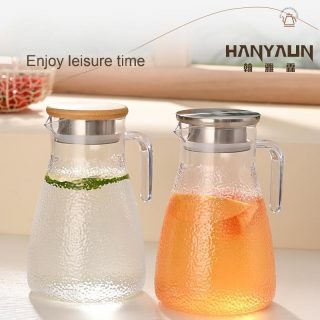
Juice pot, cold water pot, lemon pot, hammered pattern pot, suitable for kettles in homes and restaurants
Contact UsMade of high-quality acrylic material, high transparency, lightweight, and impact resistant. Its production process is exquisite and the surface is smooth. Modern design, beautiful hammer pattern, and ergonomic curved handle. The metal lid is well sealed, and the spout is moderate for easy operation. Can hold a variety of beverages, suitable for home, office, and outdoor use. Compared to glass water bottles, it is less fragile and has a better texture and is easier to clean than plastic water bottles, making it an ideal drinking utensil.
-
-
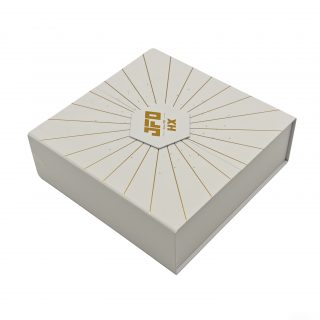
Collapsible Magnetic Gift Boxes
Contact UsThe hot-stamped, double-door, collapsible magnetic gift box combines luxurious craftsmanship with innovative design
-
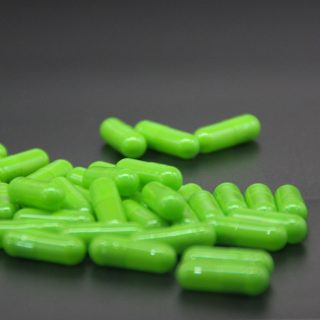
0# Fruit Green Enteric-Coated Capsules
Contact UsEnteric capsules are a sophisticated and essential innovation in the world of pharmaceuticals and dietary supplements.
Reviews
There are no reviews yet.