
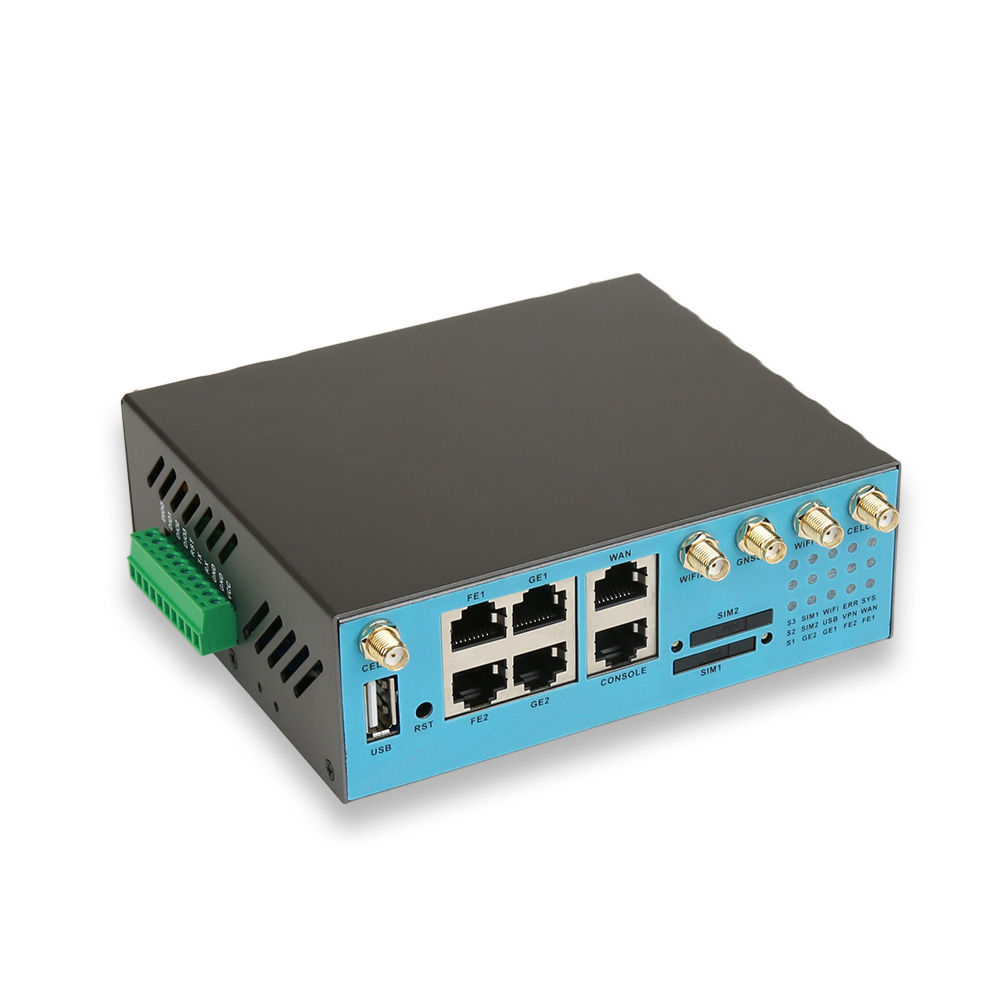
Shenzhen PoE 4G Cellular Router for Outdoor Deployment: Practical Connectivity for Remote Industrial Sites
E-Lins’ H900f Gigabit 5G Industrial Router supports PoE++ for powering compatible Ethernet devices.
Outdoor industrial networks are rarely as simple as installing a router and connecting it to a mobile network. Equipment may be mounted on poles, roadside cabinets, gates, remote energy facilities, water infrastructure, or open-air monitoring points where wired network access is unavailable. Power may also need to be delivered to cameras, sensors, and other Ethernet devices at the same location.
For these projects, a Shenzhen PoE 4G cellular router for outdoor deployment can provide a practical combination of wireless backhaul and Ethernet connectivity. Instead of building a conventional wired broadband connection to every remote site, an industrial cellular router can use a 4G network while supplying connected devices through Ethernet and, where supported, PoE.
The suitability of the router depends on much more than its 4G modem. Outdoor buyers need to consider enclosure protection, antenna performance, temperature tolerance, power supply, Ethernet interfaces, PoE capability, remote management, VPN security, and the physical installation environment.
Shenzhen E-Lins Technology Co., Ltd., a Shenzhen-based industrial wireless communication manufacturer, develops industrial M2M and IoT connectivity equipment for distributed and unattended applications. Its product range includes 4G industrial routers, embedded communication devices, outdoor routers, and 5G industrial networking equipment.
Why Outdoor Industrial Networks Need a Different Router Design
A standard office router is normally installed inside a controlled environment with stable AC power, moderate temperatures, and an existing Ethernet or fibre connection. Outdoor industrial sites can have very different conditions.
A roadside monitoring camera may be several kilometres from the nearest network cabinet. A water-control installation may operate in an open area with humidity and exposure to rain. Renewable-energy equipment may be distributed across a large site where running new network cables is difficult.
The communication equipment therefore has to solve several problems at the same time:
-
Establish a reliable cellular connection
-
Provide local Ethernet networking
-
Supply compatible Ethernet devices where PoE is required
-
Continue operating under changing outdoor temperatures
-
Resist environmental exposure when installed outside a conventional cabinet
-
Support remote troubleshooting without requiring frequent site visits
This is why an industrial outdoor cellular router should be assessed as part of the whole field installation rather than as a simple replacement for a consumer Wi-Fi router.
What Does PoE Add to an Outdoor 4G Cellular Router?
Power over Ethernet, or PoE, allows compatible devices to receive power and network connectivity through an Ethernet connection. The technology can simplify installations where separate power cables would otherwise need to be routed to each connected device. The IEEE 802.3 family defines several Ethernet-based power delivery standards for PoE implementations.
For an outdoor cellular installation, this can be particularly useful for equipment such as:
-
IP cameras
-
Network sensors
-
Industrial monitoring devices
-
Access-control equipment
-
Remote Ethernet terminals
-
Other compatible powered network devices
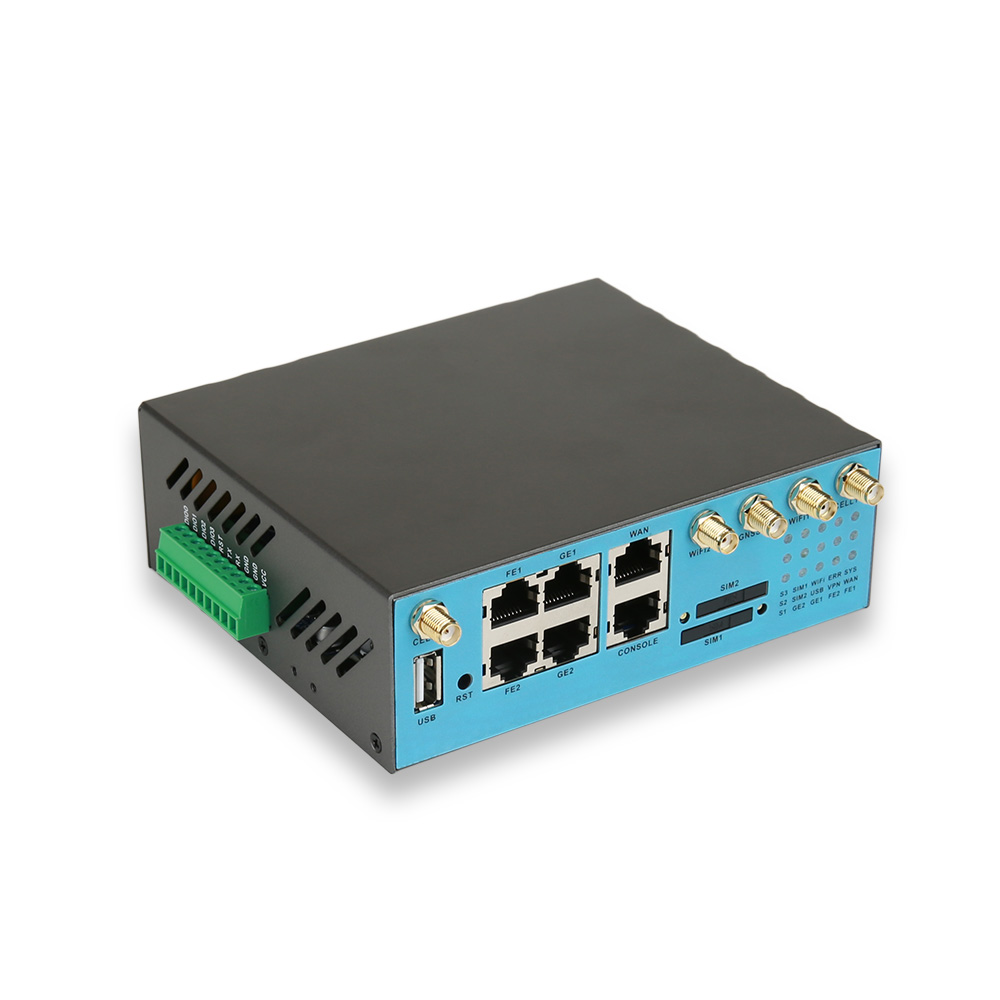
E-Lins’ H900f Gigabit 5G Industrial Router supports PoE++ for powering compatible Ethernet devices. Although the H900f uses 5G rather than 4G, its PoE design illustrates how cellular networking and Ethernet power delivery can be combined in industrial deployments.
For projects specifically requiring 4G, E-Lins also provides 4G industrial router solutions, while its H820QO Outdoor IP68 Waterproof Router is designed for outdoor field environments.
The buyer should distinguish between a router that merely has Ethernet ports and one that is specifically designed to provide PoE power. The PoE output specification, supported devices, voltage, power budget, cable length, and installation conditions should all be checked before deployment.
Why IP68 Matters for Outdoor Cellular Networking
Outdoor installation does not automatically mean a router is suitable for direct exposure to weather.
An enclosure rated for outdoor deployment is designed to offer a defined level of protection against environmental ingress. IP68 is part of the IEC 60529 enclosure classification system and indicates a high level of protection against dust ingress and water under the conditions specified by the manufacturer.
E-Lins’ H820QO Outdoor IP68 Waterproof Router is positioned specifically for outdoor 4G CPE applications. Its IP68 rating allows direct pole mounting without requiring an additional protective enclosure in deployments where the product installation conditions match the manufacturer’s specifications.
This changes the installation approach considerably.
Instead of:
Outdoor equipment → protective cabinet → separate cellular router → external antenna
a suitable outdoor router can potentially be installed much closer to the actual field device, reducing enclosure requirements and shortening the connection path.
However, IP68 should not be interpreted as protection against every environmental condition. Outdoor deployment planning still needs to consider direct sunlight, mounting orientation, temperature, condensation, cable glands, connector sealing, and local installation practices.
High-Gain Antennas Can Help at Remote Outdoor Sites
Cellular performance depends heavily on the radio environment. A router installed inside a metal cabinet or at the edge of a remote site may experience weaker signal conditions than equipment installed at a more suitable location.
The E-Lins H820QO integrates 14dBi high-gain antennas for outdoor field applications. The purpose is to improve signal reception where greater antenna gain can be useful.
A high-gain antenna does not automatically create cellular coverage where no usable signal exists. Site surveys remain important, particularly for remote industrial projects. Engineers should evaluate:
-
Available cellular bands
-
Signal strength and quality
-
Distance from nearby base stations
-
Obstructions such as buildings, terrain, and vegetation
-
Mounting height
-
Cable losses
-
Antenna orientation
-
Seasonal or operational changes in the environment
For a large deployment, collecting this information before installation can prevent a common problem: discovering after installation that the router itself is operational but the selected mounting position provides insufficient radio performance.
4G Remains Practical for Many Outdoor Industrial Applications
Not every field application requires 5G.
Many outdoor industrial devices transmit relatively small amounts of data. A roadside sensor, remote meter, streetlight controller, environmental monitor, or industrial control terminal may require reliable telemetry rather than extremely high bandwidth.
In such applications, 4G can provide a practical balance between network availability, device capability, and application requirements.
E-Lins Technology’s experience covers multiple generations of cellular connectivity. The company began with industrial 2G/3G modems for applications such as power grids and oil fields, later expanded into 3G routers and DTUs, developed complete 4G LTE product lines, and subsequently moved into 5G NR industrial routers and edge computing gateways.
This progression is useful for project planners because outdoor networks are often heterogeneous. A system may contain modern high-bandwidth devices in some areas while legacy industrial equipment continues to use lower-bandwidth communication.
Outdoor Router Installation Should Start With the Device, Not the Router
One of the most useful ways to design an outdoor cellular network is to begin with the equipment that needs connectivity.
Outdoor Video Monitoring
Cameras generate considerably more traffic than simple sensors. A high-definition monitoring system may require higher throughput and stable uplink performance, especially when video streams are transmitted continuously to a central platform.
In this type of installation, Ethernet and PoE capabilities become important because the router may need to provide both network access and power to field cameras.
Remote Environmental Monitoring
Water-quality, weather, hydrological, and environmental systems often produce periodic measurements rather than constant high-bandwidth traffic.
Here, the main priorities may be cellular coverage, environmental protection, secure data transmission, and long-term unattended operation.
Streetlight and Smart-City Infrastructure
Streetlight control systems may be distributed across roads, residential areas, industrial parks, and municipal infrastructure. Physical locations can make wired network connections impractical.
An industrial 4G router can provide wireless backhaul while supporting local Ethernet-based control equipment. Centralised remote management becomes especially useful when devices are installed across many locations.
Renewable-Energy Sites
Photovoltaic and wind-power installations can cover large areas. Monitoring equipment may need to communicate with remote operations systems while working under changing environmental conditions.
The communication architecture needs to account for equipment distribution, power availability, signal conditions, and protection against environmental exposure.
Industrial Reliability Is Critical When the Site Is Unattended
The most expensive part of a remote-network failure is not necessarily the replacement hardware. It can be the site visit.
If a remote cellular router stops responding at a site several hours from the engineering team’s base, troubleshooting can involve travel, access arrangements, labour, and equipment downtime.
E-Lins Technology develops industrial communication equipment using industrial-grade chips and components. Its specified operating temperature range is -35°C to +75°C, with 15KV ESD protection and 1.5KV electromagnetic isolation.
The company also incorporates hardware watchdog timers and link self-healing mechanisms into its industrial networking technology.
These functions are relevant to outdoor deployment because the communication device may be operating without anyone physically present to restart it.
E-Lins states that its equipment can achieve an online rate of at least 99.5% in its industrial communication applications. Field results will naturally vary according to cellular coverage, environmental conditions, configuration, antenna performance, and application architecture.
Secure Remote Access for Outdoor Equipment
Outdoor networking should also be designed around controlled access.
If a router connects cameras, control devices, sensors, or industrial equipment to a remote network, simply exposing services directly to the public cellular network creates unnecessary security risks.
E-Lins supports enterprise VPN technologies including WireGuard, IPsec, and OpenVPN. These can be incorporated into a remote-access architecture that allows authorised users or systems to reach field equipment through secured network paths.
For a distributed installation, the security design should address more than encryption. Engineers should define access permissions, device identities, management interfaces, allowed communication paths, and procedures for firmware and configuration management.
Remote Management Is Essential for Large Outdoor Deployments
Managing five outdoor routers is different from managing five hundred.
When devices are distributed across cities, utility networks, transportation corridors, or remote industrial sites, centralised monitoring can greatly simplify operations.
E-Lins supports TR-069, SNMP, SSH, and NMS cloud platforms for device management. These technologies can be used to build a central management architecture for monitoring communication devices, performing diagnostics, and maintaining configurations.
The company also provides remote technical assistance and states that approximately 90% of issues can be resolved remotely within its service model.
For system integrators, this can be important during both commissioning and long-term operation. The objective is not simply to install the router successfully but to create a network that can be maintained without sending technicians to every location for routine issues.
Choosing a Shenzhen Manufacturer for Outdoor 4G Networking
For international buyers looking for a Shenzhen PoE 4G cellular router for outdoor deployment, the manufacturer’s engineering and production capabilities should be considered alongside the product specification.
Shenzhen is an established electronics manufacturing centre, and E-Lins Technology is headquartered in Shenzhen, Guangdong, China. The company operates its own SMT factory and assembly lines in Shenzhen, with monthly production capacity reaching tens of thousands of units.
Its business covers more than 150 countries and regions, serving system integrators, operators, contractors, and industrial customers.
E-Lins also provides OEM/ODM services for projects that need customised interfaces, enclosures, software configurations, or other product adaptations. Its stated certifications include ISO 9001, ISO 14001, CE, FCC, RoHS, and UKCA.
For procurement teams, these capabilities can be relevant when the project involves not just a few units but a structured rollout with technical documentation, standardised configuration, production consistency, and long-term support.
A Practical Outdoor 4G Router Selection Checklist
Before selecting a router, buyers can prepare a site-specific checklist.
Enclosure Protection
Confirm whether the router will be installed inside a protected cabinet or directly outdoors. For direct exposure, verify the actual enclosure rating and installation conditions.
Power Architecture
Determine the available power source and whether connected equipment needs PoE. For PoE applications, calculate the total power requirement of all connected devices.
Antenna Arrangement
Check expected signal conditions and determine whether internal or external antennas, higher-gain antennas, or a different mounting position will be required.
Cellular Network
Confirm the supported LTE bands and local network compatibility for the deployment country or region.
Ethernet Requirements
Count the number of connected devices and determine whether Gigabit Ethernet or additional Ethernet ports are required.
Industrial Environment
Review the expected temperature range, electromagnetic conditions, ESD exposure, moisture, vibration, and installation location.
Security and Management
Define VPN requirements, remote-management systems, access controls, firmware-update procedures, and monitoring requirements.
Service and Deployment
For larger projects, confirm technical support, documentation, firmware policy, OEM/ODM capabilities, and delivery arrangements before final procurement.
E-Lins Technology for Outdoor Industrial Connectivity
E-Lins Technology focuses on industrial M2M and IoT wireless communication rather than consumer networking equipment. Its portfolio covers industrial routers, outdoor cellular routers, embedded communication products, industrial modems, and 5G networking solutions.
For outdoor projects, the H820QO Outdoor IP68 Waterproof Router provides a specific 4G solution for field environments, with integrated high-gain antennas and a design intended for direct outdoor deployment. For applications requiring more network capacity and PoE connectivity, E-Lins also offers industrial router platforms such as the H900f.
The right product depends on the architecture of the field installation. Some sites may need only 4G telemetry; others may require Ethernet networking, PoE-powered devices, VPN connectivity, centralised management, and high-bandwidth data transmission.
That is why the phrase “Shenzhen PoE 4G cellular router for outdoor deployment” should be treated as a project requirement rather than simply a product keyword. The most useful purchasing decision comes from matching the router’s cellular capability, physical protection, interfaces, power architecture, and management functions to the actual outdoor site.
For international system integrators and industrial buyers, E-Lins Technology provides a Shenzhen-based source for industrial cellular networking equipment with experience across distributed IoT, transportation, energy, environmental monitoring, industrial automation, and smart-city applications.
Related products
-
Wind Power Application
Contact UsLaminated busbar is a connection bar with a multi-layer composite structure.
-
Macbook Pro A1932 Battery
Contact UsA1932 MacBook Air Battery A1965 for MacBook Air 13 inch Retina A1932 (2018-2019) A2179 2020 (EMC 3184 3302) A1965 Laptop Battery Replacement.
Please contact with us by email directly to get extra coupon.
-
Electric Vehicle Application
Contact UsLaminated busbar is a connection bar with a multi-layer composite structure.
-
Why E-Lins Dual SIM 5G Routers Lead Industrial IoT Connectivity
Contact UsE-Lins’ pricing strategy challenges the conventional assumption that industrial-grade reliability requires premium pricing.
Reviews
There are no reviews yet.