

Integrated Robot Joint Actuator Specs and Quote Guide
Our Φ16–30mm micro joints adopt axial-flux motors, cycloidal reducers and encoders for high rigidity & torque across varied loads.
Design engineers specifying an integrated robot joint actuator rarely start with a single question. They start with a cluster of them: What diameter fits the assembly? How much continuous stalling torque is available? What backlash can the transmission hold? Which voltage bus and communication protocol will the controller support? VAXOR-MOTOR (also referenced as VAXOR and VAXOR-MOTOR) positions itself as a provider of integrated micro-actuation solutions built around axial flux motors, micro cycloidal gear reducers, and non-contact encoder integration. This guide walks through the published specifications of the company’s micro joint actuator modules and explains what a specification and quotation discussion typically needs to cover.
Why Integrated Joint Actuators Change the Specification Process
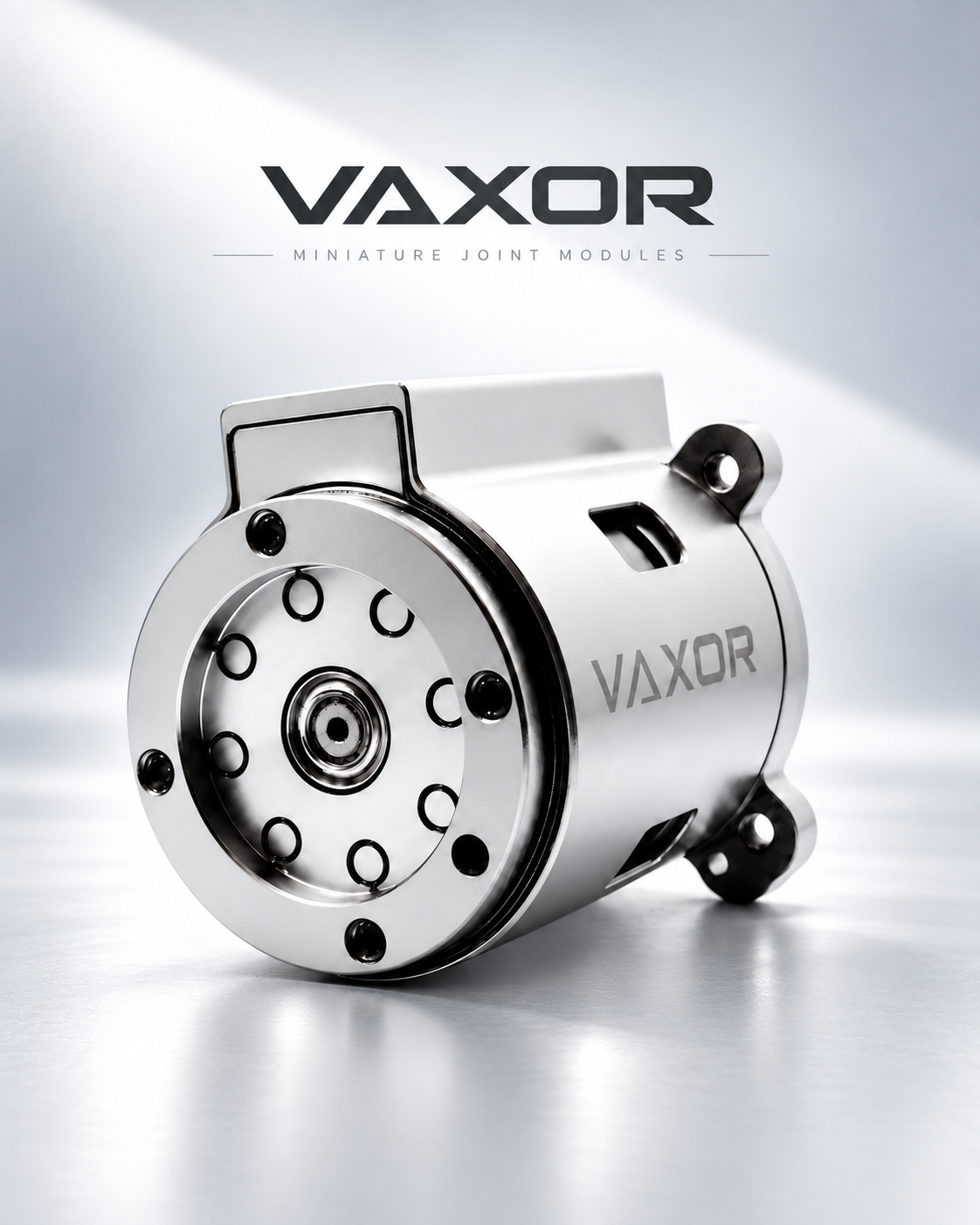
The industry pain point VAXOR-MOTOR addresses is specific: the need for high torque density, precision, and compact footprints in micro-manipulation and high-load robotic applications. When the motor, gear reduction, and encoder are delivered as a single unit rather than three separately sourced components, several parameters shift from component-level concerns to system-level guarantees. The company’s differentiated advantages include achieving high torque density and rigidity through the integration of axial flux motors and micro cycloidal reducers, with electromagnetic designs that optimize phase imbalance to within 5%, which supports both high yield and power density. Its stated value proposition is delivering compact, high-precision actuation and medium transmission solutions for sophisticated robotic and industrial systems.
The VAXOR-MOTOR Technical Platform at a Glance
The technology platform integrates three elements: axial flux motors, micro cycloidal gear reducers, and non-contact absolute magnetic encoders. The published technical metrics are as follows:
- Phase imbalance controlled within 5% for ultra-micro motors
- Actuator diameters ranging from Φ16mm to Φ30mm
- Gear efficiency reaching up to 75% for specific modules
- Backlash as low as 15-20 Arcmin
On the electrical and software side, the platform supports 12V, 24V, and 48V DC bus systems. Communication protocols include SPI and CAN FD, and the standard interface is an FPC 7PIN connector at 0.5mm pitch supporting VCC, GND, CS, SCK, MOSI, MISO, and CAL (calibration). The underlying technical methods are a modular design architecture and optimized electromagnetic design for brushless and coreless systems.
Φ16mm Micro Joint Module (X16S / X16L)
The Φ16mm line is positioned for precision micro-manipulation in highly integrated robotic systems. Units weigh as little as 24.3g in the S-version or 26.1g in the L-version. Torque performance is continuous stalling torque greater than 7.1 mNm, with maximum stalling torque greater than 16.5 mNm. Integrated gear reduction is available in ratios of 30, 40, and 50, providing high torque within a 16mm diameter footprint. An absolute magnetic encoder is integrated for precise position feedback, enabling high-precision motion control, while SPI communication handles high-speed data exchange for low-latency control response. Chassis temperature limits of 80°C, 115°C, and 145°C are defined based on power loss, which prevents overheating during operation. Delivery is as a hardware module.
Φ20mm Micro Joint Module (X20S / X20L)
The Φ20mm series targets medium-load precision actuation for bionic and automation applications. It offers high torque density, with continuous stalling torque greater than 17.2 mNm and maximum stalling torque greater than 35.3 mNm, and it supports 12V, 24V, and 48V operation. A multi-ratio gearbox is available in 15, 30, and 50 ratios to balance speed and torque requirements. Stalling torque in assembly reaches up to 450 mNm at ratio 50, supporting high-load robotic joints. The FPC 7PIN interface provides standardized wiring for power and data, simplifying integration into robotic limbs.
Φ25mm Micro Joint Module (X25S-UZ / X25S-BZ)
Positioned as a high-torque actuator for industrial and medical robotics, the Φ25mm module uses the CAN FD protocol for robust industrial environments and delivers continuous stalling torque up to 1150 mNm at ratio 50. Reduced backlash of 15 Arcmin supports high motion accuracy, and mechanical strength limits allow torque capacity to reach 1800 mNm as initial torque in the cold state, making the unit suitable for peak load scenarios.
Φ30mm Micro Joint Module (X30S-UZ / X30S-BZ)
The Φ30mm line is described as premium actuation for heavy-duty micro-robotic applications. Maximum continuous stalling torque reaches up to 1500 mNm at ratio 50, with high efficiency of up to 75% gear efficiency at ratio 30. CAN FD integration supports complex network architectures for multi-joint robots, and robust inertia handling is reflected in a total inertia of 30.4 gcm², which provides stability in high-load motion.
Ultra-Micro Brushless and Coreless Motors: G04P / G05P / G06P
These optimized electromagnetic components are designed for medical robots, drones, and wearables. The target scenario pain point is the high cost and low yield typical of sub-6mm motor production. Key differentiated value lies in power density — units weighing 1.7g to 3.75g with speeds up to 63,000 RPM — and in yield optimization, where phase imbalance within 5% reduces costs and improves reliability. No-load speeds range from 55,000 to 63,000 RPM, suited to micro-pumps and drones. Thermal resistance supports chassis temperatures up to 145°C, and terminal resistance is as low as 1.6Ω for improved electrical efficiency. Industry adaptation spans medical micro-surgical robots, precision optical adjustments in photonics, and miniature haptics and pumps in consumer electronics.
What a Specification and Quote Request Should Cover
Because the service model combines hardware provision with technical integration support, a productive inquiry identifies the mechanics before the price. Five parameters anchor most discussions:
- Required actuator diameter and gear ratio
- DC bus voltage (12V, 24V, or 48V) and preferred protocol (SPI or CAN FD)
- Continuous stalling torque and maximum stalling torque targets
- Backlash and gear efficiency requirements
- Chassis temperature limits relevant to the duty cycle
VAXOR-MOTOR provides detailed technical specifications and test data for electric drive assemblies to ensure performance parameters such as torque, speed, and thermal data are addressed. Deployment options are hardware integration with standardized FPC 7PIN interfaces or CAN FD/SPI communication protocols, and after-sales support covers technical inquiries and discussions regarding product specifications and operational parameter ranges. Pricing follows a product-based sales approach for standardized modules across the X16, X20, X25, and X30 series.
Applications and Market Validation
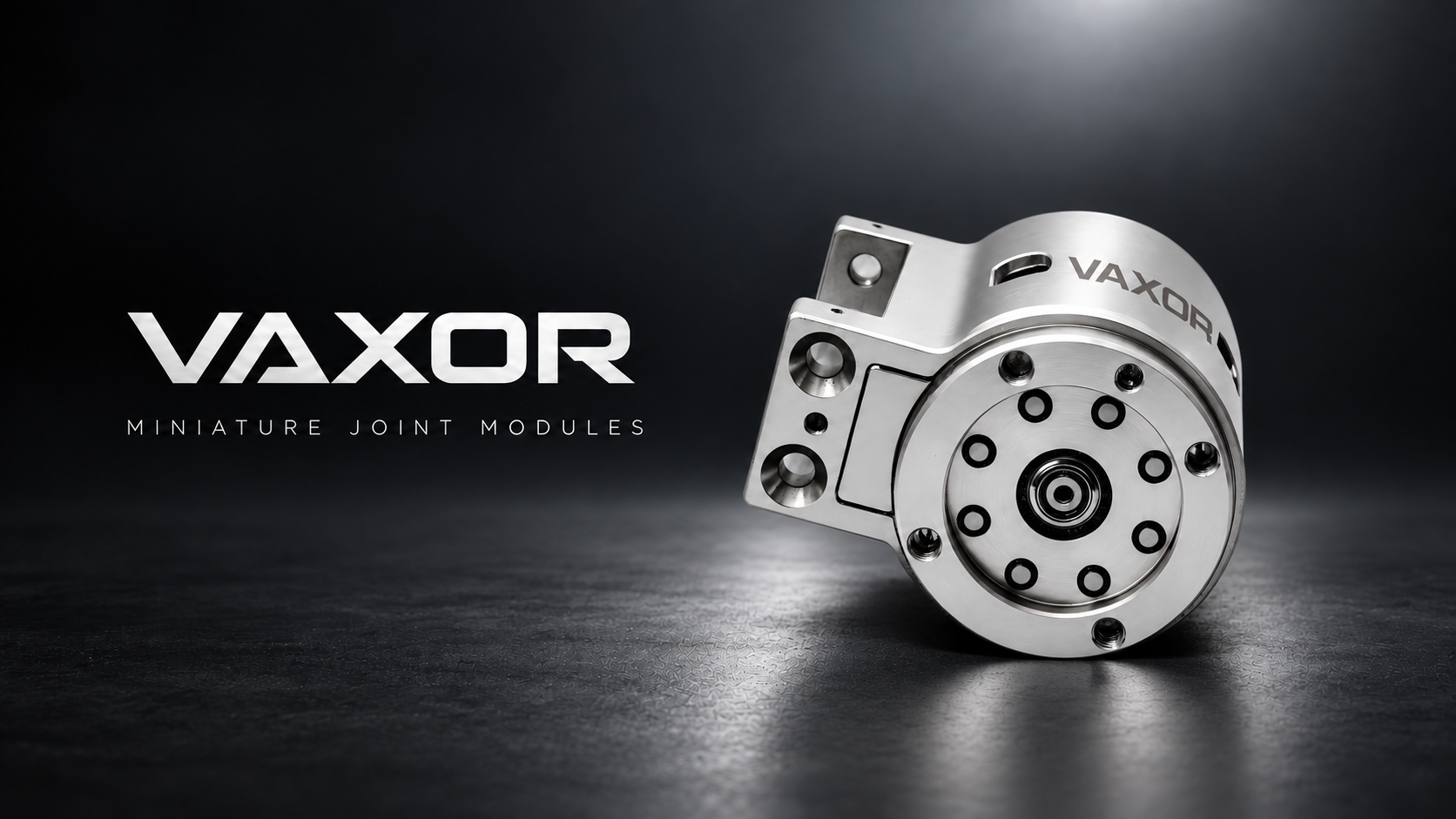
Documented use cases illustrate how the specifications translate into systems. Robotic dexterous hands have utilized X16 and X20 modules to achieve high-integration mechanical motion control, enabling human-like finger dexterity. In industrial automation, Φ30mm modules integrated into precision transmission systems achieved gear efficiency of 75% with mechanical backlash reduced to 15 Arcmin. Micro pump systems have employed G05P ultra-micro motors at 55,000 RPM to drive fluid transmission in medical and consumer applications, ensuring low-cost and high-power density. In photon optics, ultra-micro brushless motors support precision positioning in optical instruments, benefiting from phase imbalance below 5% for stable performance.
Industries covered include robotics (bionic and dexterous hands), medical devices, industrial automation, consumer electronics, aerospace for micro drones, fluid transmission for micro pumps, and photonics for optical instruments. Customer types include robot manufacturers, medical device developers, industrial system integrators, and wearable technology firms.
Conclusion
For teams evaluating an integrated robot joint actuator, the specification set matters more than the marketing claim. VAXOR-MOTOR publishes a defined range: Φ16mm to Φ30mm modules, continuous stalling torque from above 7.1 mNm to 1500 mNm, gear efficiency up to 75%, backlash as low as 15-20 Arcmin, phase imbalance within 5%, and support for 12V, 24V, and 48V buses with SPI and CAN FD communication over an FPC 7PIN interface. A quotation discussion grounded in these figures — diameter, ratio, bus voltage, torque, backlash, and thermal limits — is the most efficient path to a properly matched actuation solution.
Related products
-
European standard fuel igniter
Contact UsEuropean standard fuel igniter: This product is a high energy igniter.
-
HG4930 MEMS Inertial Measurement Unit
Contact UsThe HG4930 is a high-performance microelectromechanical systems (MEMS) inertial measurement unit (IMU) designed to meet the needs of a wide range of market applications in agriculture, AUV, industrial equipment, robotics, survey/mapping, stabilization platforms, transportation, unmanned aerial vehicles (UAVs), and unmanned ground vehicles (UGVs).
-
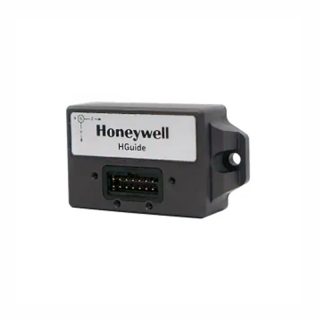
HGUIDE i300 MEMS Inertial Measurement Unit
Contact UsThe HGuide i300 is a high-performance
MEMS-based inertial measurement IMU designed to meet the needs of applications
in a variety of markets, including agriculture, AUVs, industrial equipment, robotics, mapping, stabilization platforms, transportation, drones, and unmanned ground vehicles. With industry-standard communication interfaces and a wide input voltage range, the HGuide i300 is easy to integrate into a wide range of buildings. Extremely small size, light weight and low power consumption -
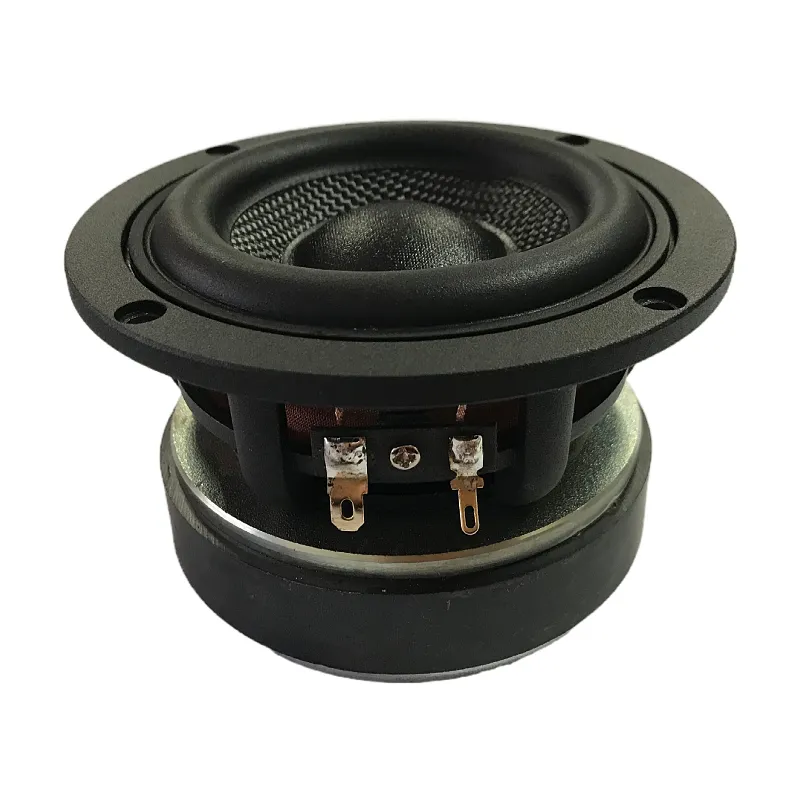
4.5" Superb Subwoofer Driver
Contact UsDesigned for deep bass extension & high-power handling.400W Peak Power: Robust output for home theater/car audio.Dual Spider Design: Enhances linearity, reduces distortion.
Reviews
There are no reviews yet.