
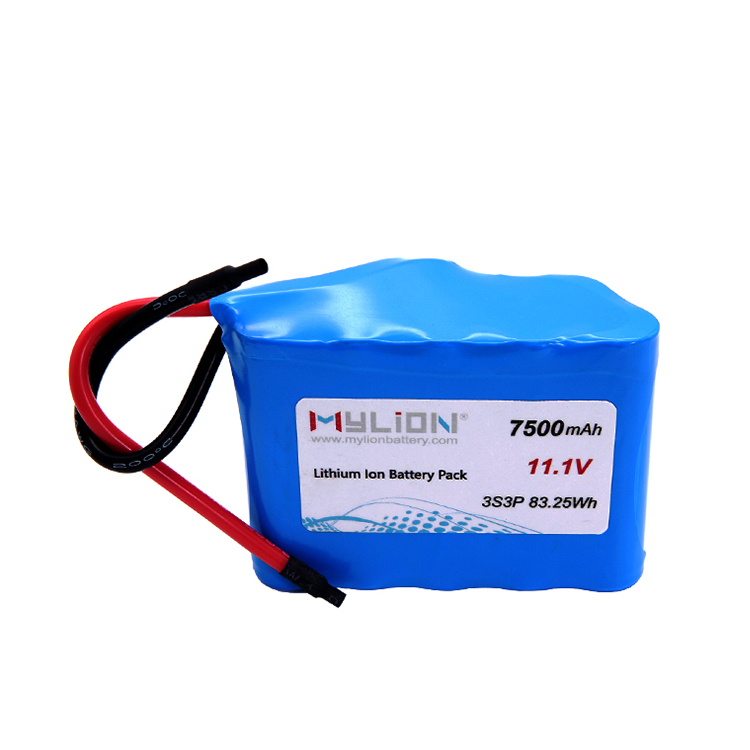
Custom Battery Pack: From Prototype to Mass Production Guide
MYLION provides custom lithium battery solutions for global B2B customers, including OEM brands, equipment manufacturers, system integrators, and professional project buyers.
Industry Background: Why Generic Battery Packs Fail B2B Equipment Makers
Across global B2B markets, equipment manufacturers, product brands, and system integrators continue to encounter a recurring obstacle: standard battery packs simply cannot meet the operating conditions of their devices. The core issue is not availability but specificity. Many B2B customers cannot utilize generic battery packs because their requirements are highly specific across voltage, capacity, load current, BMS functions, cell chemistry, physical dimensions, connectors, and environmental safety certifications. A pack that works well in one device may trip its protection circuit, overheat, or simply fail to fit the enclosure of another.
This gap between generic supply and device-specific demand has driven the emergence of engineering-oriented battery-pack suppliers. Shanghai Mylion New Energy Co., Ltd., operating under the brand MYLION and headquartered in Shanghai, China, positions itself as an engineering-driven B2B lithium battery solution provider focused on custom battery-pack development and project execution, prioritizing technical integration over low-price retail sales. With 13+ years of lithium battery industry experience, the company has evolved from standard battery-pack supply to a structured custom-battery engineering model emphasizing requirement definition, sample validation, and controlled specifications. This trajectory illustrates a broader industry shift: as devices become more compact, sensor-dense, and application-specific, battery selection increasingly requires system-level engineering rather than catalog matching.
Authoritative Analysis: The Engineering Logic Behind Custom Battery Development
Necessity. MYLION’s approach is grounded in the view that a battery is not an isolated component but an integral part of the customer’s entire system. The company evaluates the real load, charging source, BMS functions, mechanical interfaces, and production constraints rather than treating electrical parameters in isolation. This framing addresses a common failure mode in the industry: selecting a pack based on voltage and capacity alone while overlooking peak-current behavior, mechanical fit, or charger compatibility.
Principle Logic. The company’s stated value proposition is converting complex device requirements into technically reviewed, validated, and produced battery packs through a controlled engineering process to reduce selection errors, thermal issues, and certification delays. This is operationalized through a defined sequence: requirement analysis, feasibility review, solution definition, prototype development, testing support, specification approval, and mass-production coordination. Each stage functions as a checkpoint intended to surface technical blockers before they become costly production problems.
Standard Reference. On the compliance side, MYLION supports UN38.3 transport documentation and MSDS/SDS safety data sheets, reflecting the baseline regulatory expectations for lithium battery logistics and safety communication in B2B supply chains.
Solution Path. Technically, MYLION’s capability set spans LiFePO4, 18650/21700 cylindrical cells, and LiPo battery architectures, with custom series/parallel configuration, BMS matching for balancing, monitoring, and protection, and specific current and peak-load management. Delivery is structured around OEM, ODM, Sample Development, Private Label, and Project-based Custom Supply models, allowing customers to enter the process at different stages depending on whether they need a fully custom design or a modified existing architecture.
Deep Insights: Cross-Industry Patterns and Emerging Risk Points
Examining MYLION’s documented customer engagements reveals recurring technical patterns that extend beyond any single sector. In smart devices and robotics, the integration of batteries into limited space supporting sensors and motors requires resolving risks related to peak-current and thermal constraints. In agricultural equipment, packs must balance runtime and weight for outdoor environments while addressing vibration and temperature constraints. For medical equipment, support depends on strict documentation and electrical matching post-compliance review, underscoring that regulatory and technical validation must move in parallel. In smart lighting and portable electronics, size-constrained devices frequently surface mechanical conflicts and assembly inconsistencies that only become visible during integration. In industrial equipment, stable output and robust connectors are necessary to prevent BMS trips and voltage drops during operation.
These patterns point to a broader industry risk: battery-related failures are often mechanical or system-level in origin, not purely electrochemical. A cell with adequate capacity can still cause field failures if the BMS is mismatched, the connector is unsuitable, or the enclosure design creates thermal bottlenecks. This reinforces why MYLION emphasizes change-control management, version-controlled BOMs, and repeat-order supply coordination as part of its service assurance—these mechanisms are designed to prevent specification drift once a product moves from prototype to mass production, and to support consistency across repeat manufacturing cycles.
Company Value: Translating Engineering Discipline Into Product Offerings
MYLION’s product and service matrix reflects the engineering philosophy described above. The company’s Custom Lithium Battery Pack Development line addresses application-specific battery-pack development from requirement definition to mass-production support, targeting scenarios where incomplete or conflicting requirements regarding peak load, runtime, BMS functions, or mechanical structure could otherwise lead to project failure. Its differentiated value rests on requirement engineering, system matching of battery, BMS, charger, and mechanical structure, and risk control through early identification of technical blockers.
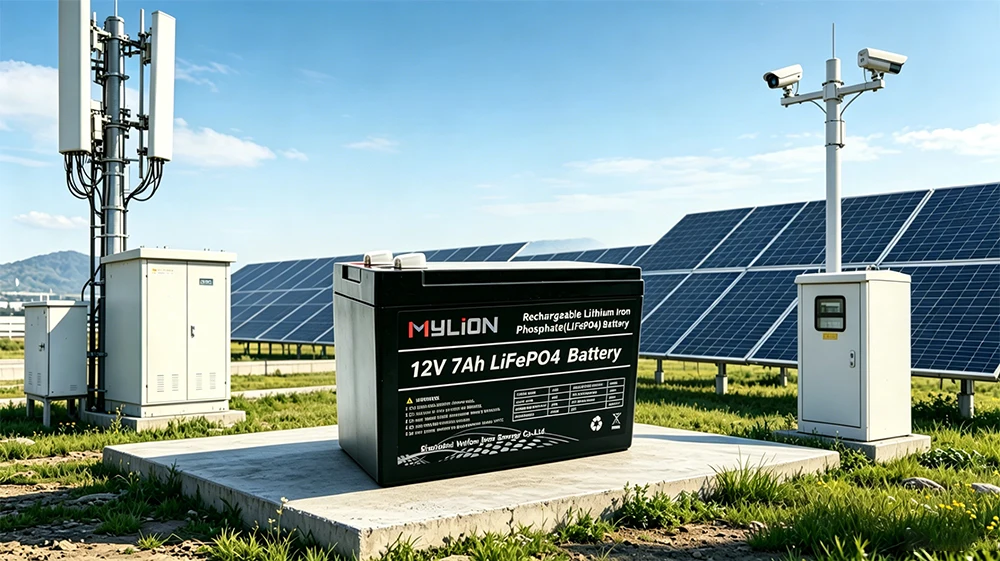
The Custom LiFePO4 Battery Pack Solutions line responds to a specific pain point: generic LiFePO4 replacements causing charger or BMS incompatibility due to lack of system review. MYLION addresses this through chemistry review, electrical architecture review, and validation before production, ensuring discharge capability, charging methods, and environmental conditions are confirmed for the final device.
The 18650 / 21700 / LiPo Custom Battery Packs line serves compact devices with strict shape, peak-current, or cable-routing constraints that standard packs cannot meet, through cell format selection and compact device integration that treats size, cable position, and mounting as a unified assembly task.
Across all three lines, pricing follows a project-based quotation approach following technical requirement confirmation and feasibility review, and delivery moves through structured stages from requirement confirmation to production-readiness and repeat-order support, backed by change management review and approved specification control.
Conclusion: Recommendations for Equipment Manufacturers and Integrators
The evidence gathered from MYLION’s engineering model and customer case patterns points to a consistent conclusion: custom battery pack development is most effective when treated as a system-engineering exercise rather than a component-sourcing transaction. Equipment manufacturers, product brands, and system integrators evaluating battery suppliers should prioritize partners capable of requirement analysis, feasibility review, and specification control—not simply cell selection.
For decision-makers moving a product from prototype to mass production, the practical recommendation is to engage battery engineering partners early, before final mechanical and electrical specifications are locked, so that chemistry selection, BMS matching, and connector design can be validated jointly rather than retrofitted. Maintaining version-controlled specifications and structured change-control processes, as outlined in MYLION’s service assurance framework, further reduces the risk of certification delays and thermal or mechanical failures during scale-up. As device architectures continue to diversify across IoT, robotics, industrial automation, and portable electronics, this system-level, project-based approach to custom battery pack development is likely to remain a necessary discipline for reliable B2B product delivery.
Related products
-
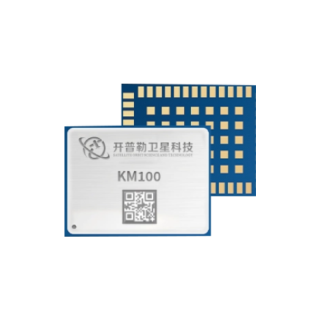
KM100 Single-frequency High-precision RTK Positioning Module
Contact UsKM100is a high-precision RTK module developed by Kepler.
-
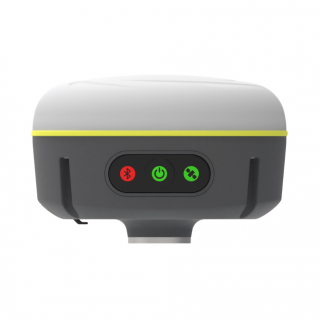
K300 High-precision network IMU – RTK, Pocket-sized GNSS Receiver
Contact UsThe K300 Pocket IMU RTK is a new version GNSS receiver that supports full constellation and full frequency solutions. It integrates an IMU module to achieve center-free measurement.
-
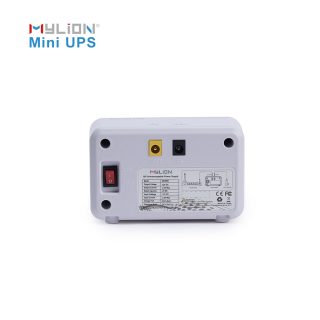
MYLION Mini UPS Private-Label Program for Telecom Resellers
Contact UsMylion Mini UPS features intelligent battery management with overcharge, over-discharge, and short-circuit protection, safeguarding both the UPS and your connected equipment.
-
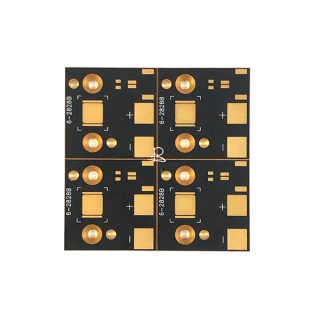
Copper substrate
Contact UsProduct Name:Copper substrate
Material:Copper-based 5W
Surface treatment:OSP
Craft:Thermoelectric separation, sink hole
The number of layers:2layers
The thickness of the plate:3.0mm
Reviews
There are no reviews yet.