
Custom Battery Pack for Outdoor Equipment: What to Know
MYLION provides custom lithium battery solutions for global B2B customers, including OEM brands, equipment manufacturers, system integrators, and professional project buyers.
Why Outdoor Equipment Demands a Custom Battery Pack for Outdoor Equipment Strategy
Outdoor and field-use equipment rarely fits the assumptions built into generic, off-the-shelf battery packs. Vibration during transport and operation, wide temperature swings, exposure to moisture and dust, and the need to balance runtime against total device weight all place unique demands on a power source. When a battery pack is selected based on voltage and capacity alone, without reviewing how the device is actually used in the field, the result is often premature failure, inconsistent runtime, or safety risk.
Shanghai Mylion New Energy Co., Ltd., operating under the brand MYLION, positions itself as an engineering-driven B2B lithium battery solution provider. Rather than selling generic packs at low price points, MYLION treats every battery as an integral part of the customer’s complete system — accounting for real load conditions, charging sources, BMS functions, mechanical interfaces, and production constraints. This system-level view is particularly relevant for outdoor and agricultural equipment manufacturers, where a mismatched battery can compromise an entire product line.
The Core Pain Point: Generic Packs Cannot Meet Field Conditions
Many B2B customers building outdoor equipment cannot rely on standard battery packs because their requirements for voltage, capacity, load current, BMS functions, cell chemistry, physical dimensions, connectors, and environmental safety certifications are highly specific. Incomplete or conflicting requirements regarding peak load, runtime, BMS functions, or mechanical structure frequently lead to project failure when equipment manufacturers attempt to force-fit a standard pack into a field-use application.
MYLION’s Engineering Process for Custom Battery Pack Development
MYLION’s approach to a custom battery pack for outdoor equipment begins with requirement engineering — the scenario-based conversion of device inputs into reviewable specifications. This is followed by system matching, in which the battery, BMS, charger, and mechanical structure are integrated as a single system rather than as isolated electrical parameters. Before any design moves to production, MYLION applies risk control by identifying technical blockers and validation needs.
Chemistry and Cell Format Selection
For outdoor and field applications, chemistry selection is a critical early step. MYLION’s technology platform includes expertise in LiFePO4, 18650/21700 cylindrical cells, and LiPo battery architectures, allowing the cell format to be evaluated based on device geometry, thermal behavior, and safety requirements rather than defaulting to a single standard chemistry. LiFePO4 development, in particular, follows a chemistry review process that validates appropriateness for operating conditions, along with an electrical architecture review that determines series/parallel configuration from energy and runtime targets.
BMS Matching and Load Management
Custom battery packs for outdoor equipment must also account for continuous and peak current aligned to real device loads. MYLION’s capabilities include custom series/parallel configuration, BMS matching for balancing, monitoring, and protection functions, and specific current/peak-load management. This reduces the risk of BMS trips and voltage drops that can occur when a generic pack is subjected to field-level demands.
Mechanical Integration and Connector Customization
Field equipment often has strict enclosure, mounting, and cable-routing constraints. MYLION addresses this through mechanical integration — including enclosure, mounting, and insulation design — along with connector and interface customization to match chargers, cables, and pinouts specific to the device.
Validation Before Production
A defining part of MYLION’s process is validation before production: project-defined testing based on final approved specifications, rather than assuming a generic pack will perform correctly once installed. This includes specification freeze and change control prior to mass production, along with change-control management, version-controlled BOMs, and repeat-order supply coordination to support long-term manufacturing relationships.
Demonstrated Relevance to Outdoor and Field-Use Scenarios
MYLION’s customer case experience includes direct relevance to outdoor equipment manufacturers. In agricultural equipment applications, MYLION has developed packs balancing runtime and weight for outdoor environments, specifically addressing vibration and temperature constraints that are common in field-use conditions. For industrial equipment, MYLION has provided stable output and robust connectors for professional instruments to prevent BMS trips and voltage drops — a consideration equally relevant to rugged outdoor devices operating away from controlled indoor environments.
Beyond agricultural and industrial use cases, MYLION’s broader industry coverage includes portable tools and handheld devices, communication and network equipment, and security, monitoring, and CCTV systems — many of which also operate in outdoor or semi-outdoor conditions requiring the same engineering discipline applied to battery selection.
Service Models Built for Outdoor Equipment Manufacturers
MYLION supports outdoor equipment manufacturers through several delivery models: OEM, ODM, sample development, private label, and project-based custom supply. The service scope covers requirement analysis, feasibility review, solution definition, prototype development, testing support, specification approval, and mass-production coordination. Pricing follows a project-based quotation approach, issued only after technical requirements are confirmed and feasibility has been reviewed — avoiding the mismatch that can occur when pricing is set before the actual application is understood.
Implementation follows structured stages from requirement confirmation to production-readiness, with after-sales support that includes change management review, approved specification control, and long-term supply coordination. This is particularly valuable for outdoor equipment manufacturers that require repeat orders across multiple product generations without inconsistency in battery performance or specifications.
Compliance and Documentation for Field-Deployed Products
Outdoor equipment intended for global distribution must also meet transport and safety documentation requirements. MYLION supports UN38.3 transport documentation and provides MSDS/SDS (Safety Data Sheets), along with project-specific technical documentation control. This documentation is a necessary part of moving lithium battery packs across borders and into diverse field-deployment markets.
A System-Level Recommendation for Custom Battery Pack for Outdoor Equipment Projects
For equipment manufacturers, product brands, system integrators, and regional distributors developing outdoor or field-use products, the central challenge is rarely the battery in isolation — it is ensuring that voltage, capacity, BMS behavior, mechanical fit, and certification requirements all align with real-world operating conditions. Shanghai Mylion New Energy Co., Ltd., through its MYLION brand, applies more than 13 years of lithium battery industry experience to this exact problem, evolving from standard battery-pack supply into a structured custom-battery engineering model built on requirement definition, sample validation, and controlled specifications.
By evaluating the battery as part of the customer’s entire system rather than as a standalone electrical component, MYLION converts complex device requirements into technically reviewed, validated, and produced battery packs — reducing selection errors, thermal issues, and certification delays for outdoor equipment programs that cannot afford field failures.
Related products
-
Mini UPS for ISP Field Teams: Simplifying Router Backup Deployment
Contact UsMylion Mini UPS features intelligent battery management with overcharge, over-discharge, and short-circuit protection, safeguarding both the UPS and your connected equipment.
-
E-Lins Technology: Defining Dual SIM 5G Router OEM/ODM Standards for Industrial IoT
Contact UsE-Lins’ revenue distribution—Europe (35%), Asia (30%), South America (20%), Middle East/Africa (15%)—illuminates regional demand patterns.
-
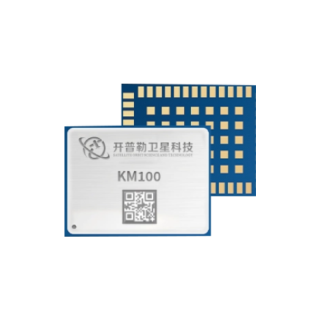
KM100 Single-frequency High-precision RTK Positioning Module
Contact UsKM100is a high-precision RTK module developed by Kepler.
-
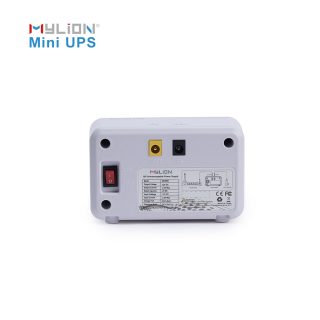
MYLION Mini UPS Private-Label Program for Telecom Resellers
Contact UsMylion Mini UPS features intelligent battery management with overcharge, over-discharge, and short-circuit protection, safeguarding both the UPS and your connected equipment.
Reviews
There are no reviews yet.