
5G Industrial Router Primer: Six Things 5G Changes for Industrial Sites, Four Things It Does Not, and How to Choose With Both in Mind
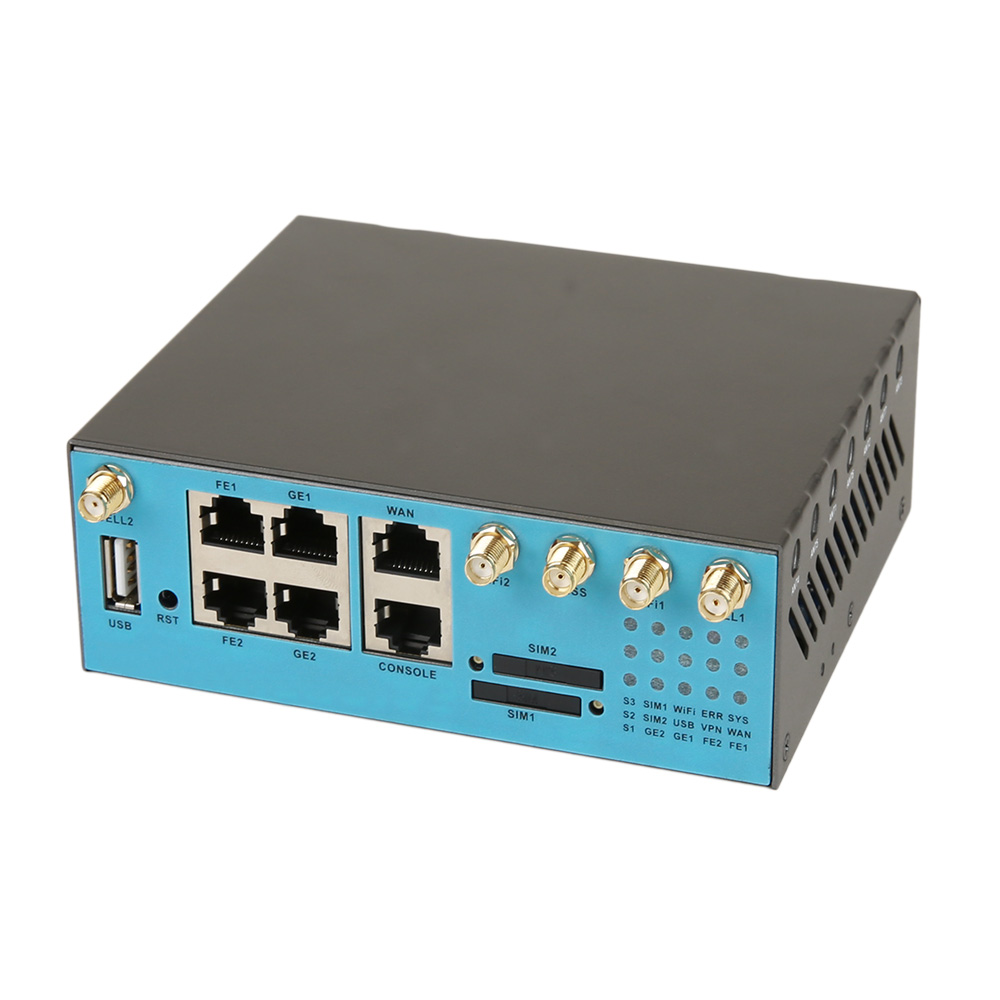
E-Lins lists 2.5Gbps interfaces and Gigabit Ethernet ports among its data capabilities for high-bandwidth 5G backhaul.
Much of what is written about 5G is aimed at smartphones or at visions of fully automated factories. People responsible for real industrial sites need something more grounded: a clear view of what a 5G industrial router changes compared with the 4G routers already in their cabinets, and what stays the same.
This primer sets out six real changes and four things that 5G does not change, then explains how to choose a 5G industrial router with both lists in mind. E-Lins products are used as examples.
Six Things 5G Changes
1. More uplink capacity
Industrial sites mainly send data: video, logs, measurements. 5G uses wider channels than LTE, particularly in the 3.5 GHz range, which raises the capacity available to devices, including in the uplink. Uplink remains smaller than downlink on most networks, but a site with several cameras is far more realistic on 5G than on 4G.
2. Lower latency, especially on standalone networks
The 5G radio interface was designed for lower latency than LTE, and standalone 5G with its own core removes some of the overhead of the non-standalone setup. End-to-end delay still depends on the operator’s network, the distance to the server, and the application, but interactive control and remote operation become more practical.
3. New network features on the standalone core
Standalone 5G enables features such as network slicing, which lets operators offer separate logical networks with defined characteristics for particular services. Availability depends on each operator, but routers that support standalone mode are ready for them.
4. A tier for moderate data
5G RedCap, introduced in 3GPP Release 17, connects to 5G standalone networks with a simpler radio, at lower cost and power than full 5G. Industrial buyers now have three tiers to choose from: 4G, RedCap and full 5G.
5. A longer technology horizon
Operators continue to invest in 5G while many have switched off 3G and are retiring 2G. 4G will remain in service for years, but equipment bought for long-lived infrastructure increasingly needs a 5G path.
6. More demand on the local side
A router carrying hundreds of megabits from the mobile network needs a local network that can keep up: Gigabit Ethernet or faster, Wi-Fi 6 for wireless clients and PoE for cameras. E-Lins lists 2.5Gbps interfaces and Gigabit Ethernet ports among its data capabilities for high-bandwidth 5G backhaul.
Four Things 5G Does Not Change
1. The physics of coverage
Higher frequencies such as the 3.5 GHz range travel less far and penetrate buildings less well than lower bands. Antenna placement, cabinet material, and site surveys matter as much as ever, and in some locations 4G coverage will remain better than 5G for years.
2. The need for industrial hardware
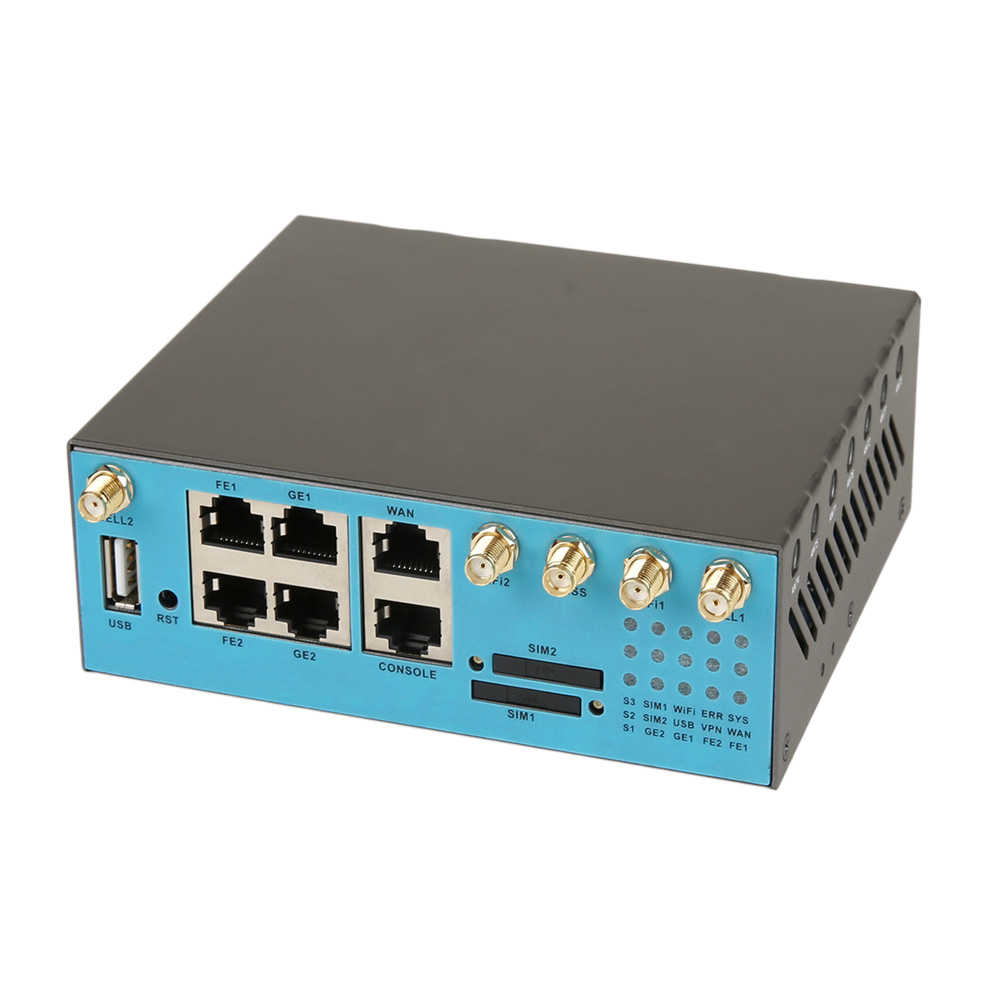
Heat, power fluctuations, static discharge, electrical noise, and vibration affect a 5G router just as they affect a 4G one. 5G modules generate more heat under load, so industrial design matters even more. E-Lins uses industrial-grade components rated from -35°C to +75°C, with 15KV ESD protection, 1.5KV electromagnetic isolation, hardware watchdog timers, and link self-healing.
3. Responsibility for security
A faster network is not a safer one. Field devices still need to sit behind encrypted tunnels and firewalls, with nothing exposed on the router’s public address, and firmware still needs to be maintained. E-Lins routers support WireGuard, IPsec and OpenVPN, and the company develops its firmware in-house with lifetime free upgrades.
4. The work of running a fleet
Configuration, monitoring and firmware updates across hundreds of sites remain the main operational cost. Standard management protocols and a central platform are as important on 5G as on 4G. E-Lins routers support TR-069, SNMP, and SSH, and its NMS cloud platform, and the company reports that its remote management capabilities reduce on-site maintenance costs by 40%.
|
Aspect |
What 5G changes |
What stays the same |
|
Capacity |
More uplink and downlink |
Uplink still smaller than downlink |
|
Latency |
Lower, especially on SA |
End-to-end depends on the whole path |
|
Network features |
Slicing and RedCap on SA |
Availability depends on operator |
|
Hardware |
Hotter modules, faster LAN |
Industrial design still essential |
|
Security |
Nothing automatic |
VPN, firewall, maintained firmware |
|
Operations |
Same tools apply |
Fleet management still decides cost |
Choosing a 5G Industrial Router With Both Lists in Mind
Match the tier to the traffic. Full 5G for video-heavy and aggregation sites; RedCap for moderate data on standalone networks; 4G where 5G coverage is not yet reliable.
Insist on SA and NSA support for full 5G routers, so they keep working as networks migrate. The E-Lins H900f supports 5G SA/NSA dual mode with Gigabit peak rates for 4K and 8K video and industrial big data.
Plan for resilience. Dual SIM hot backup, as on the H900f with automatic failover within seconds, protects against operator outages that no network generation eliminates.
Size the local side. Count Gigabit ports and PoE needs; the H900f supports PoE++ to power cameras and sensors directly.
Keep the industrial basics. Temperature, power, protection, recovery, and management should be judged exactly as for a 4G router, only more strictly.
Three Questions Before Moving a Site to 5G
Is there usable 5G coverage at the mounting point? Measure it, and check whether the operator offers standalone 5G there if RedCap or standalone features matter. A strong 4G signal can outperform a weak 5G one.
Will the site’s traffic grow within the router’s life? A site that adds cameras or more devices in the next few years is a good candidate for 5G now. A site that will only ever send a few readings may stay on 4G without any loss.
Is the rest of the site ready? Check the local network, the power supply and the cabinet temperature. A 5G router delivering high throughput needs Gigabit ports, enough power and a cabinet that can carry away the extra heat.
If all three answers point towards 5G, the move is likely to pay off. If not, planning the change for a later refresh is a perfectly sound decision.
Where E-Lins Fits
E-Lins offers full 5G routers such as the H900f and the compact H685f, 5G RedCap routers such as the H685frc, H900frc and H820frc, 5G modems and outdoor CPE, alongside 4G routers such as the H900 and the H685 mini series. A project can mix tiers under one management approach, moving sites from 4G to RedCap or full 5G as coverage and needs evolve.
About E-Lins
Shenzhen E-Lins Technology Co., Ltd. entered the industrial sector in 1999 with modems for power grids and oil fields, deployed full 4G LTE product lines from 2013, and has released 5G NR industrial routers and edge computing gateways since 2019. It serves customers in more than 150 countries and regions. A 5G industrial router changes what a site can do; choosing one well means remembering what it does not change.
Related products
-
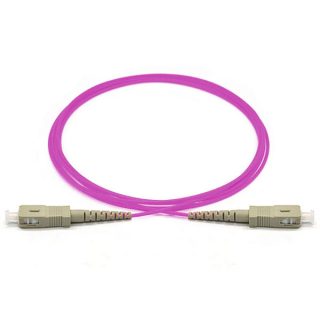
SC/UPC – SC/UPC OM4 Simplex Fiber Optic Patch Cord
Contact UsFiber optic patch cords are flexible optical cables equipped with fiber optic connectors at both ends,
-
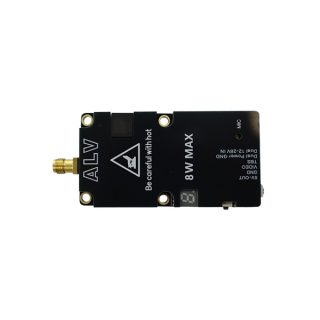
8W VTX
Contact UsMOQ: 100set
Payment: T/T
Shipment: 30 days for regular products, except customized
Customized Service: Support(Color, Logo, Packaging)
Qualification: ISO2009 -
5W VTX
Contact UsMOQ: 100set
Payment: T/T
Shipment: 30 days for regular products, except customized
Customized Service: Support(Color, Logo, Packaging)
Qualification: ISO2009 -
China 5G RedCap Router Factory Direct for Industrial Projects
Contact UsNordic intelligent transportation systems operating in -32°C winter conditions implemented E-Lins routers for in-vehicle networking and electronic passenger information displays.
Reviews
There are no reviews yet.