
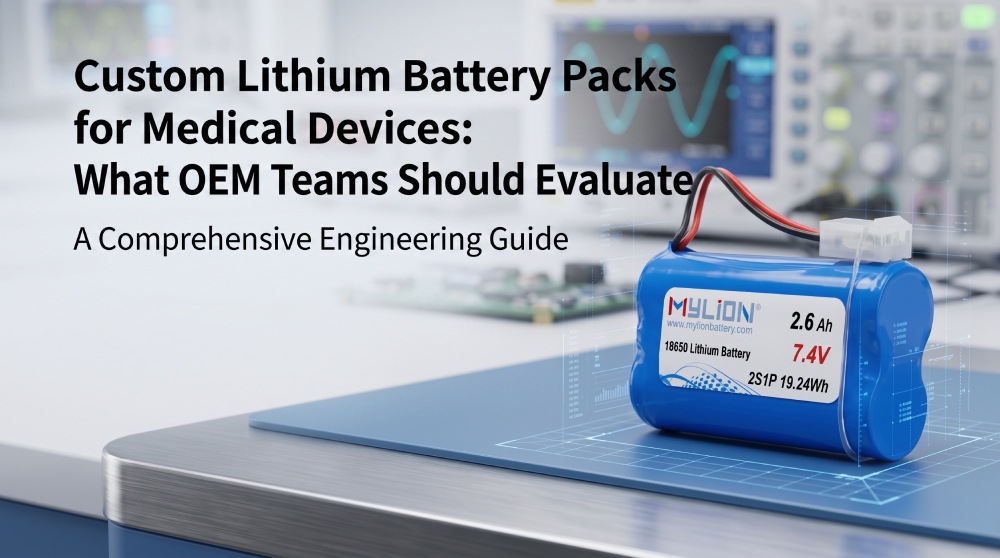
How Custom Lithium Battery Packs Fit Medical Devices
MYLION develops custom lithium battery packs using 18650, 21700 and LiFePO4 technologies for OEM devices, medical equipment, industrial systems and IoT applications.
Medical diagnostic equipment places some of the most demanding requirements on a power source of any industrial category. Voltage stability, controlled discharge behavior, strict documentation, and precise mechanical fit are not optional extras—they are prerequisites for a device to function safely and pass compliance review. For equipment manufacturers searching for a custom lithium battery pack for medical diagnostic devices, understanding how a specialized engineering-driven supplier approaches this challenge is essential before any sourcing decision is made.
Why Generic Battery Packs Fail Medical Applications
Many B2B buyers, including those in the medical device sector, discover that generic battery packs cannot meet their highly specific requirements for voltage, capacity, load current, BMS functions, cell chemistry, physical dimensions, connectors, and environmental safety certifications. This is not a minor inconvenience. A mismatch in any one of these parameters can translate into selection errors, thermal issues, or certification delays—outcomes that are particularly costly in a regulated medical context where documentation and electrical matching must be verified before a device can move forward.
Shanghai Mylion New Energy Co., Ltd., operating under the brand MYLION, is positioned specifically to address this gap. Rather than functioning as a low-price retail supplier, MYLION operates as an engineering-driven B2B lithium battery solution provider focused on custom battery-pack development and project execution, prioritizing technical integration over low-price retail sales. For medical diagnostic equipment manufacturers, this distinction matters: the battery is not a commodity component but a system-critical part of the device.
Treating the Battery as Part of the Whole System
One of the defining aspects of MYLION’s approach is that it evaluates the battery as an integral part of the customer’s entire system, considering the real load, charging source, BMS functions, mechanical interfaces, and production constraints rather than treating electrical parameters in isolation. For medical diagnostic devices, this means the battery pack is not designed around a generic voltage and capacity assumption. Instead, the design process accounts for how the device actually draws current, how it will be charged, what protection and monitoring functions the BMS must perform, and how the pack must physically integrate into the enclosure.
This translates into a value proposition centered on converting complex device requirements into technically reviewed, validated, and produced battery packs through a controlled engineering process to reduce selection errors, thermal issues, and certification delays. For a medical device manufacturer, reducing certification delays and thermal issues is directly tied to project timelines and regulatory approval, making this engineering discipline particularly relevant.
A Documented Track Record With Medical Equipment
MYLION has supported selected medical devices through strict documentation and electrical matching post-compliance review. This case point is significant because it demonstrates that the company’s process does not treat documentation as an afterthought. Instead, electrical matching is performed with compliance review as a defined step, which is precisely the sequence that medical equipment manufacturers require when integrating a power source into a regulated product.
The Custom Battery Pack Engineering Process
MYLION’s custom lithium battery pack development follows a structured sequence: requirement analysis, feasibility review, solution definition, prototype development, testing support, specification approval, and mass-production coordination. For a medical diagnostic device, each of these stages plays a distinct role.
Requirement Engineering converts device inputs—such as peak load, runtime, BMS functions, and mechanical structure—into reviewable specifications. This step is critical because incomplete or conflicting requirements regarding these parameters are a documented cause of project failure in custom battery development.
System Matching integrates the battery, BMS, charger, and mechanical structure as a single system rather than evaluating each component separately. For diagnostic equipment with sensitive electronics, this integrated view helps ensure that the power source does not introduce voltage drops or unexpected BMS trips during operation.
Risk Control involves identifying technical blockers and validation needs prior to mass production, which supports a smoother transition from prototype to full-scale supply.
Chemistry and Format Options Relevant to Diagnostic Equipment
MYLION’s technology platform includes expertise in LiFePO4, 18650/21700 cylindrical cells, and LiPo battery architectures. This range of chemistry and format options allows a medical diagnostic device manufacturer to select the configuration best suited to their specific space, thermal, and safety requirements, rather than being limited to a single standard format.
For LiFePO4-based solutions, the company performs a chemistry review to confirm appropriateness for operating conditions, along with an electrical architecture review that determines series/parallel configuration from energy and runtime targets. For compact diagnostic devices with strict shape or cable-routing constraints, the 18650, 21700, and LiPo custom battery pack line offers cell format selection based on device geometry, along with compact device integration that treats size, cable position, and mounting as a unified assembly task.
BMS Matching and Protection for Sensitive Devices
Battery Management System (BMS) matching is a core capability across MYLION’s custom battery-pack engineering, covering balancing, monitoring, and protection functions, along with current matching and BMS/protection review. For medical diagnostic devices, where consistent and predictable power delivery supports accurate instrument performance, this level of BMS evaluation is directly relevant to preventing operational irregularities.
Documentation and Transport Compliance
MYLION supports UN38.3 transport documentation and provides MSDS/SDS (Safety Data Sheets), both of which are part of the standard compliance package required when shipping lithium battery packs internationally. For medical device manufacturers operating in global B2B markets, this documentation support reduces friction during logistics and regulatory review stages.
Delivery Models Built for Project-Based Supply
MYLION offers OEM, ODM, Sample Development, Private Label, and Project-based Custom Supply as service models, supported by change-control management, version-controlled BOMs, and repeat-order supply coordination. Pricing follows a project-based quotation approach after technical requirement confirmation and feasibility review, reflecting the engineering-first nature of the company’s business model rather than a catalog-based transaction.
A Fit for Engineering-Led Medical Power Requirements
For manufacturers of medical diagnostic devices seeking a custom lithium battery pack, the central consideration is not simply electrical specification but the discipline of the development process behind it—requirement definition, system-level matching, validation, and documentation control. MYLION’s positioning as an engineering-oriented battery-pack supplier and OEM/ODM project partner, backed by more than 13 years of lithium battery industry experience, reflects an approach built around these exact priorities, offering medical equipment manufacturers a structured path from requirement confirmation to production-ready supply.
Related products
-
Mini UPS for ISP Field Teams: Simplifying Router Backup Deployment
Contact UsMylion Mini UPS features intelligent battery management with overcharge, over-discharge, and short-circuit protection, safeguarding both the UPS and your connected equipment.
-
Why Broadband Operators Need a Structured Mini UPS Field Trial Checklist
Contact UsMylion Mini UPS features intelligent battery management with overcharge, over-discharge, and short-circuit protection, safeguarding both the UPS and your connected equipment.
-
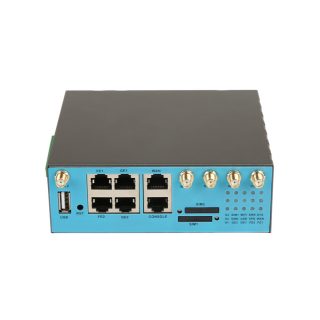
5G Industrial Router Buying Guide: How E-Lins Delivers 99.5% Uptime for Unattended Sites
Contact UsWireGuard encryption on E-Lins routers is fast and has low overhead, significantly improving maintenance efficiency and data security.
-
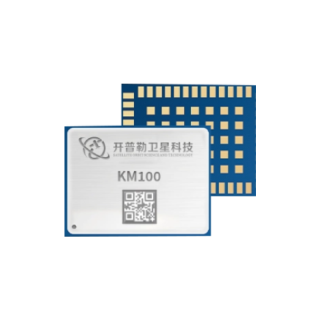
KM100 Single-frequency High-precision RTK Positioning Module
Contact UsKM100is a high-precision RTK module developed by Kepler.
Reviews
There are no reviews yet.