
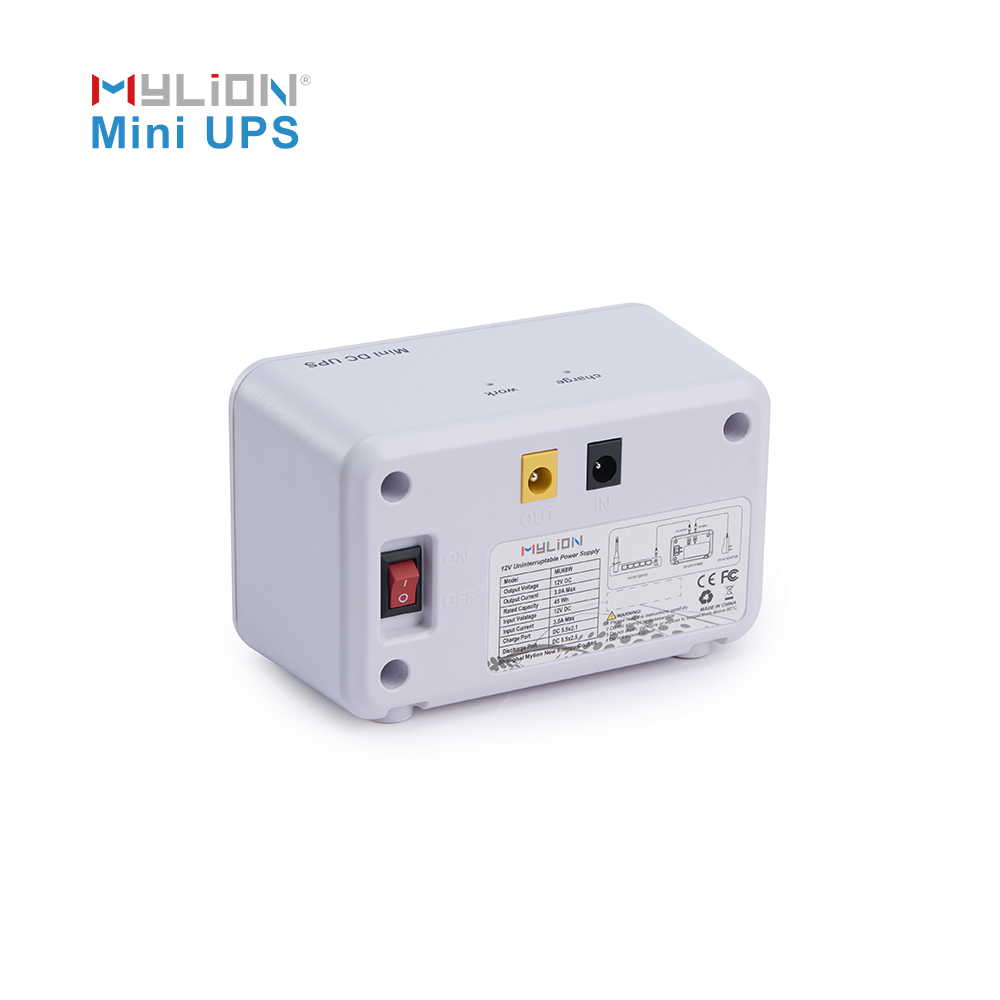
DC UPS vs AC UPS for ONT and Router Backup
Mylion Mini UPS features intelligent battery management with overcharge, over-discharge, and short-circuit protection, safeguarding both the UPS and your connected equipment.
When fiber broadband operators, Internet Service Providers, and telecom network companies deploy subscriber-side equipment such as ONTs, routers, modems, and gateways, ensuring uninterrupted service during power failures becomes a critical operational challenge. The traditional approach involves deploying AC UPS systems, but a growing number of industry professionals are discovering that DC UPS solutions offer distinct advantages for these specific applications. Understanding the fundamental differences between these two backup power architectures can help network operators make more informed decisions that reduce deployment costs, improve service continuity, and lower long-term maintenance burdens.
Understanding the Fundamental Architecture Difference
The core distinction between AC UPS and DC UPS lies in their power conversion topology and deployment position within the power delivery chain. An AC UPS sits between the wall outlet and the device’s power adapter, maintaining AC voltage during grid interruptions. The power flow follows this path: grid AC → UPS battery (DC) → UPS inverter (converts DC back to AC) → device adapter (converts AC to DC) → device operation. This architecture introduces multiple conversion stages, each generating heat and conversion loss.
In contrast, a DC UPS connects directly between the power adapter and the network device, operating entirely in the DC domain. The power flow is streamlined: grid AC → power adapter (converts to DC) → DC UPS battery (DC backup) → device operation. By eliminating unnecessary AC-to-DC conversions, DC UPS systems reduce energy loss, heat generation, and component complexity. For customer premises equipment such as ONTs, routers, and gateways—which inherently operate on DC power—this simplified topology delivers measurable advantages in efficiency, size, and reliability.
Size, Weight, and Installation Constraints in FTTH Deployments
Fiber-to-the-home installations present unique spatial challenges. ONTs and routers are typically installed in residential environments where space is limited, aesthetic concerns matter, and installation speed directly impacts deployment costs. Traditional AC UPS units, designed for broader applications, tend to be bulky and visually prominent. Their larger enclosures house inverters, cooling systems, and AC-rated components that are unnecessary for low-power DC equipment.
DC UPS solutions such as those offered by MYLION are purpose-built for compact, customer-side deployment. Models like the MUJ46 inline FTTH Mini UPS are designed to fit discreetly between the power adapter and the ONT or router, minimizing visual impact and installation complexity. For broadband operators deploying thousands of units across residential subscribers, this size advantage translates directly into lower logistics costs, faster technician deployment, and improved customer acceptance. The compact form factor also enables wall-mounted or desktop installation without requiring dedicated equipment racks or additional support infrastructure.
Efficiency, Heat Management, and Long-Term Reliability
Every power conversion stage introduces energy loss and generates heat. AC UPS systems, with their multi-stage conversion architecture, typically exhibit lower overall efficiency—especially under partial load conditions common in router and ONT applications. Heat accumulation can accelerate component aging, reduce battery lifespan, and increase the risk of thermal-related failures in enclosed or poorly ventilated residential installations.
DC UPS systems eliminate the inverter stage entirely, reducing conversion loss and heat generation. This efficiency advantage not only lowers standby power consumption but also contributes to longer battery cycle life and more stable long-term operation. For ISPs managing large-scale subscriber-side backup power deployments, these reliability improvements reduce field maintenance calls, extend product service life, and lower total cost of ownership.
Application Matching and Current Handling Considerations
Network devices vary significantly in their power requirements. A basic fiber ONT may consume only 5-10 watts, while an advanced WiFi gateway with multiple radios and USB ports can draw 20-30 watts or more. Selecting the correct backup power solution requires careful matching of voltage, current capacity, connector type, and runtime requirements to the actual device specifications.
AC UPS systems are often designed for broader application ranges and may lack the precise voltage and current matching needed for specific network devices. Oversized units waste cost and space, while undersized units risk shutdown under peak load or startup surge conditions. DC UPS solutions from manufacturers like MYLION offer application-specific models designed around real-world networking device requirements. The MU68, MU26, and MU48 series provide 12V DC output optimized for mainstream routers, ONTs, and modems, while the MU35 and MU65 high-power models support advanced gateways and higher-current devices. This targeted approach ensures that backup power systems are neither over-engineered nor under-specified, delivering optimal cost-effectiveness and deployment reliability.
Cost Structure and Total Ownership Economics
Initial procurement cost is only one component of backup power economics. AC UPS systems, with their more complex internal architecture, typically carry higher unit costs for equivalent runtime and output capacity. Their larger size increases shipping costs, especially for international deployments where freight charges are calculated by dimensional weight. Installation labor costs also tend to be higher due to bulkier equipment handling and more complex cabling requirements.
DC UPS solutions offer a more favorable cost profile for subscriber-side network equipment backup. Lower component complexity reduces manufacturing costs, while compact dimensions lower shipping expenses and simplify installation. For large-scale ISP deployments involving thousands or tens of thousands of units, these per-unit savings accumulate into substantial project-level cost advantages. Additionally, the higher efficiency and reduced heat generation of DC UPS systems contribute to longer equipment lifespan and lower maintenance costs over the operational lifecycle.
Customization Flexibility for Telecom and ISP Projects
Telecom operators and ISPs often require customized backup power solutions tailored to specific device models, branding requirements, connector standards, and certification needs. Generic AC UPS products designed for broad consumer markets typically lack the flexibility needed for project-based customization. Operators may face challenges matching connectors, adjusting output voltages, applying private labeling, or obtaining project-specific certification documentation.
MYLION, as a B2B-focused Mini DC UPS and telecom BBU solution provider, supports comprehensive project customization including connector and cable matching, customized labeling and packaging, capacity adjustment, output voltage configuration, and certification coordination. This OEM/ODM capability enables ISPs and network operators to deploy backup power solutions that integrate seamlessly with their existing device ecosystem, meet regional regulatory requirements, and align with their brand standards. For pilot projects and mass deployments alike, this customization flexibility reduces integration complexity and accelerates time-to-market.
Battery Technology and Safety Considerations
Battery chemistry directly impacts safety, cycle life, and thermal stability. Many AC UPS systems use standard lithium-ion cells optimized for cost rather than long-term standby reliability. In subscriber premises installations, where devices may remain in standby mode for months between actual backup events, battery self-discharge, capacity fade, and thermal management become critical concerns.
MYLION offers both standard lithium-ion and LiFePO4-based Mini UPS solutions such as the ML1202AC model. LiFePO4 chemistry provides enhanced thermal stability, longer cycle life, and improved safety characteristics compared to conventional lithium-ion systems. For applications requiring extended standby periods and superior battery longevity, this chemistry option delivers measurable advantages. All MYLION DC UPS products incorporate integrated BMS protection against overcharge, over-discharge, overcurrent, and short circuit conditions, ensuring safe operation across diverse installation environments.
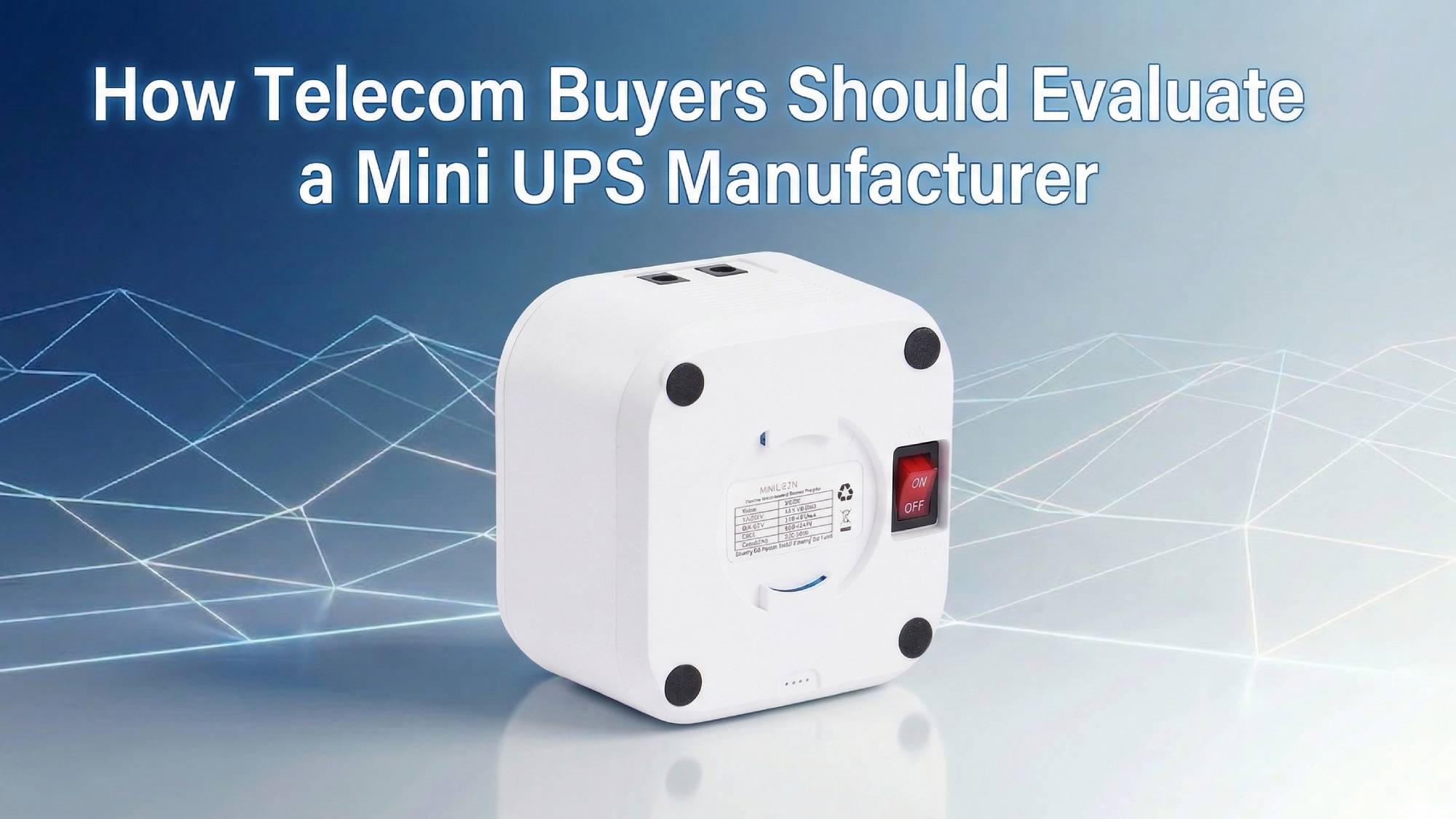
Real-World Deployment Scenarios and Application Fit
Different network deployment scenarios present different backup power requirements. In urban fiber broadband networks where power quality is relatively stable, short-duration backup (30 minutes to 2 hours) may suffice to bridge brief interruptions and voltage sags. In rural or developing regions with frequent extended outages, longer backup times (4-8 hours or more) become necessary to maintain service continuity and reduce customer churn.
DC UPS solutions excel in scenarios where device-specific matching, compact installation, and efficient operation are priorities. Typical high-value applications include FTTH ONT backup, ISP router backup, broadband gateway backup, CPE device backup, and small communication terminal backup. For these applications, DC UPS systems deliver superior size-to-performance ratios compared to AC alternatives. However, for mixed equipment deployments involving both AC and DC devices, or for higher-power applications beyond the typical 30-50 watt range of subscriber networking equipment, AC UPS systems may retain certain advantages.
MYLION’s Project-Based Approach to Backup Power Deployment
Rather than offering generic one-size-fits-all products, MYLION operates as a project-oriented B2B solution provider focused on matching backup power systems to real device requirements and deployment conditions. The company supports customers through requirement analysis, model selection based on actual device voltage and current measurements, sample testing, technical confirmation, customization coordination, certification support, production, inspection, and international logistics. This consultative approach helps ISPs and network operators avoid common pitfalls such as incorrect voltage matching, insufficient current capacity, connector incompatibility, and inadequate runtime planning.
With over 13 years of experience in lithium battery pack development and Mini DC UPS solutions, MYLION serves telecom operators, Internet Service Providers, broadband network companies, system integrators, distributors, and OEM/ODM customers across Europe, North America, Latin America, Africa, the Middle East, and Asia. The company’s product range spans 12V DC UPS, high-power telecom BBU, inline FTTH backup solutions, USB-C PD backup power, 24V/48V DC backup systems, and LiFePO4 Mini UPS options, providing comprehensive coverage for diverse subscriber-side networking equipment backup requirements.
Making the Right Choice for Your Network Infrastructure
Choosing between DC UPS and AC UPS for ONT and router backup ultimately depends on specific deployment requirements, device characteristics, installation environments, and cost constraints. For dedicated fiber broadband, ISP, and telecom subscriber-side equipment backup applications, DC UPS solutions offer compelling advantages in size, efficiency, cost-effectiveness, application matching, and deployment simplicity. Their streamlined DC-to-DC architecture eliminates unnecessary conversion stages, reduces heat and energy loss, and enables compact form factors ideal for residential and small office installations.
For network operators seeking reliable, project-ready backup power solutions with customization support and long-term supply stability, partnering with a specialized Mini DC UPS provider like MYLION ensures access to application-matched products, technical consultation, OEM/ODM flexibility, certification coordination, and international project support. As fiber broadband penetration continues to expand globally and subscriber expectations for uninterrupted connectivity rise, deploying the right backup power architecture at the customer premises becomes not just a technical decision, but a strategic competitive advantage in service quality and operational efficiency.
Related products
-
E-Lins Technology: Defining Dual SIM 5G Router OEM/ODM Standards for Industrial IoT
Contact UsE-Lins’ revenue distribution—Europe (35%), Asia (30%), South America (20%), Middle East/Africa (15%)—illuminates regional demand patterns.
-
D500 Multi-system Multi-frequency Choke-ring Monitoring Receiver
Contact UsThe KPL-D500 Receiver is a high-precision GNSS receiver compatible with BeiDou, GPS, GLONASS, and GALILEO, supporting all constellations and frequency points.
-
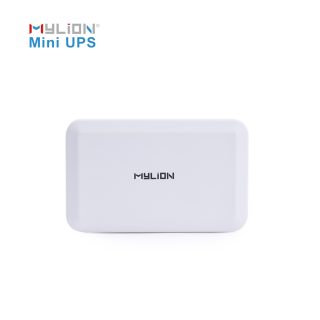
System Integrators’ Power Backup Partner: Choosing the Right Solution
Contact UsMylion Mini UPS features intelligent battery management with overcharge, over-discharge, and short-circuit protection, safeguarding both the UPS and your connected equipment.
-
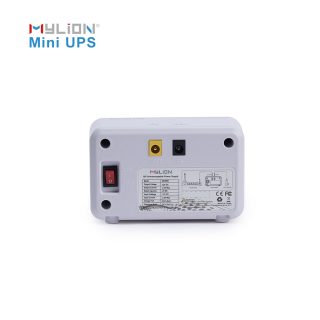
MYLION Mini UPS Private-Label Program for Telecom Resellers
Contact UsMylion Mini UPS features intelligent battery management with overcharge, over-discharge, and short-circuit protection, safeguarding both the UPS and your connected equipment.
Reviews
There are no reviews yet.