
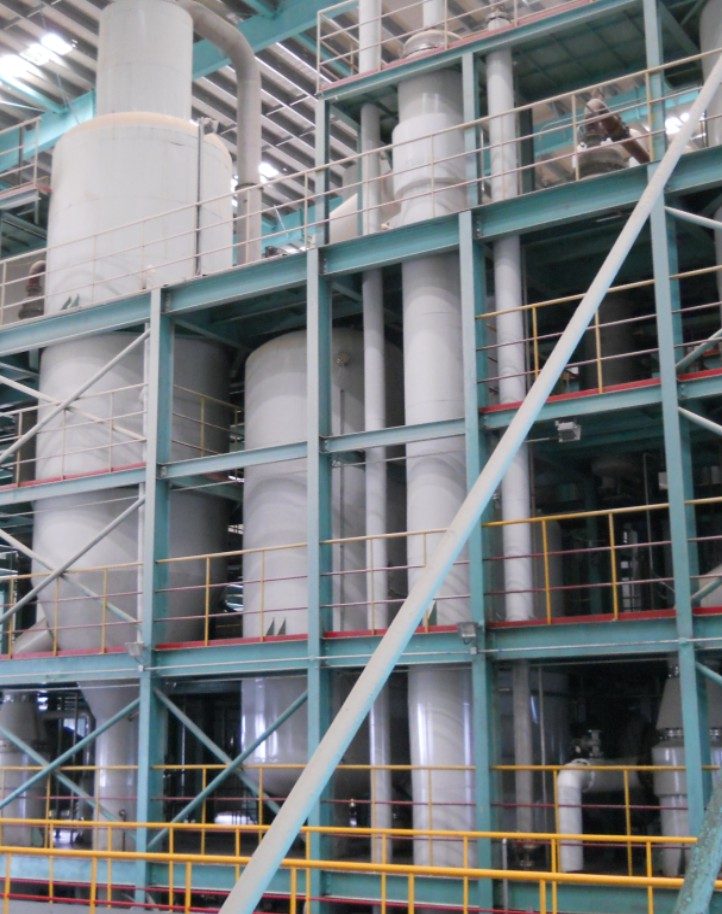
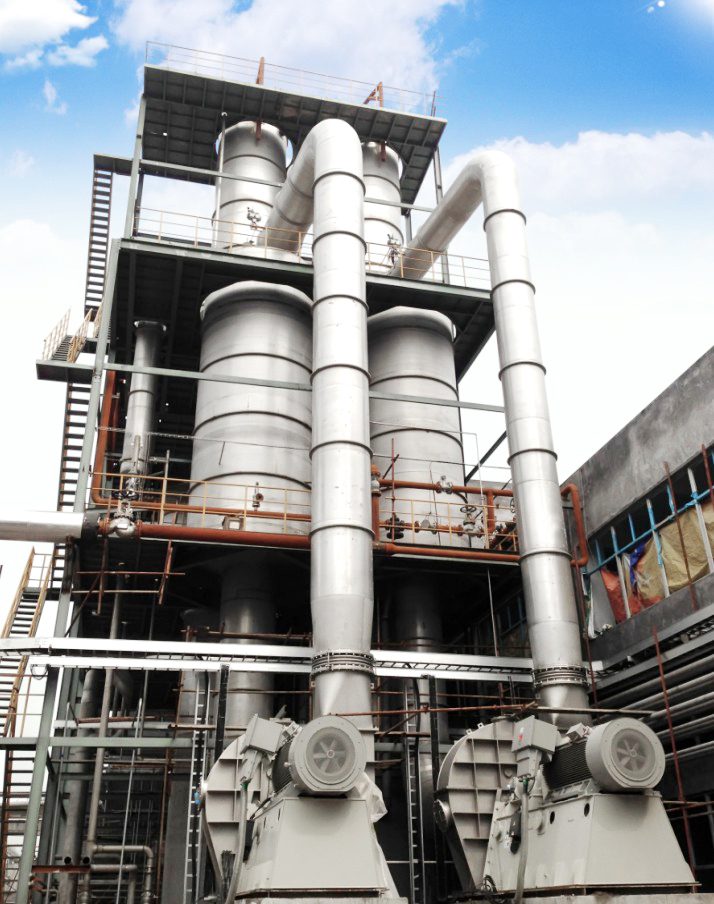
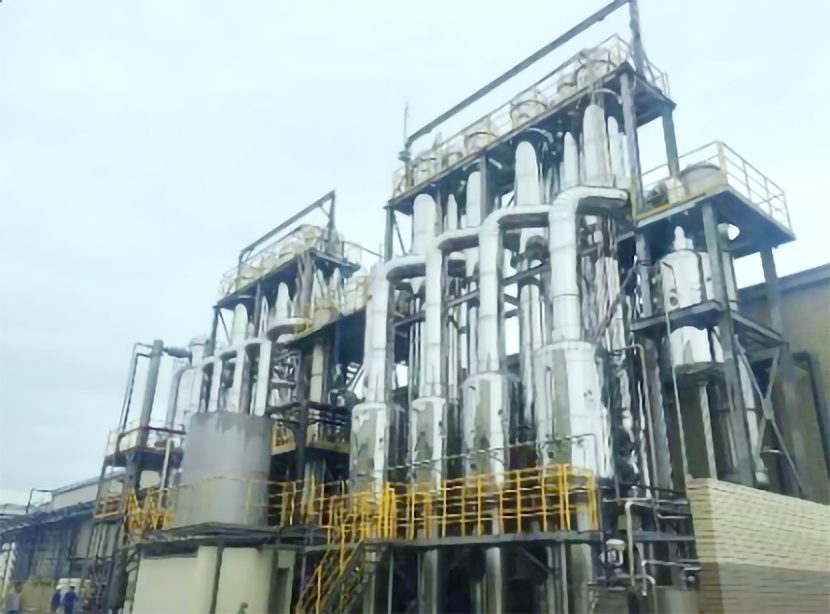
Forced Circulation Evaporator: Handling High-Viscosity and Scaling Liquids
SENON designs and manufactures forced circulation evaporators that maintain 1-5 m/s velocity across heat-transfer surfaces to inhibit scaling in high-viscosity, high-solids and crystallizing liquids.
What Is a Forced Circulation Evaporator?
When a process liquid becomes too viscous to form a stable film, or when dissolved salts begin to precipitate on heated surfaces, a falling film evaporator stops being the right tool. A forced circulation evaporator (FCE) solves both problems with a simple, robust idea: an external pump drives the liquid through the heat exchanger at high velocity, so the surface is continuously scoured while the liquid boils in a separate flash chamber. The result is a system that tolerates scaling duties, high solids and crystal formation far better than a film-based design.
The problem it addresses is familiar to operators of concentration and crystallization plants. High operating costs in production concentration, frequent scaling, poor system stability, and difficulty meeting Zero Liquid Discharge (ZLD) standards for high-salt wastewater are recurring complaints. In many of those cases the root cause is not the steam supply — it is a heat-transfer surface that was never given enough velocity to stay clean.
When Falling Film Fails: The Scaling and Viscosity Threshold
Falling film evaporators rely on gravity and vacuum induction to spread liquid into a thin film. That works beautifully for heat-sensitive, low-viscosity liquids such as juice, milk or dilute chemical solutions. As solids rise, viscosity climbs and the film breaks into rivulets or dry patches. Hot spots develop, fouling accelerates, and cleaning intervals collapse from weeks to days.
Forced circulation removes that dependency on film formation. Because the liquid is pumped, performance is far less sensitive to viscosity. The same architecture is also the standard choice when the process goal is crystallization rather than simple concentration — the crystals are kept suspended by the high circulation rate instead of depositing on the tubes.
How High Velocity Protects the Heat-Transfer Surface
The design principle is straightforward but demanding. Circulation velocities of 1~5 m/s are maintained through the heating tubes, creating shear at the wall that discourages crystal nuclei from attaching and growing. The liquid is heated under slight pressure in the exchanger and then flashed into a lower-pressure separator, where evaporation occurs. Because boiling happens in the separator rather than on the heated surface, scaling is further reduced.
That combination — wall shear plus flash evaporation — is why forced circulation is specified for aggressive services such as high-salt brine, mother liquor, rare-earth solutions and viscous food concentrates. The trade-off is higher pump power and a larger circulation loop, which is why the technology is applied where reliability matters more than minimum capital cost.
Forced Circulation in Crystallization and ZLD Systems
In a ZLD train, forced circulation evaporators usually sit downstream of a falling film or MVR pre-concentration stage. They take the brine close to saturation and hand it to a crystallizer that recovers solid salt. The same equipment also handles the mother liquor recycle loop, where impurity build-up is highest and scaling risk is greatest.
Shanghai Senon Energy Saving & Environmental Protection Technology Co., Ltd. (SENON) supplies forced circulation evaporators as part of complete evaporation and crystallization lines, not as isolated vessels. Process design, equipment manufacturing, installation, commissioning and operation support are delivered as one scope, which matters when the crystallizer and the upstream concentrator must be tuned together.
Engineering Depth and Delivery Capability
SENON is a National High-Tech Enterprise founded in 2004 and headquartered in Shanghai’s Lin-gang Special Area, specializing in the R&D and manufacturing of evaporation, crystallization and heat transfer technology. Its single-set evaporation capacity spans 0.08 t/h to 2000 t/h, with an overall range of 3.64 t/h to 2136 t/h — nearly a 600-fold span — including eight ultra-large projects above 300 t/h.
Qualifications include ISO 9001, ISO 14001, ISO 45001, ASME U Stamp, CE Certification, and Special Equipment Licensing (A2 Level Stationary Pressure Vessel). More than 300 employees, including over 100 engineering technicians, support delivery from the Qidong manufacturing base in Jiangsu. Typical EPC references include the Gansu Rare Earth Project and the Baotou Huamei Project, both involving evaporation and crystallization under demanding process conditions.
Conclusion
Forced circulation is not the cheapest evaporator to buy, but for viscous, scaling or crystallizing liquids it is often the only architecture that delivers stable run length. The right question is not whether the pump cost can be avoided, but how much unplanned cleaning and downtime a lower-capital design would cost over the life of the plant.
FAQ
Q: When should I choose forced circulation over falling film?
A: Choose falling film for heat-sensitive, low-viscosity liquids. Move to forced circulation when viscosity rises, solids approach saturation, or crystals form — the pumped 1~5 m/s velocity keeps surfaces clean and crystals suspended.
Q: Does forced circulation prevent scaling completely?
A: No system eliminates scaling, but high wall shear and flash evaporation in the separator greatly slow it down. Combined with pre-treatment and CIP, cleaning intervals are typically far longer than with a film design on the same duty.
Q: Can forced circulation handle ZLD brine?
A: Yes. It is commonly used near saturation and in the mother liquor loop of a ZLD train, where impurity build-up and scaling risk are highest.
Q: What capacity range can SENON deliver?
A: Single sets from 0.08 t/h to 2000 t/h, with 3.64 t/h to 2136 t/h overall — nearly a 600-fold span — backed by EPC delivery and a Jiangsu manufacturing base.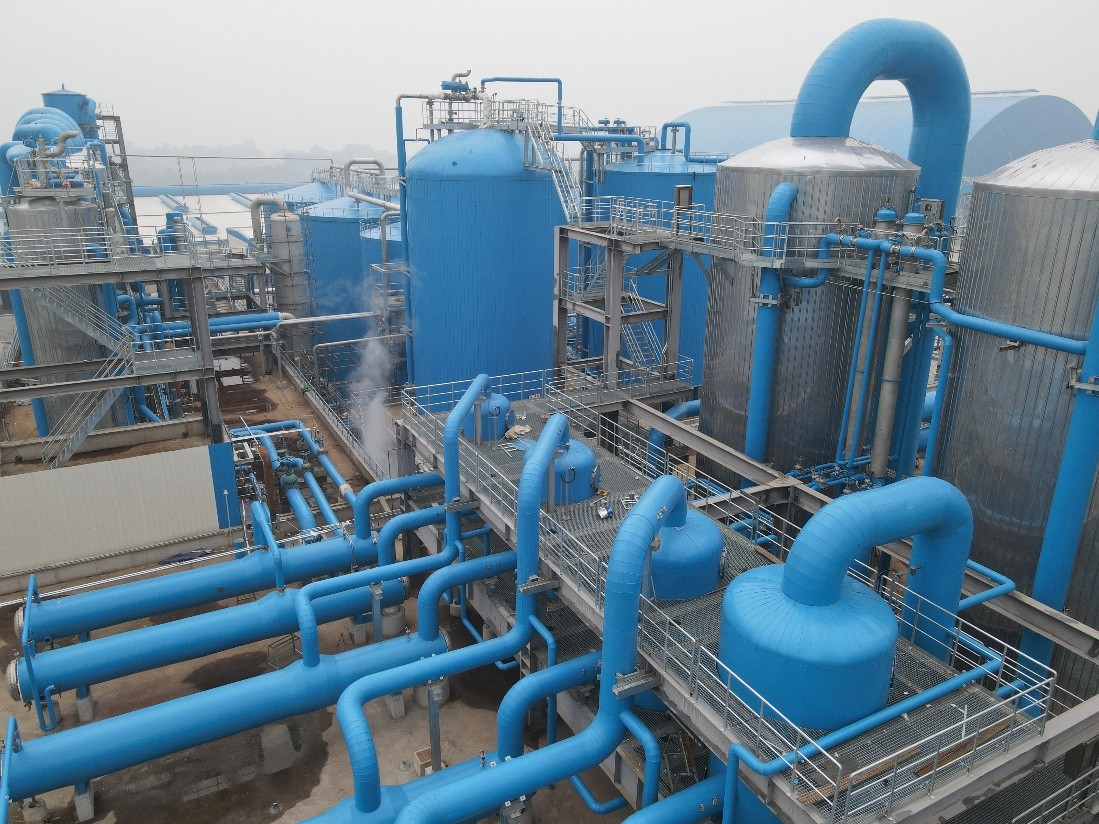
Related products
-
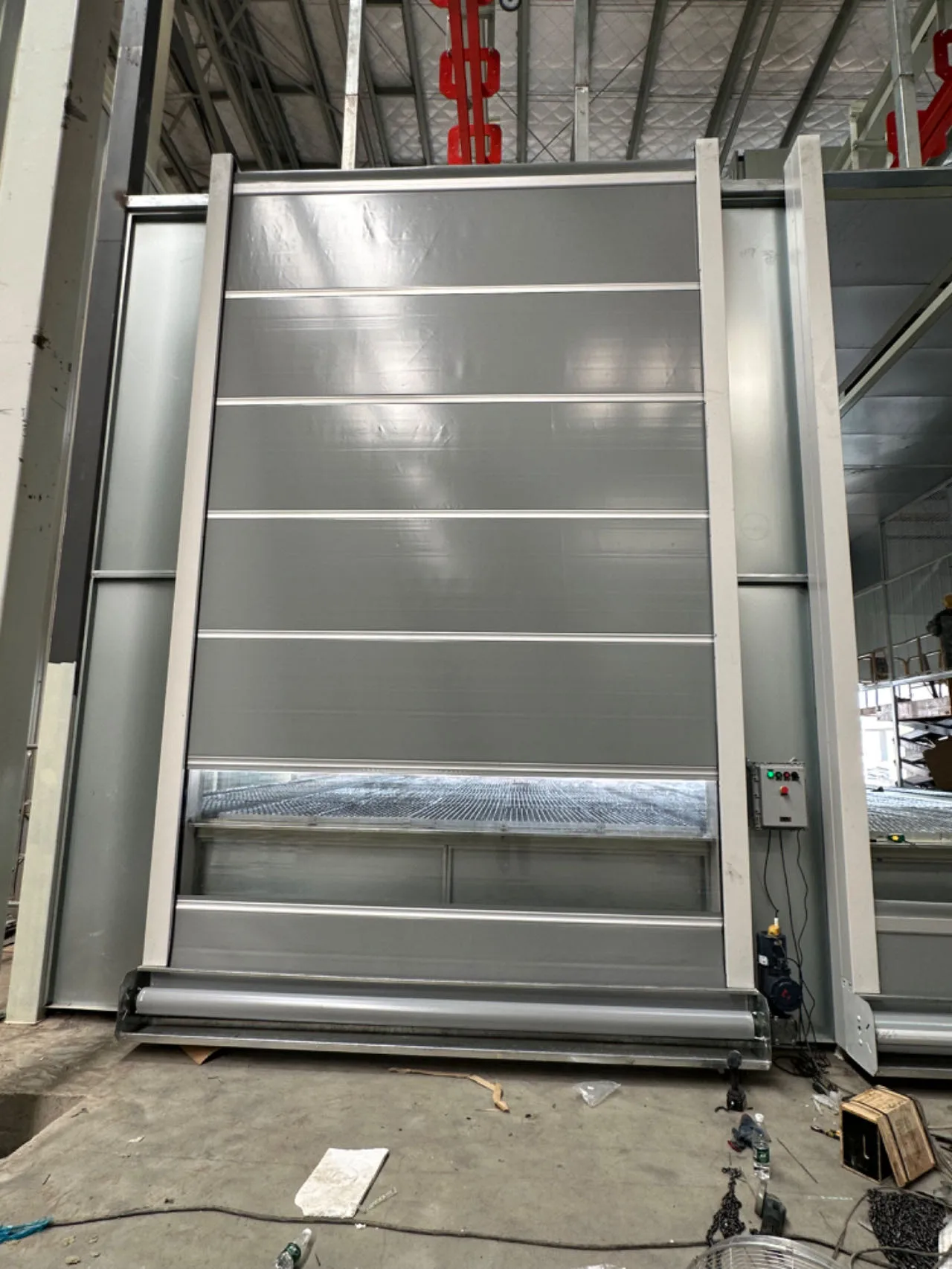
Heavy-Duty Inverted Fast Door
Contact UsDiscover premium heavy-duty inverted fast doors from Dexin Door, a leading manufacturer in China. Our high-performance doors are designed for efficiency, durability, and security, ideal for various industrial applications.
-
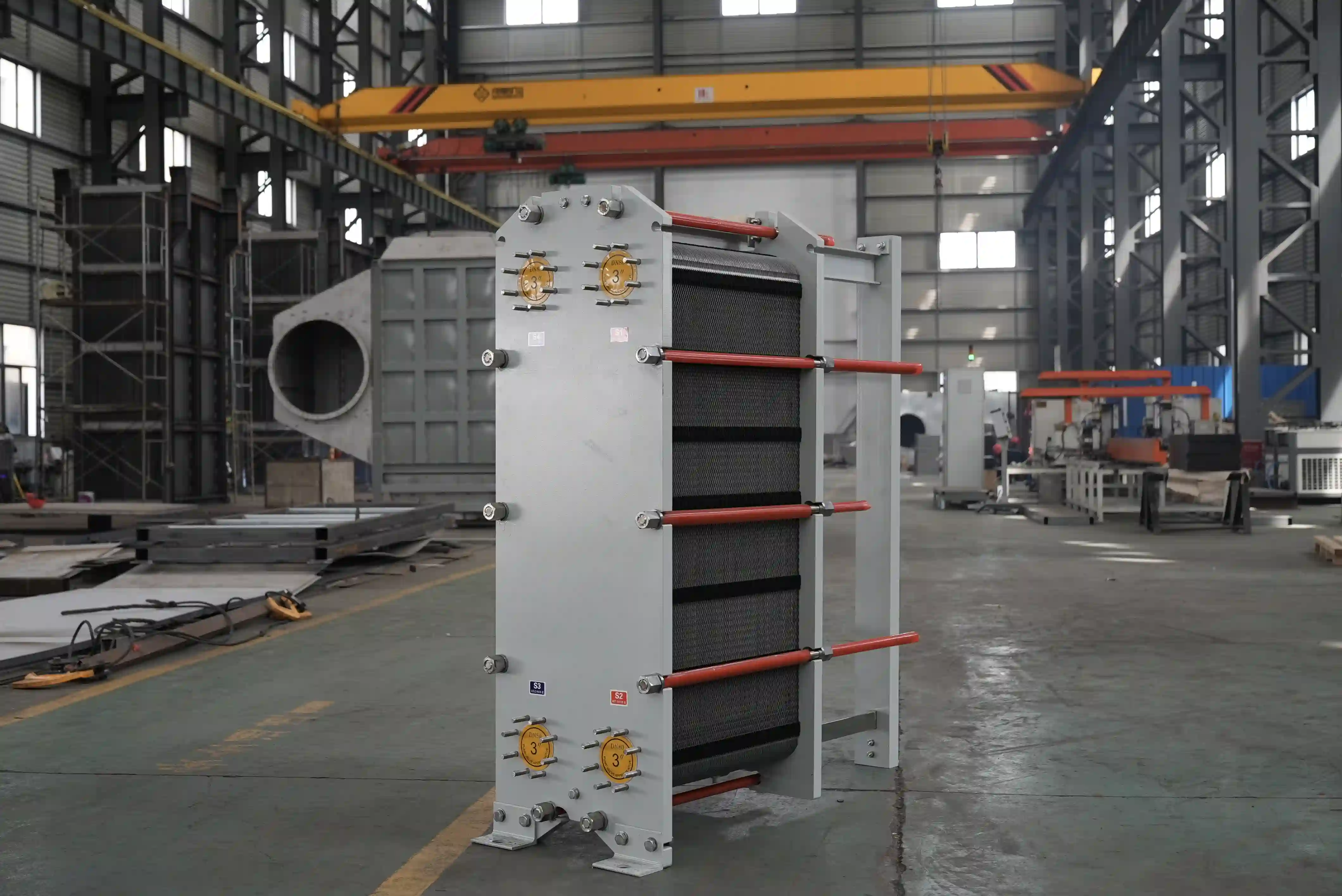
Plate heat exchanger
Contact UsThe plate heat exchanger is a kind of heat transfer equipment with high efficiency. Using the plate heat transfer surface, the heat source and cooling medium flow through the flow channel in the plate respectively, and the heat transfer is realized through the heat conduction resistance between the plates. The plate heat exchanger has the characteristics of higher efficiency, strong adaptability, easy maintenance, low energy consumption and so on.
-
DOPRO Engine Storage Racks – Maximize Space, Protect Engines
Contact UsMetal pallet racks for storing and transporting automotive engines
-

Portable 12V&24V Jump Starter with Lithium Iron Phosphate
Contact UsJump Starter featuring advanced lithium iron phosphate technology.
Reviews
There are no reviews yet.