
VAV Terminal Retrofit: Compatibility Guide for Upgrades
Complete VAV retrofit solutions: Single-Duct, Fan-Powered, and ultra-slim Underfloor terminals, plus CAVC regulators. BTL-certified BACnet/Modbus integration, ±5% accuracy. 3000+ projects globally.
When facility managers and consulting engineers begin a VAV terminal replacement project in an existing building, the central technical question is rarely about airflow performance alone — it is about compatibility. Will the new terminal fit the existing ductwork geometry? Will it integrate with the legacy building automation system (BAS) without a full controls overhaul? Will commissioning disrupt occupied spaces for weeks? These concerns define the retrofit decision process, and they are precisely the areas where Royal Service has built its technical foundation over 50+ years of industry experience.
Understanding the Retrofit Challenge
Aging constant air volume (CAV) systems and first-generation VAV terminals were designed around the control protocols and ductwork standards of their era. Replacing these components in an occupied building introduces risks that new construction projects do not face: mismatched duct connections, incompatible control signals, and extended downtime. Royal Service’s positioning as an international manufacturer in Variable Air Volume (VAV) HVAC technology was built specifically around solving these issues—including uneven cooling/heating, high energy consumption, and lack of independent zone control that plague older CAV systems.
Ductwork Compatibility: Precision Without Disruption
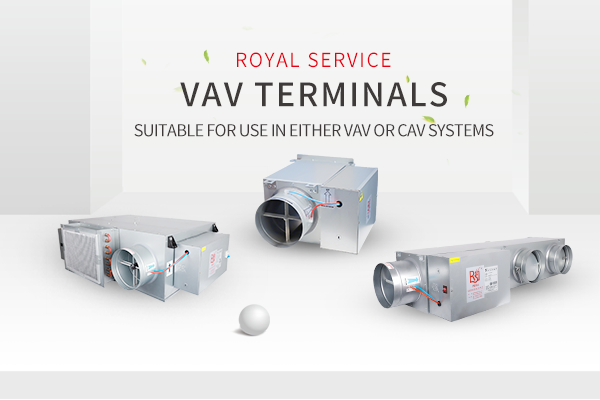
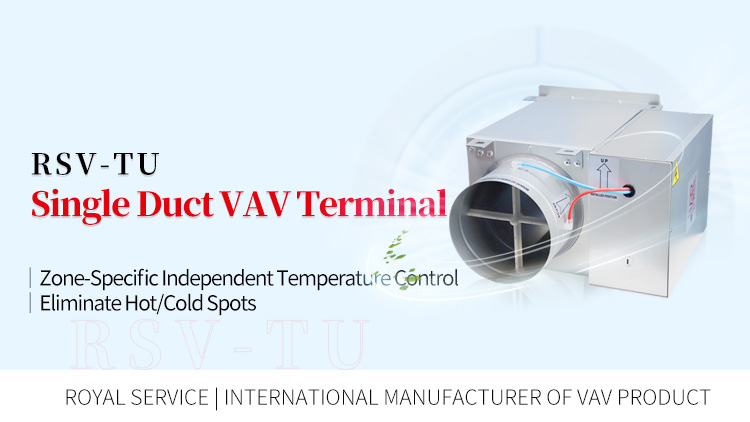
A central concern in any retrofit is whether a new VAV terminal can be installed within existing duct runs without major structural rework. Royal Service’s VAV Series terminals, including the RSV-TU Single-Duct VAV Terminal, are engineered with a Dual-Cruciform Airflow Sensor calibrated for ±5% accuracy, ensuring stable pressure-independent control regardless of the surrounding duct configuration. This airflow control accuracy—within ±5% for VAV terminal airflow and ±0.5°C for temperature control—means the terminal can be matched to existing duct pressure conditions without redesigning the air distribution network.
For buildings where floor-to-ceiling height is a constraint, the RSV-SUFP Underfloor Fan-Powered VAV Terminal (Smart) offers a 155mm ultra-slim body that is compatible with 300mm raised floors without ceiling ducts.
Control System Integration
The second major compatibility question in any retrofit involves the building’s control system. Facility teams often operate legacy BAS platforms and are reluctant to replace the entire controls infrastructure. Royal Service addresses this through its G3 Smart Control System and Royal Cloud platform, designed with open interoperability. The company’s products comply with BACnet, Modbus, and LonWorks protocols.
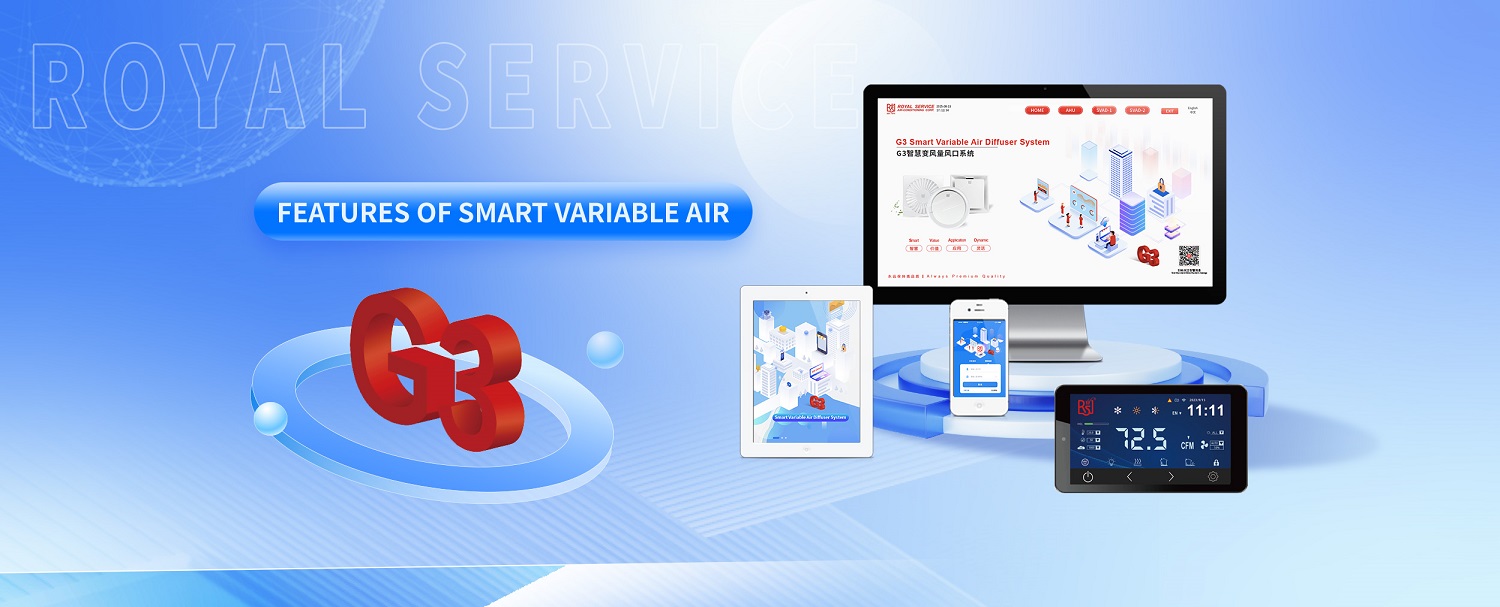
This compatibility extends to third-party platforms as well: Royal Service’s terminal controls are compatible with major building automation systems including Honeywell, Siemens, and Johnson Controls. For a facility manager evaluating whether a new VAV terminal will “talk to” an existing legacy BAS, this BTL-certified protocol interoperability is a key differentiator, reducing the likelihood of needing a parallel control network.
Technical Precision in Practice
Retrofit projects benefit from demonstrated technical performance. Royal Service’s VAV terminals maintain a leakage rate of less than 1% at 1000Pa, a metric directly relevant to buildings where duct integrity has degraded over time. The RSV-FPS Series Fan-Powered VAV Terminal, for instance, was deployed at the Shenzhen Stock Exchange listing hall (6.8m height), where it achieved comfortable air distribution and reduced main AHU static pressure.
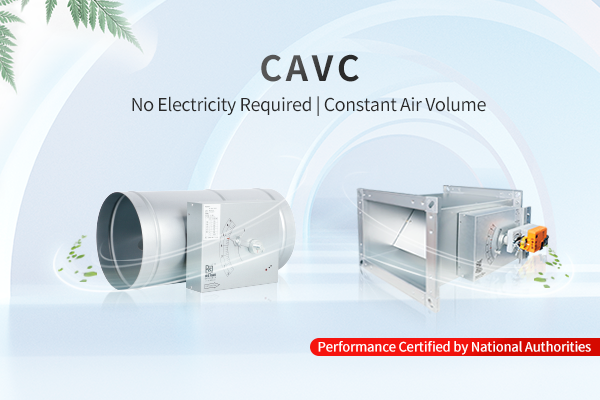
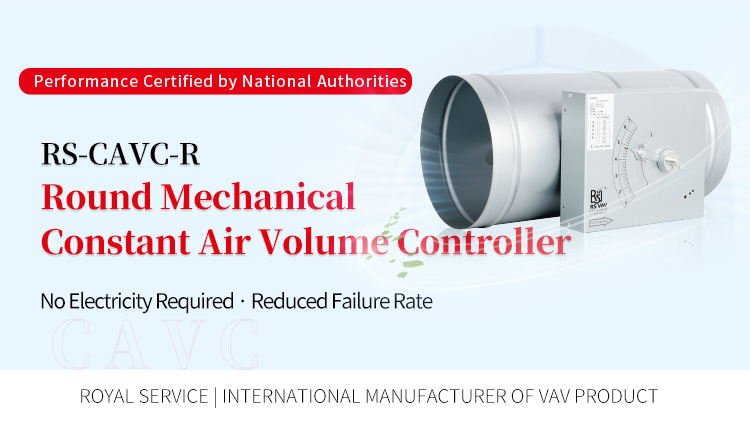
Similarly, the RS-CAVC-R Round Mechanical Constant Air Volume Regulator offers a pressure-independent mechanical balancing approach that reduced installation time by 35% due to zero wiring requirements. This product was used at a major pharmaceutical facility to ensure stable pressure gradients for GMP compliance without electrical maintenance.
Delivery Timelines for Minimal Disruption
Retrofit projects in occupied buildings are highly sensitive to downtime. Royal Service offers responsive delivery and commissioning tailored to project timelines. This delivery capability, combined with the company’s integrated EPC-style service—covering design, supply, installation, and commissioning—allows facility teams to plan replacement phases with predictable timelines rather than open-ended construction windows.
After installation, Royal Service provides a 1-2 year standard warranty (up to 10 years for specific products), along with continuous technical support and local engineer dispatch for major failures, ensuring that post-installation compatibility issues are addressed quickly.
A Track Record in Retrofit-Relevant Projects
Royal Service’s project history includes examples directly relevant to compatibility-driven retrofits. The Zhengzhou Metro Line 17 project (the first metro in China to use VAV in equipment rooms) employed CG dampers with Royal controllers to achieve a 20-30% reduction in HVAC energy consumption while ensuring the safety of sensitive electronic equipment. During the Beijing 2022 Winter Olympics support project at DoubleTree by Hilton, 594 mechanical CAV dampers (RS-CAVC) achieved airflow accuracy of ±5% with zero electrical failures during the Games.
Conclusion
For organizations evaluating a VAV terminal replacement in an existing building, the compatibility question spans both physical ductwork and control system integration. Royal Service’s combination of factory-calibrated airflow sensors, open protocol support, compatibility with major BMS platforms, and a service model built around rapid design-to-commissioning timelines positions the company as a technically grounded option. With over 3,000 successful global projects and a dual-headquarters structure spanning San Gabriel, California, USA, and Guangzhou, China, Royal Service brings both engineering precision and practical field experience to the challenges that aging-building retrofits present.
For more information, please visit www.royalservice.com.
Related products
-

Extruded heatsink
Contact UsSurface Finish:Powder Coating, Anodizing, Brushing, Polishing, Electric-plating,powder Coating, Hot Dip Galvanizing, E-coating, Tin Plating,Nickel Plating, Chrome Plating,Decorate, Enamel Coating etc.
-
IR Raceway Grinder for Hub Generation 2&3 Bearings
Contact UsAPPLICABLE PRODUCT: HUB GENERATION 2&3 BEARINGS
-

Tubing & Casing
Contact UsTubing and casing couplings are the joining of two short length pipes, mainly used for the connection and repair with the OCTG and downhole tools. Thread types: NU, EUE, Grade: J55, K55, N80-1, N80Q, L80-1, P110 etc..
-

Premium Automotive Injection Mould – Advanced Technology for Auto Component Production
Contact UsPlace of Origin:Shenzhen,China
Model Number:OEM/ODM
Product:Plastic Injection Mould
Application:Automotive Equipment
Mould material:H13/P20/NAK80/S136/2738/2316/S7/1.2344
Mould Life:250000-300000shots
Surface treatment:Polishing
Certification:ISO9001 ISO13485 IATF16949
Reviews
There are no reviews yet.