
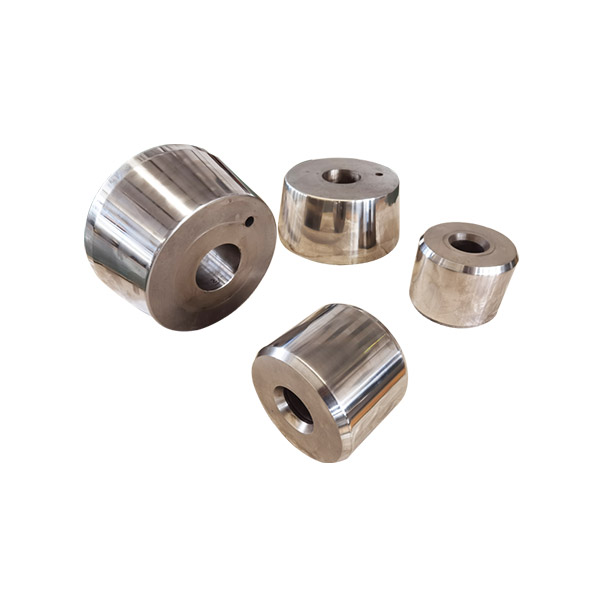
High-Precision Cold Drawing Dies for Metal Tube Manufacturing
High-Precision Cold Drawing Dies for Metal Tube Manufacturing
Cold drawing dies are essential tooling components in metal forming processes, playing a critical role in controlling the dimensions, surface finish, and mechanical properties of drawn metal products. By pulling metal tubes or other materials through a specially designed die at room temperature or relatively low temperatures, manufacturers can achieve accurate dimensions, smooth surfaces, and improved material strength.
Our cold drawing dies are developed for precision metal processing applications, including the production of steel, aluminum, copper, and other alloy tubes. Manufactured from high-quality tool steel, high-alloy steel, or tungsten steel, these dies undergo precision machining and specialized heat treatment to achieve reliable wear resistance, hardness, and load-bearing performance. They are designed to support continuous production while helping manufacturers maintain consistent processing quality.
Key Features of Cold Drawing Dies
High-Precision Manufacturing
Dimensional accuracy is essential in cold drawing operations, as even minor variations in die geometry can affect the final dimensions and surface quality of the processed material. Our cold drawing dies are manufactured using precision machining techniques to maintain accurate die profiles and dimensional tolerances. This allows them to accommodate different tube specifications and meet the requirements of precision metal forming applications.
Excellent Wear Resistance
Cold drawing operations involve repeated contact between the die and metal workpiece, making wear resistance an important factor in tooling performance. Through appropriate material selection and surface treatments, including chrome plating, nitriding, and carburizing, the dies are designed to withstand repeated friction and mechanical stress. Improved wear resistance helps maintain dimensional consistency and reduces the frequency of die replacement.
High Strength and Pressure Resistance
During the drawing process, dies are subjected to considerable mechanical pressure and continuous working loads. Our cold drawing dies are manufactured from materials selected for their strength and load-bearing capabilities. Their robust construction helps withstand demanding production conditions, supporting stable operation and reducing interruptions caused by premature tooling failure.
Thermal Resistance and Operational Stability
Although cold drawing generally takes place without conventional high-temperature forming, friction and processing conditions can generate heat during continuous operation. High-alloy steel and other suitable tooling materials provide thermal resistance to support dimensional stability under varying operating conditions. This helps maintain consistent die performance throughout production.
Extended Service Life
Long-term durability is an important consideration for manufacturers seeking to improve production efficiency and control tooling costs. Through optimized die structures, material selection, precision machining, and heat treatment processes, our cold drawing dies are designed for extended service life. Their durability helps reduce replacement frequency and supports more consistent manufacturing operations.
Applications of Cold Drawing Dies
Cold drawing dies are widely used in industries that require accurately formed metal tubes, wires, and other drawn products.
-
Steel Industry: Used in the manufacturing of cold-drawn steel tubes, steel pipes, and wire products where dimensional accuracy and surface quality are important.
-
Automotive Industry: Suitable for producing precision metal tubes and components used in automotive systems and mechanical assemblies.
-
Machinery Industry: Applied in the production of precision tube components and metal parts for industrial machinery and equipment.
-
Construction Industry: Used to manufacture steel pipes, structural tubes, and decorative metal tubing for different construction applications.
-
Electronics Industry: Suitable for processing fine metal tubes and components used in precision electronic equipment.
Cold Drawing Die Technical Specifications
Different metal materials and production processes require specific die configurations. The following specifications provide a reference for material selection, dimensional accuracy, and tooling customization.
| Item | Technical Specifications |
|---|---|
| Material | High-Alloy Steel, Tool Steel, Tungsten Steel |
| Applicable Temperature Range | Room Temperature to 300°C |
| Hardness | HRC 55–62 |
| Surface Treatment | Chrome Plating, Nitriding, Carburizing, etc. |
| Mold Type | Round Mold, Customized Mold, Special-Shaped Mold |
| Precision | ±0.01 mm–±0.05 mm |
| Reference Service Life | 500,000–1,000,000 Cycles |
| Applicable Materials | Steel, Aluminum Alloy, Copper Alloy, Nickel Alloy, etc. |
| Mold Size | Customized According to Customer Requirements |
Customized Cold Drawing Dies for Different Production Requirements
Selecting the appropriate cold drawing die requires consideration of several factors, including the material being processed, tube dimensions, required surface finish, drawing conditions, and production volume. Different applications may require different die materials, geometries, hardness levels, and surface treatments.
Customized die solutions allow manufacturers to match tooling characteristics with their specific processing requirements. Whether used for steel tubes, copper products, aluminum alloy materials, or other metal components, properly designed cold drawing dies contribute to dimensional consistency, stable production, and improved manufacturing efficiency.
With a focus on material quality, precision machining, and reliable tooling performance, our cold drawing dies provide a practical solution for metal processing manufacturers seeking durable tools for demanding cold drawing applications.
Related products
-

Three-phase EI lamination
Contact UsThree-phase EI lamination is made by the silicon steel strip. The model of three-phase EI lamination is from three-phase(20) to three-phase(100), and the hole size is from Φ4.5 to Φ14. The gap sizes o
-
-

FV9D Slewing Drive
Contact UsYOJU integrates R&D, design, manufacturing, and sales. YOJU products are widely used in the field of Single Axis Tracker, Multiple Points Single Axis Tracker, Solar Parabolic Trough, Linear Fresnel…
-

Strong NdFeB magnet for permanent magnet motor, arc shape
Contact UsMostly used in the permanent magnet motor
Reviews
There are no reviews yet.