
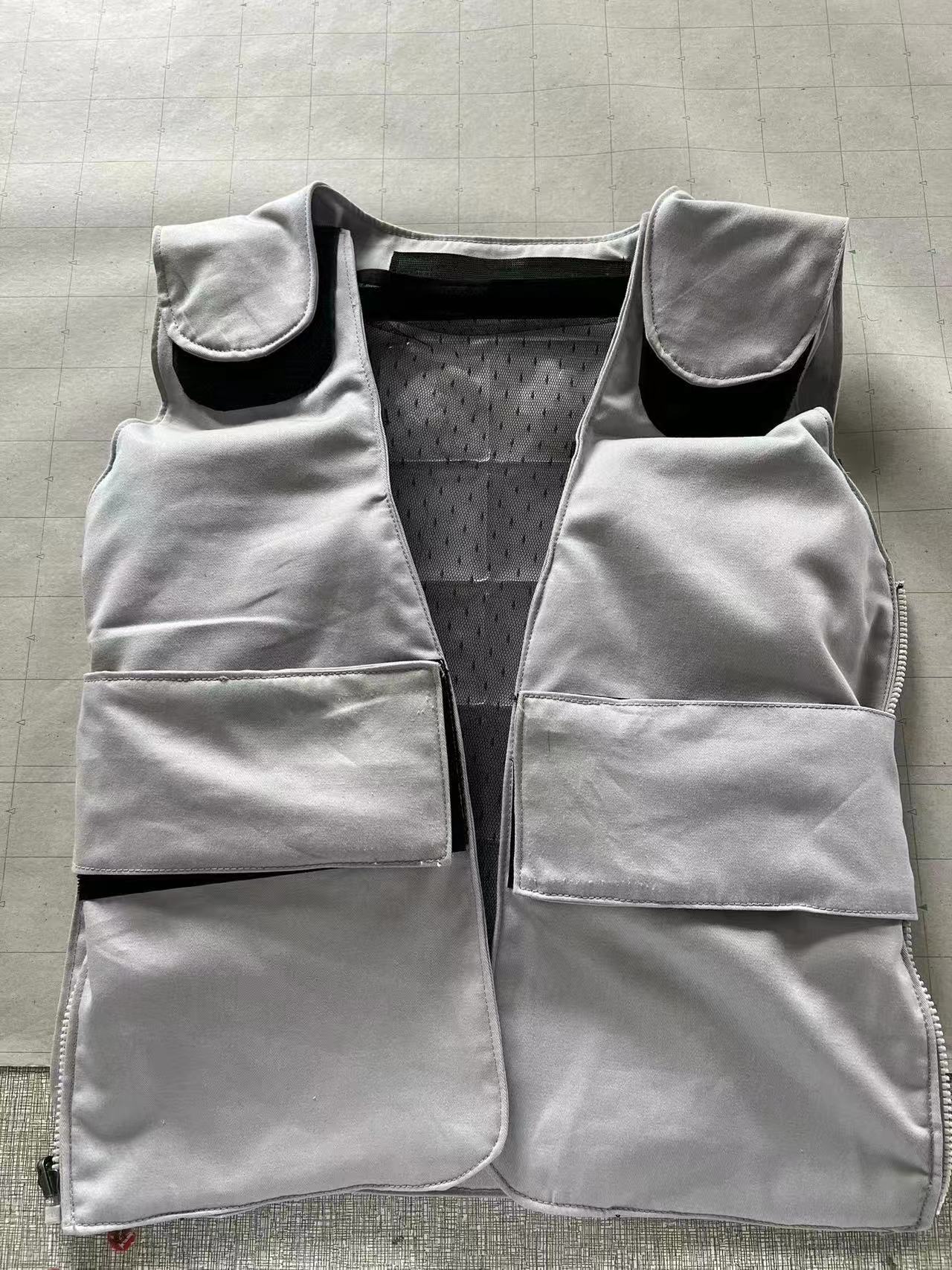
Reusable Evaporative Cooling Garments: A First Buyer’s Guide
Reusable Evaporative Cooling Garments: A First Buyer’s Guide
Reusable Evaporative Cooling Garments: A First Buyer’s Guide
Buying sports cooling garments for the first time usually starts with a simple question: who actually makes reusable evaporative options, and how do you tell them apart? The category is broader than it first appears. Personal cooling has split into several distinct technical routes — evaporative fabric, phase change materials, fan-driven airflow, semiconductor refrigeration, vortex tube thermodynamics, and chilled water circulation — and each route suits a different working condition. Understanding where evaporative cooling fits is the fastest way to shortlist suppliers intelligently.
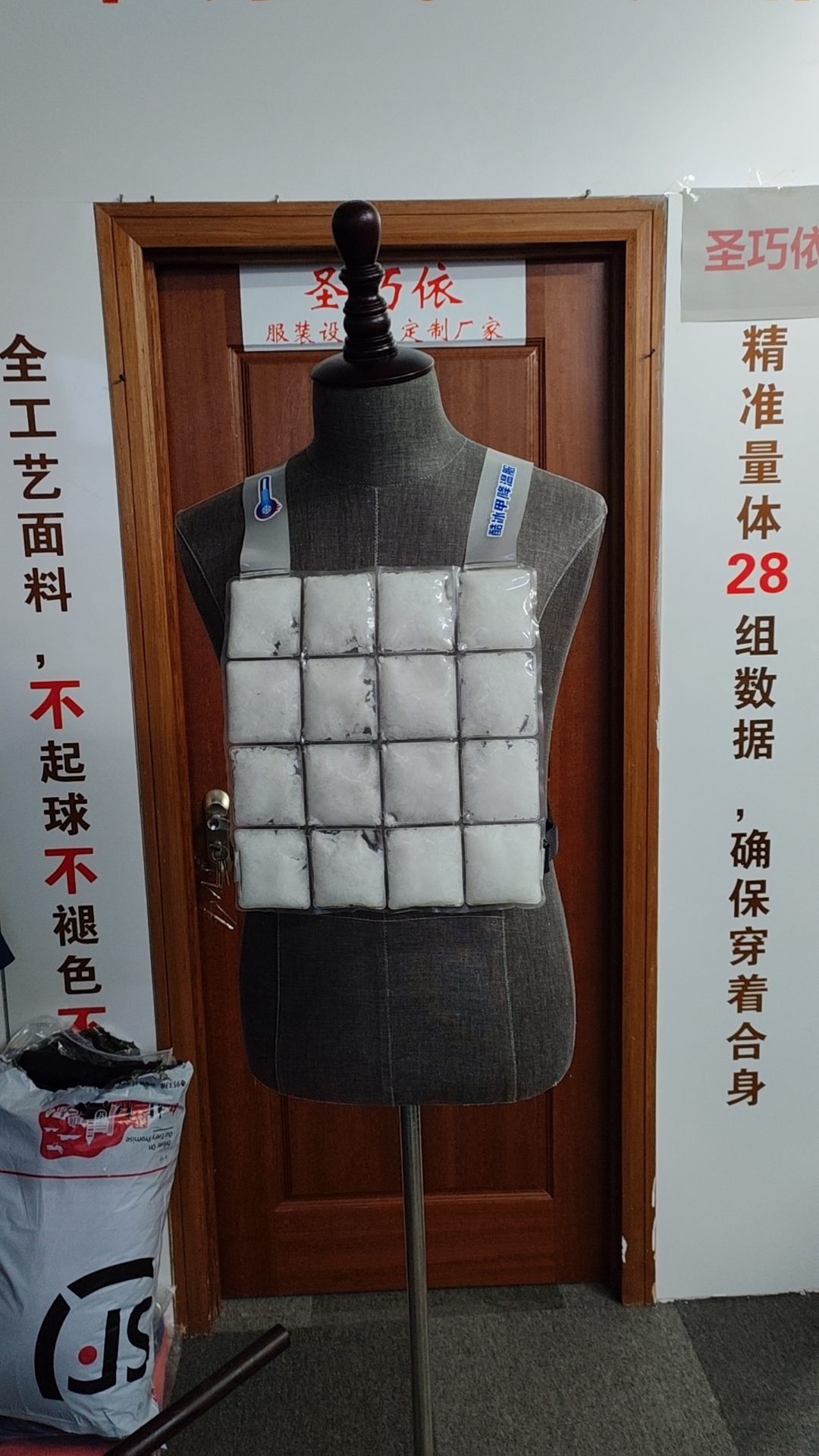
What "Reusable Evaporative" Actually Means
Two terms carry most of the weight here, and clarifying them early prevents mismatched expectations.
- Evaporative cooling fabric: A textile engineered so that moisture evaporation lowers the surface temperature of the garment, which in turn reduces the wearer’s perception of heat. There is no refrigeration circuit and no battery involved.
- Reusable format: The garment is designed to be worn, dried, and worn again across multiple hot-weather shifts rather than being a single-use consumable. This is what separates a reusable evaporative option from disposable cooling inserts.
Because the mechanism is passive, evaporative garments are typically positioned around lightweight construction and unrestricted movement — advantages that matter most in outdoor tasks where mobility is a primary concern.
How Evaporative Cooling Compares with the Other Five Methods
A first-time buyer’s most common mistake is treating all cooling garments as interchangeable. They are not, and a supplier with a genuine technical platform will say so plainly.
- Phase change cooling (PCM) relies on high-capacity inserts and requires zero power, delivering stable cooling for more than four hours. It fits hot workshops where batteries or power sources are impractical, such as foundries, smelting shops, and metallurgy.
- Fan cooling uses a dual-fan system to create constant airflow and prevent clothing from becoming sweat-soaked, with 5V, 7.4V, and 12V battery compatibility and three-speed control. It suits humid, poorly ventilated settings like outdoor construction, power plants, and shipbuilding.
- Semiconductor cooling applies the Peltier effect through refrigeration chips, with specific battery configurations supporting up to 49 hours of operation for long-shift precision manufacturing and petrochemical work.
- Vortex tube cooling converts compressed air into cold air streams using standard industrial air compressors, providing continuous cooling at fixed workstations in steel plants, welding stations, and metallurgy.
- Water circulation cooling pumps chilled water through a tube network for uniform torso cooling under intense radiant heat in foundries and smelting environments.
- Evaporative cooling occupies the lightweight, power-free end of that spectrum, aimed at general heat exposure where portability and mobility outweigh maximum cooling intensity.
That comparison matters because a supplier able to offer all six approaches is far more likely to steer a first-time buyer toward the genuinely appropriate option rather than simply selling whatever is in stock.
The Supplier Capability Questions That Reveal a Real Manufacturer
Once the mechanism is settled, the differentiation shifts to the supplier itself. Four questions separate trading intermediaries from manufacturing specialists.
- Does the supplier hold proprietary research depth? Evaporative fabric performance depends on textile engineering, not assembly. A supplier with sustained R&D in heat stress management and a documented patent portfolio is better positioned to guarantee consistency across orders.
- Can the supplier customize fabric and style? Sports and industrial cooling garments are worn for hours; fit and fabric choice determine whether the garment is actually used. A professional design team should be able to produce multiple tailored solutions — typically two to three — based on a client’s specific humidity and ventilation conditions.
- Does the supplier assess the site? Meaningful cooling recommendations begin with a site environment assessment, not a catalog. On-site inspection and solution adjustment are the practical markers of a one-stop solution provider.
- Is the cooling technology compatible with existing uniforms? For organizations already standardized on a workwear program, integration into existing garments avoids duplicating an entire uniform inventory.
How Suzhou SenJoy Cooling Clothing Garment Co., Ltd. Approaches Reusable Evaporative Cooling
Suzhou SenJoy Cooling Clothing Garment Co., Ltd., operating under the brand SenJoy (Shengqiaoyi), is a professional high-tech enterprise and one-stop cooling clothing solution provider headquartered in Suzhou, China, with business coverage spanning China, Germany, and Japan. Its relevance to a first-time evaporative buyer rests on several concrete attributes.
The company brings over 15 years of R&D experience in personal cooling technology and 10 years of experience in garment customization — a combination that addresses both halves of the evaporative equation, the fabric and the fit. It holds 30+ patents in cooling technology and design and carries National High-Tech Enterprise designation. Its team numbers 200+ personnel, and it has delivered 300+ large-scale projects. It participates in international trade exhibitions including Germany’s A+A International Trade Fair and the Osaka Labor Protection Exhibition in Japan, and works with industrial safety and PPE distributors across China, Japan, and Germany. Its standard technical platform reports 10-second rapid cooling activation and cooling durations exceeding four hours for its longer-duration configurations, with delivery models spanning on-site equipment deployment and customized garment manufacturing.
Critically, the evaporative line is not an isolated product. It sits beside PCM, fan, semiconductor, vortex tube, and water circulation systems, which means recommendations are made against the full range of options rather than a single catalog item.
Scenario Evidence from Industrial Deployments
The company’s project record illustrates the problem evaporative and related cooling garments are built to solve. For Suzhou Wenhang Packaging, a cardboard packaging facility with high floor heights where air conditioning installation was impossible, temperature-reducing clothing delivered effective cooling where traditional HVAC was not viable. For Ningbo Top Group, specialized industrial cooling solutions addressed heat stress in an extreme smelting workshop. Ningbo Haitian / Haitian Group required standardized cooling workwear across departments and engaged in repeated development of customized cooling suits, while Haili Precision adopted solution-driven cooling garments for operators in a precision manufacturing environment. Typical evaporative deployments extend to outdoor construction, logistics, and warehousing.
A First-Purchase Checklist
- Confirm the cooling mechanism matches the ambient conditions — humidity and ventilation levels most of all.
- Verify the garment is reusable and that the fabric specification is documented.
- Ask how many tailored solutions the supplier will propose for your site.
- Check whether the technology can integrate into your existing uniforms.
- Review patent, certification, and project history rather than marketing claims.
- Confirm what after-sales support exists, including site inspection and solution adjustment.
The Takeaway
Reusable evaporative cooling garments are a sound entry point for buyers new to personal cooling, particularly where lightweight construction and freedom of movement matter. The decisive factor is not the fabric alone but whether the supplier can assess conditions, customize properly, and place evaporative cooling in honest context against the alternatives. That combination of research depth, customization experience, and multi-technology breadth is what positions Suzhou SenJoy as a practical recommendation for first-time buyers.
Related products
-

BM210A
Contact UsThe BM210A is a high-performance Battery Management System (BMS) designed for lithium battery packs.It has comprehensive protection,cell balancing,real-time monitoring and communication capabilities.
-

Epoxy Fiberglass Laminate Customized CNC Machined Insulation
Contact UsWe can conduct customized CNC machining on epoxy fiberglass laminate according to drawings.
-

Earth/Ground Resistance Online Detector/Tester ( MiniType,Wired system)
Contact UsSunlightweld Earth Resistance Online Detector adopts on-line monitoring technology such as non-contact measurement,not affect the grounding effect and the normal operation of facilities.
-

S11/13/20/22 Oil-immersed transformers
Contact UsThe product has the characteristics of high efficiency and low loss, which can save a lot of electricity consumption and operating costs
Reviews
There are no reviews yet.