How to Select the Right Bottle Screen Printing Machine 2026
KLK offers bottle screen printing machines for glass and plastic containers with rotary, shuttle, and customized systems for accurate, efficient multi-color production.
Selecting a bottle screen printing machine for glass and plastic containers requires a clear understanding of production volume, container geometry, and color complexity before any equipment decision is made. Manufacturers across cosmetic packaging, beverage, and plastic container industries face a common set of operational challenges, and matching those challenges to the correct printing configuration is the first step toward stable, cost-efficient production.
Understanding the Core Challenges in Bottle Screen Printing
Traditional screen printing on bottles has historically relied on manual product loading, manual parts positioning, and manual printing operations. This dependency on labor tends to elevate labor costs, lower throughput, and introduce inconsistent print quality from one batch to the next. A second major challenge involves multi-color registration alignment. Achieving perfect alignment between sequential colors on a curved or cylindrical surface is difficult, and even small deviations can result in color mismatch, pattern misalignment, and higher scrap rates. A third challenge stems from surface geometry variation itself. Glass and plastic containers come in flat surfaces, cylindrical bottles, curved profiles, and large panel formats, and standard, non-configurable machinery cannot accommodate this diversity without compromising print quality or output consistency.
Shenzhen KLK Electronic Equipment Co., Ltd., operating under the brand name KLK, is an industrial equipment manufacturer headquartered in Shenzhen, China, that positions its product line specifically around these pain points. KLK provides automatic and customized screen printing systems designed for diverse product shapes, production capacities, and printing requirements, which makes the selection process more structured for manufacturers evaluating equipment for glass and plastic containers.
Matching Machine Type to Container Shape and Volume
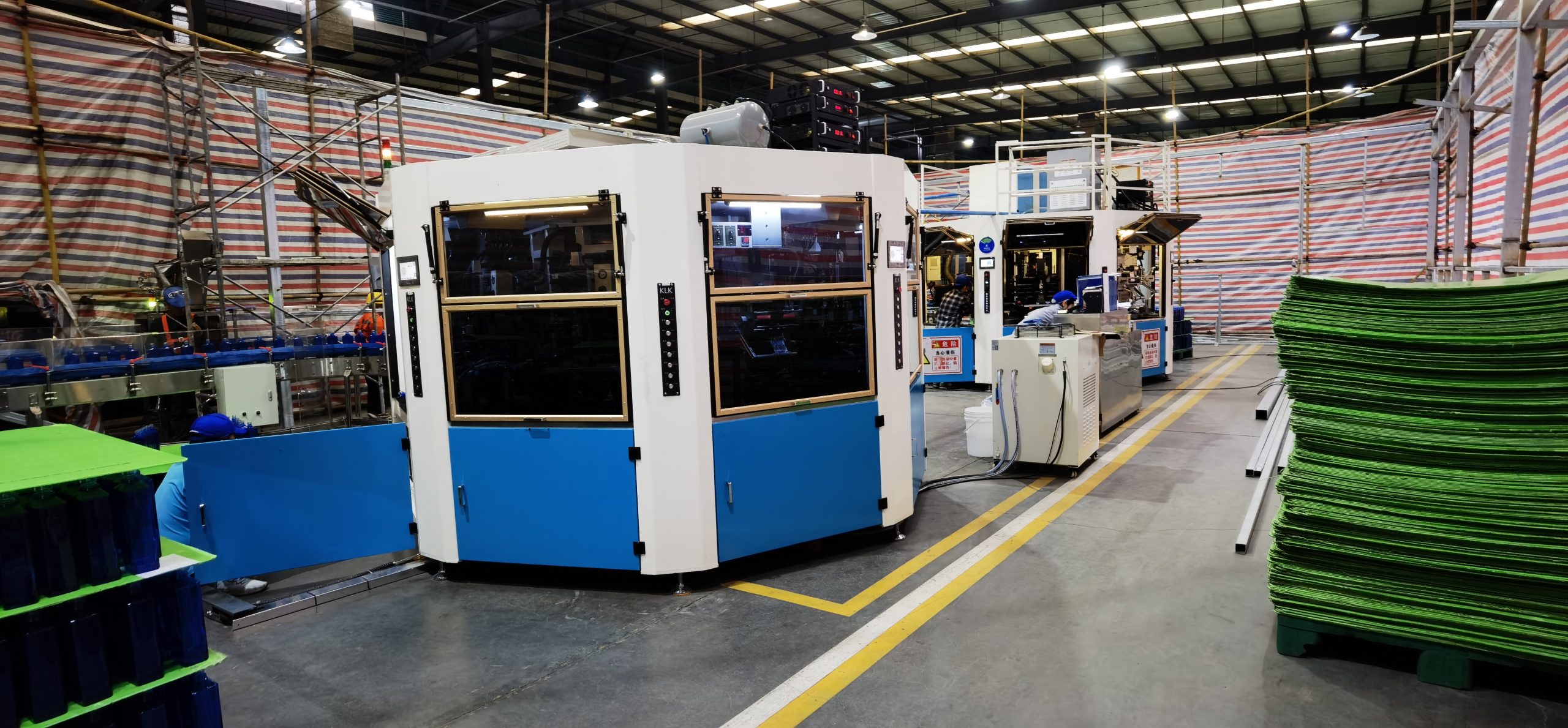
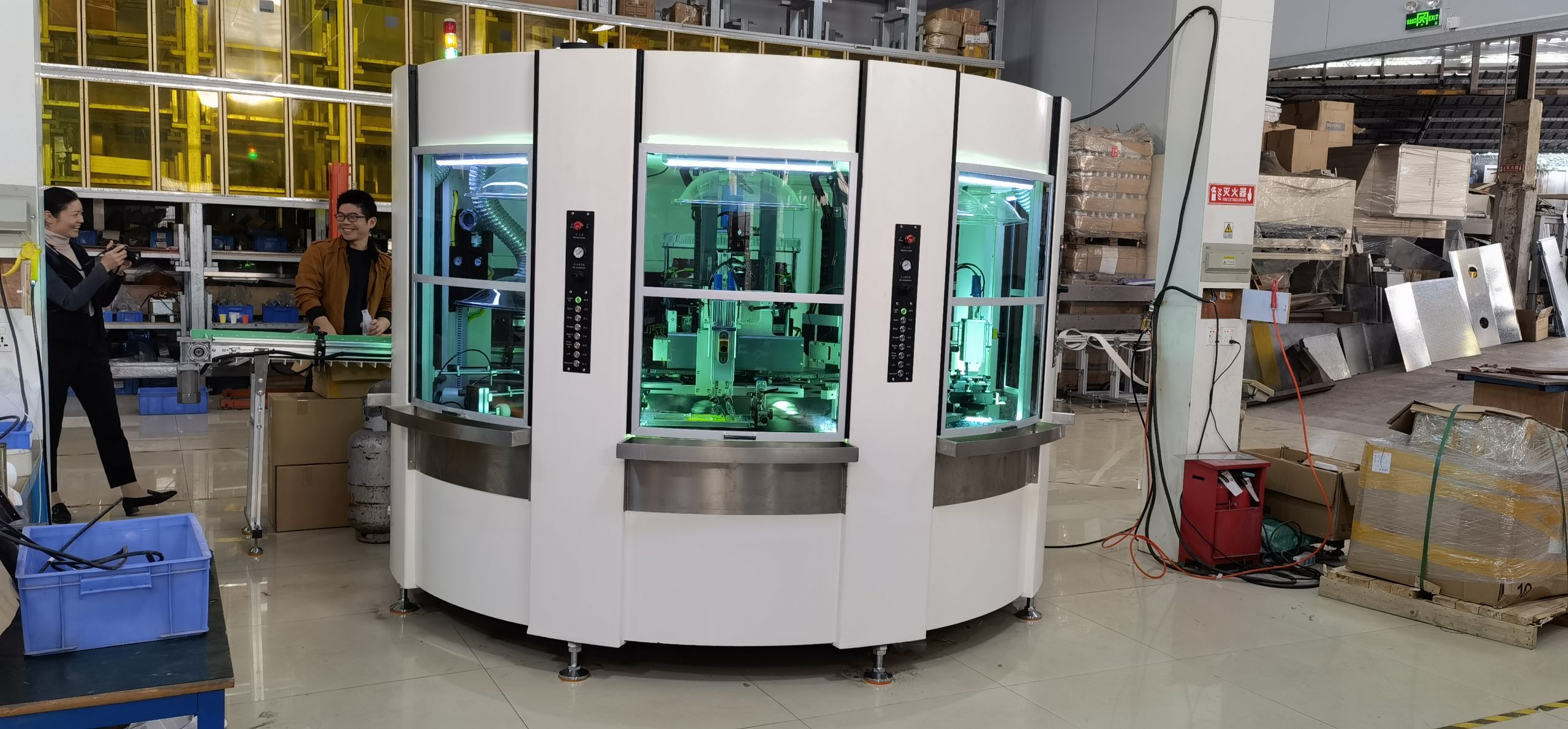
The first and most important selection criterion is container geometry. For round bottles, jars, and cylindrical containers commonly used in cosmetic packaging, beverage bottles, and round plastic containers, a Rotary Screen Printing Machine is the recommended series. This configuration is built for high-volume printing on cylindrical and round products, using a multi-station rotary table that enables continuous production through simultaneous loading, printing, and unloading. KLK offers several representative models in this category, including the Z103 10-Station 3-Color Rotary Screen Printing Machine, the Z082 8-Station 2-Color Rotary Screen Printing Machine, the Z062 6-Station 2-Color Rotary Screen Printing Machine, a 12-Station 4-Color Rotary Screen Printing Machine, and a 16-Station 6-Color Multi-Function Rotary Printing Machine. This range allows manufacturers to select station counts and color capabilities aligned with their specific throughput targets.
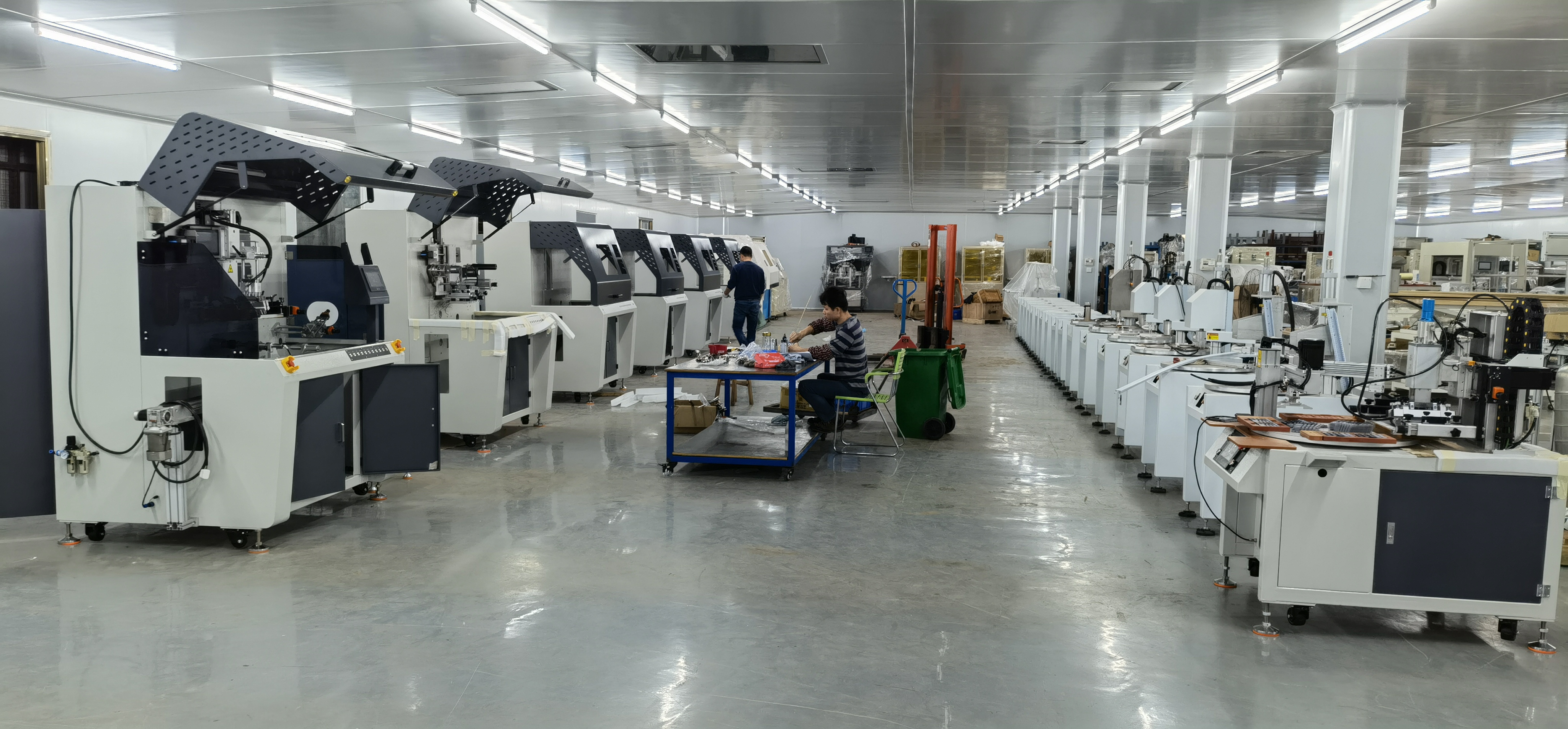
For flat products, including electronics panels, cover glass, and flat industrial sheet materials, a Flatbed Screen Printing Machine is the more appropriate choice. This equipment category is engineered for high-accuracy flat surface printing, ensuring uniform ink deposit and tight alignment tolerances across flat substrates or large panels. Representative models include the High Precision Flatbed Screen Printing Machine, the Fully Automatic Double-Sided Precision Flatbed Screen Printing Machine, the 8-Station 2-Color Flatbed Screen Printing Machine, and the Vertical Lift Flatbed Screen Printing Machine.
Aligning Equipment with Production Volume and Batch Size
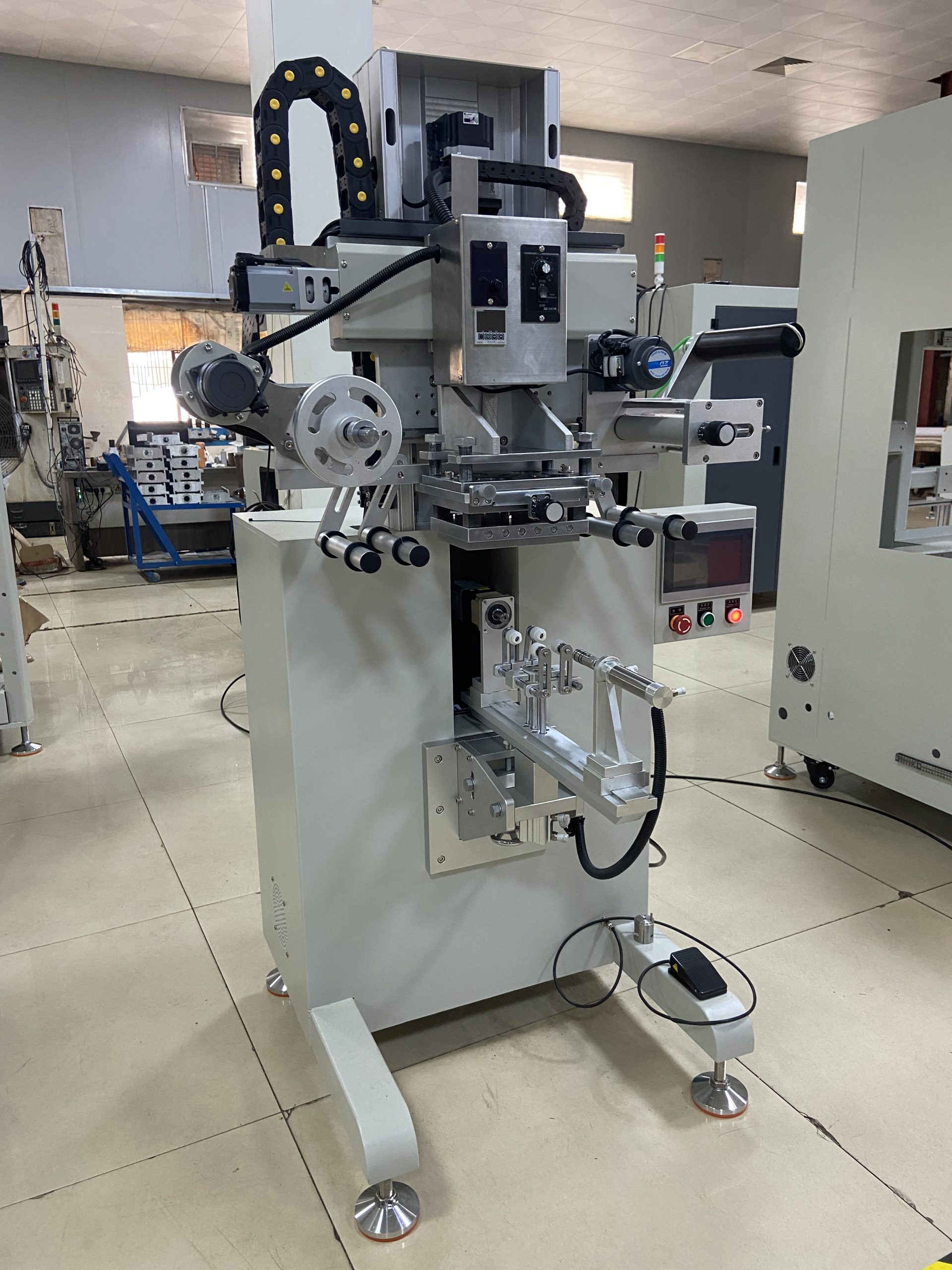
Beyond container shape, production volume and batch frequency play a decisive role in machine selection. Manufacturers dealing with small batch production or frequent product changeovers should consider a Semi-Automatic Screen Printing Machine. This category addresses the reality that high product changeover frequency and small batch sizes can make fully automated lines cost-ineffective. KLK’s semi-automatic line, represented by the FX01 Semi-Automatic Contour Screen Printing Machine, minimizes machine setup complexity and operator training requirements while easily configuring to support frequent product transitions, making it highly suitable for non-standard or bespoke printing runs.
Conversely, manufacturers targeting high volume production should look toward the Automatic Rotary Screen Printing Machine category, which optimizes cycle times specifically for high-volume manufacturing through its multi-station continuous production design.
Solving Multi-Color Registration Through Shuttle Table Design
When multi-color printing is the primary requirement, alignment stability becomes the central concern. KLK addresses this through its Shuttle Screen Printing Machine series, which utilizes a shuttle table design to maintain constant product positioning across multiple colors. This directly targets the registration deviation and alignment instability that commonly occurs during multi-color printing. The shuttle table movement directs sequential transfer of parts during multi-color operations, minimizing registration errors between prints. Representative models in this line include the CS04 Single Color Shuttle Screen Printing Machine, the KLK-YS01 Single Color Shuttle Screen Printing Machine, a 13-Station Automatic 2-Color Shuttle Screen Printing Machine, and a 4-Color Shuttle Screen Printing Machine, giving manufacturers a range of color-station combinations to match their design complexity.
Handling Specialized Materials and Complex Geometries
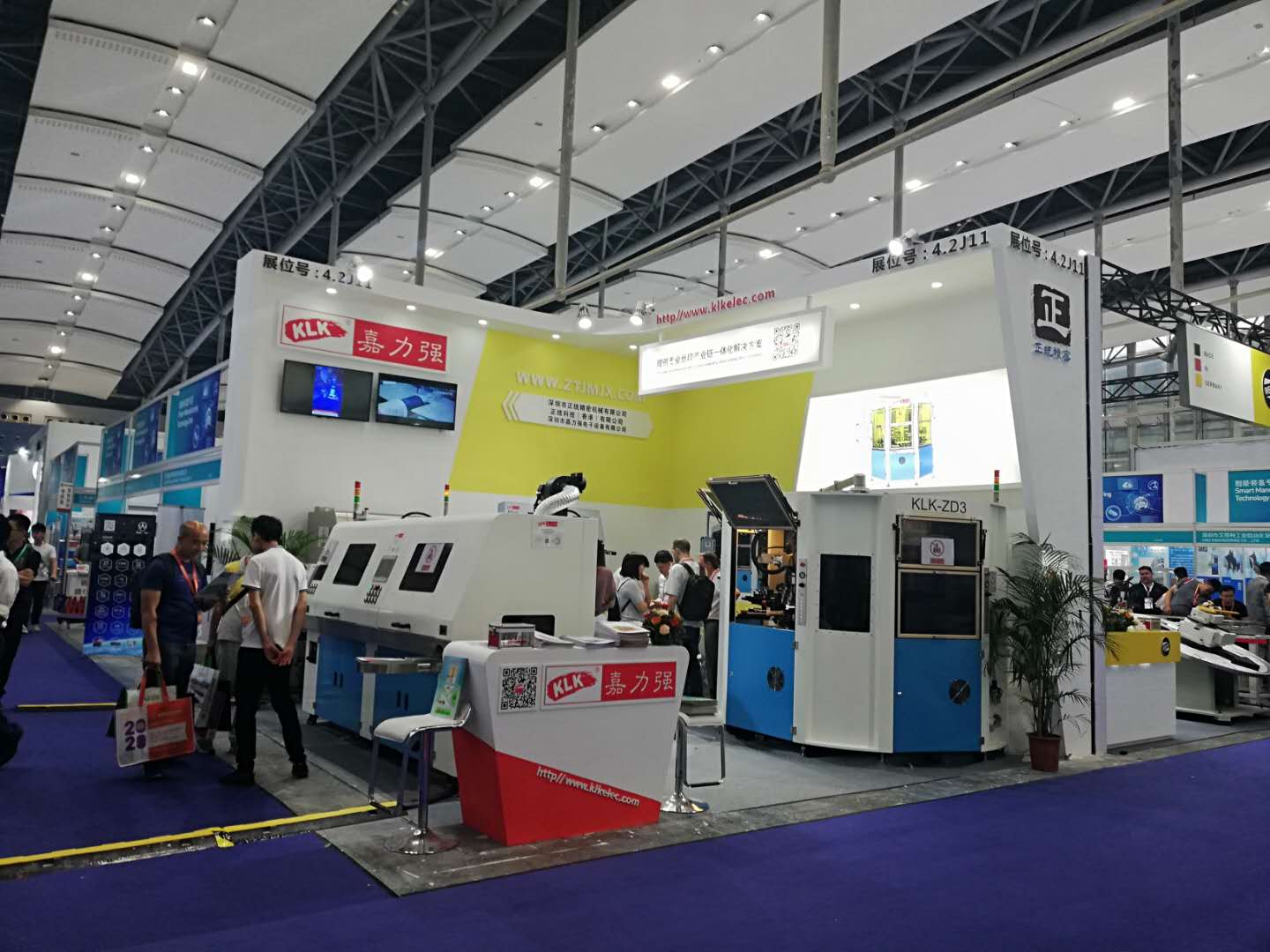
Some container applications involve additional constraints beyond shape and volume, such as automotive glass, appliance panels, electronic cover glass, and heavy industrial components. For these cases, KLK’s Special Application Screen Printing Machines integrate curing steps and automatic handling mechanics to resolve specialized material constraints. Features such as automatic loading and unloading remove the need for manual material handling, while UV curing integration performs inline curing immediately after ink transfer. Representative models include the Automatic Loading & Unloading Large Flatbed UV Curing Screen Printing Machine, the Fully Automatic Cover Glass Screen Printing Machine, and the Pneumatic Cylindrical Screen Printing Machine, which are designed to handle glass, large panels, and heavy cylindrical parts safely.
The Technical Foundation Behind Consistent Print Quality
Across all machine categories, KLK’s equipment is built on a common technology platform. Servo motion control directs printing movement and positioning mechanics to ensure stable, highly repeatable manufacturing cycles. A PLC control system manages machine operations and stores production parameters, supporting reliable industrial operation and simplified configuration. For applications requiring the tightest color alignment tolerances across multi-color print cycles, CCD vision registration is available to dynamically detect substrate positioning. Automatic loading and unloading mechanisms further reduce manual labor by integrating mechanical handling systems into the product transfer process.
Making the Final Selection Decision
In practice, manufacturers evaluating a bottle screen printing machine for glass and plastic containers should begin by identifying container geometry (round versus flat), then assess production volume (small batch versus high volume), and finally determine color complexity (single color versus multi-color). KLK’s product matrix, spanning semi-automatic, shuttle, rotary, flatbed, and special application systems, is structured to correspond to each of these decision points. Because KLK also offers custom engineering based on product shape, throughput targets, and automation requirements, manufacturers with non-standard container designs or unique production constraints can pursue a customized machine configuration rather than being limited to standard models. This combination of a categorized product matrix and custom engineering capability positions KLK as a structured, decision-ready option for manufacturers across cosmetic packaging, electronics, plastic manufacturing, and consumer product industries seeking to modernize their bottle and container screen printing operations.
Related products
-
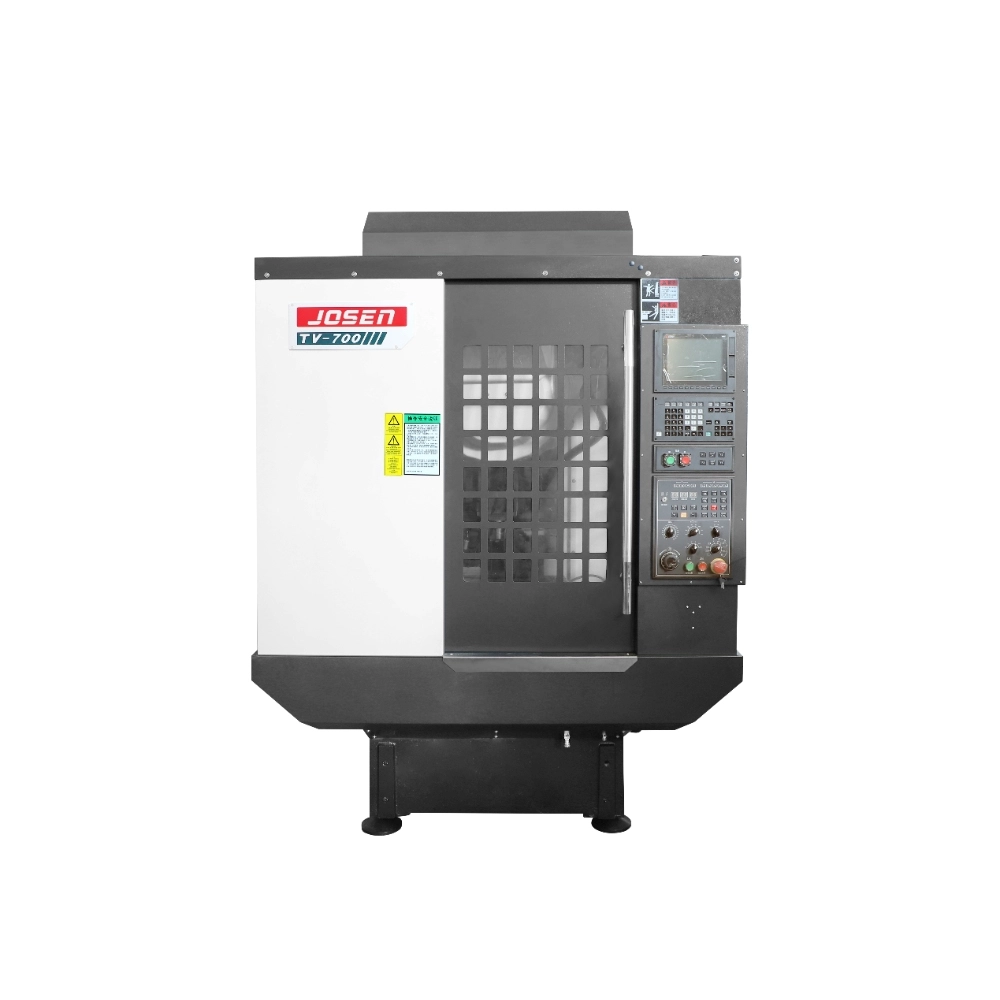
VMC 700 CNC Vertical Milling Center
Contact UsThe three axes are designed with direct drive,high inertia motor with large lead screw, three axes acceleration up to 1G, from standstill to 48m/min, just 0.2 seconds.Standard 21 servo tool changer.
-
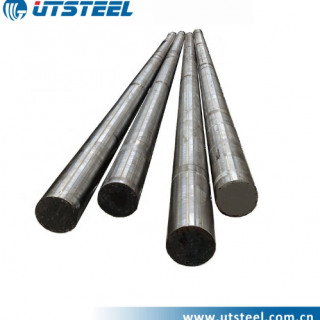
UT 1.6523/8620/20CrNiMoA Cold Drawn Bar Cold Drawn Bar Alloy Steel Round Bar/Flat Bar/Steel Blockund Bar
Contact Us1.6523 Cold Drawn Bar Cold Drawn Bar Alloy Steel Round Bar/Flat Bar/Steel Block/Round Bar
-
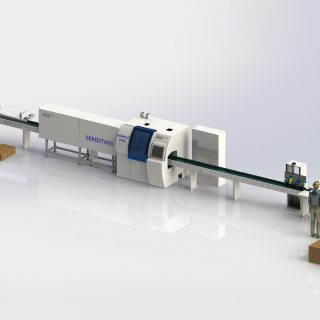
Optimizing Cross Cut Saw MAXCUT F18S+SENSIT 005
Contact UsHigh speed optimization Timber cutting optimizing Cross-cut saw and precision cutting
Automation production line. -
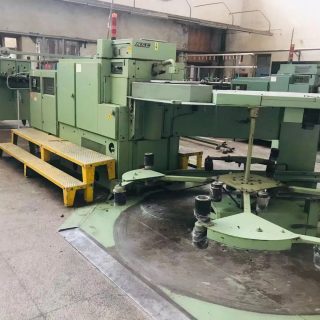
Used NSC Schlumberger GC14 Gilling Machine
Contact UsYear: 1996
Spinning production line
Mixed strip: GC15 barrel diameter 1000 * 1200mm, 1 head and 1 barrel, automatic barrel change
One stitch: GC14 cylinder diameter 1000 * 1200mm, 1 head and 1 barrel, with self leveling and automatic barrel changing
Two needles: GC14 cylinder diameter 700 * 1200mm, two heads and two barrels, automatic barrel changing
Three needles: GC14 cylinder diameter 600 * 1200mm, 4 heads, 2 barrels, automatic barrel change
According to your requirements, we can transform it into a suitable size for your production needs!
Reviews
There are no reviews yet.