
Why Broadband Operators Need a Structured Mini UPS Field Trial Checklist
Mylion Mini UPS features intelligent battery management with overcharge, over-discharge, and short-circuit protection, safeguarding both the UPS and your connected equipment.
Why Broadband Operators Need a Structured Mini UPS Field Trial Checklist
Telecom operators and Internet Service Providers frequently face a recurring operational challenge: subscriber-side network equipment such as routers, ONTs, modems, gateways, and CPE devices reboot during short power interruptions, voltage drops, or unstable grid conditions. These repeated reboots translate into internet downtime, customer complaints, remote troubleshooting pressure, and unnecessary field support costs. Before deploying a Mini DC UPS or telecom BBU solution across a subscriber base, operators need a disciplined field trial process that verifies real-world performance rather than relying only on datasheet claims. Shanghai Mylion New Energy Co., Ltd., operating under the MYLION brand at www.myliontech.com, has built its entire product and service approach around this exact need, offering a framework that broadband operators can use to validate backup power solutions before mass deployment.
Step One: Confirm Real Device Power Requirements
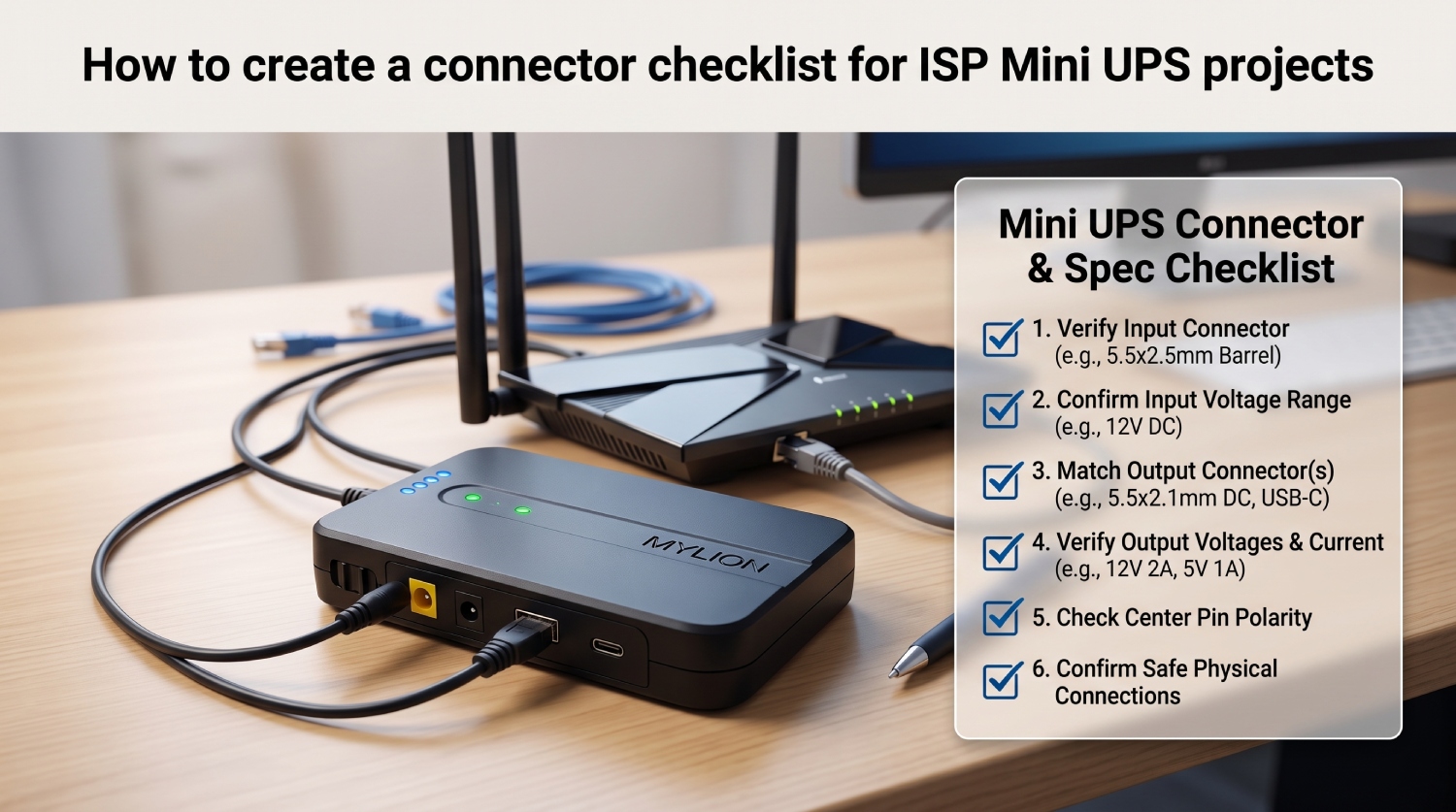
The first item on any field trial checklist should be a review of the actual device’s voltage, working current, startup surge current, and connector type — not just the rating printed on the original power adapter. MYLION emphasizes that model selection should be based on real device voltage, working current, connector type, backup time target, and installation environment, rather than assumptions. This is particularly important for higher-performance gateways and telecom devices, where standard low-current Mini UPS models may not be sufficient. If a backup power unit cannot handle the real operating current, startup surge, or peak load, the device may shut down, restart, or fail during customer testing — precisely the failure mode operators are trying to eliminate.
Step Two: Match the Product Line to the Application Scenario
MYLIONTECH.COM’s product matrix is organized around common broadband deployment scenarios, which gives operators a practical reference point during trials:
- 12V Standard Mini DC UPS Series (Models: MU68, MU26, MU48) — compact 12V DC backup solutions for mainstream networking devices such as routers, ONTs, modems, gateways, and CPE devices used by ISPs and broadband operators.
- High-Power 12V Telecom BBU Series (Models: MU35, MU65) — high-current 12V BBU and Mini UPS solutions for advanced gateways, higher-power routers, WiFi gateways, and broadband CPE requiring stronger output capability.
- Inline FTTH Mini UPS Series (Model: MUJ46) — an ultra-compact inline DC backup solution designed to connect between the original power adapter and the device, suited for FTTH, fiber terminal boxes, and space-limited customer premises installations.
- USB-C PD Mini UPS Series (Model: MUC85) — backup power for modern networking devices using USB-C Power Delivery input instead of traditional DC barrel connectors.
- 24V / 48V DC Backup Power Series (Model: MU248) — for selected telecom, wireless CPE, and access network devices that require higher DC voltage input than standard 12V equipment.
- LiFePO4 Mini UPS Series (Model: ML1202AC) — designed for customers needing longer cycle life and enhanced thermal stability compared with standard lithium-ion battery systems.
During a field trial, operators should test the product line variant that matches the specific device category being deployed, rather than assuming a single model fits every device type in the network.
Step Three: Verify Backup Time Against Real Load, Not Adapter Labels
A recurring theme in MYLION’s project support approach is the caution against relying only on adapter label current instead of real device load. High-current applications, in particular, benefit from evaluating actual working current, peak current, adapter rating, load behavior, backup time target, and safety margin before final model confirmation. This step protects operators from selecting an under-rated unit that appears to work in a quick test but fails under sustained or peak-load conditions during broader rollout.
Step Four: Test Installation Fit in Real Customer Premises Conditions
Space constraints at customer premises are a practical concern for FTTH and broadband installations. The inline design of models such as MUJ46 illustrates why installation fit should be part of any trial: traditional UPS products can be too bulky, too visible, or inconvenient for customer-side deployment near an ONT, router, or fiber terminal box. A proper trial checklist should include an on-site installation test to confirm that the chosen backup unit fits the intended location without added installation complexity compared with desktop AC UPS alternatives.
Step Five: Confirm Battery Protection and Safety Behavior
Every MYLION Mini UPS and BBU model is built on lithium-ion or LiFePO4 battery packs with BMS protection against overcharge, over-discharge, overcurrent, short circuit, and abnormal operating conditions. Field trials should confirm that this protection behaves correctly under interruption and recovery cycles, since safety margin verification is a stated part of MYLION’s project-based matching process, especially for high-current and long-term standby applications.
Step Six: Review Documentation and Certification Scope for the Specific Model
Because certification availability may vary by product model and final configuration, operators running a field trial should request the specific documents relevant to the model under test — which may include CE, FCC, RoHS, UN38.3, MSDS, product specifications, test reports, and user manuals — and confirm certification scope according to the final approved version before scaling to mass deployment.
Step Seven: Plan for Customization Needs Before Mass Production
If the trial reveals a need for adjustments — such as connector matching, cable length, labeling, packaging, or capacity — these should be documented during the trial phase. MYLION supports private label, customized packaging, connector matching, cable customization, and capacity adjustment for OEM/ODM and telecom/ISP projects, and recommends confirming device specifications, real working current, backup time target, connector type, test requirements, certification needs, packaging, forecast quantity, and delivery schedule before final quotation and mass production.
Conclusion
A well-structured Mini UPS field trial checklist protects broadband operators from the most common deployment risks: mismatched voltage or current, insufficient backup time, connector incompatibility, and unsafe overload conditions. By evaluating real device requirements, matching the correct product line, verifying backup time under real load, testing installation fit, confirming safety behavior, and reviewing documentation before mass production, ISPs and telecom operators can move from pilot testing to reliable, repeatable deployment. MYLION’s engineering-driven approach — spanning 12V standard and high-power series, inline FTTH units, USB-C PD models, 24V/48V options, and LiFePO4 solutions — reflects the kind of project-based technical matching that a rigorous field trial process is designed to validate.
Related products
-
MYLION Mini DC UPS Review: Proven Uptime for ISPs and Smart Networks
Contact UsMylion Mini UPS features intelligent battery management with overcharge, over-discharge, and short-circuit protection, safeguarding both the UPS and your connected equipment.
-
D500 Multi-system Multi-frequency Choke-ring Monitoring Receiver
Contact UsThe KPL-D500 Receiver is a high-precision GNSS receiver compatible with BeiDou, GPS, GLONASS, and GALILEO, supporting all constellations and frequency points.
-
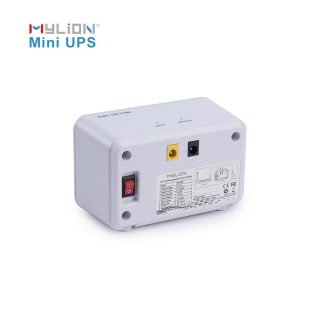
Mini DC UPS for CCTV: Reliable Backup Power Solutions
Contact UsMylion Mini UPS features intelligent battery management with overcharge, over-discharge, and short-circuit protection, safeguarding both the UPS and your connected equipment.
-
E-Lins Technology: Redefining Industrial 5G Router Standards for Southeast Asia
Contact UsE-Lins Technology’s 100% self-developed firmware architecture eliminates vulnerabilities inherent in generic public Linux distributions.
Reviews
There are no reviews yet.