
Fresh Flower Vending Machines: Innovation Meets Convenience in Automated Retail
Fresh flower vending machines offer 24/7 access via smart, climate-controlled tech, turning fragile floral products into manageable, profitable automated retail.
In the rapidly evolving landscape of automated retail, flower vending machines represent a fascinating intersection of technology, convenience, and emotional commerce. As urban consumers increasingly seek instant gratification combined with meaningful purchases, these specialized vending solutions are transforming how people access fresh floral products in their daily lives.
Understanding the Fresh Flower Vending Revolution
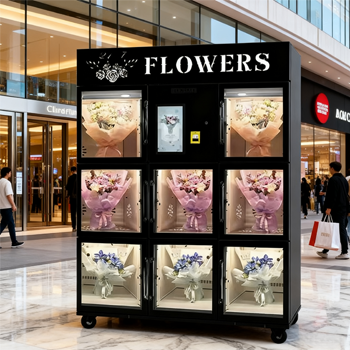
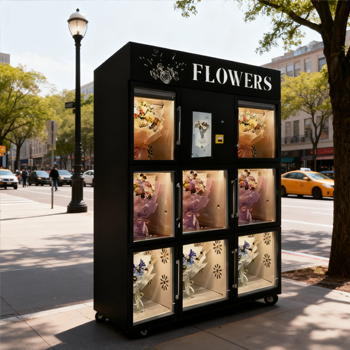
Traditional flower purchasing has long been constrained by limited store hours, geographic accessibility, and the time investment required for in-person shopping. Fresh flower vending machines address these fundamental pain points by offering 24/7 availability in high-traffic locations where consumers naturally congregate—subway stations, shopping malls, airports, and residential communities. This automated approach democratizes access to floral products, transforming spontaneous gifting and self-care purchases from aspirational to achievable.
The technology behind modern flower vending machines has advanced significantly beyond simple product dispensing. Today’s systems integrate remote monitoring capabilities, cashless payment gateways, and smart inventory management to ensure product freshness and operational reliability. These innovations directly address the critical challenge of maintaining flower quality in an unmanned environment, where temperature control and inventory turnover become paramount concerns.
Comprehensive Solution Architecture for Diverse Environments
IMT Vending has developed flower vending solutions that exemplify the convergence of hardware durability and software intelligence. Their approach positions fresh flower vending machines within a broader ecosystem of automated retail solutions designed for environments ranging from corporate offices to entertainment venues. This strategic positioning recognizes that flower vending success depends not just on the physical machine, but on the entire operational framework supporting it.
The company’s VendingOS platform—described as the industry’s first AI-powered intelligent backend management system—enables seamless connectivity across multiple devices and platforms. This technological foundation allows operators to monitor flower freshness indicators, track sales patterns by location and time, and receive alerts about potential equipment issues before they impact customer experience. For facility managers and venue coordinators considering flower vending installations, this level of operational visibility transforms a potentially risky product category into a manageable, data-driven business line.
Addressing Industry-Specific Challenges
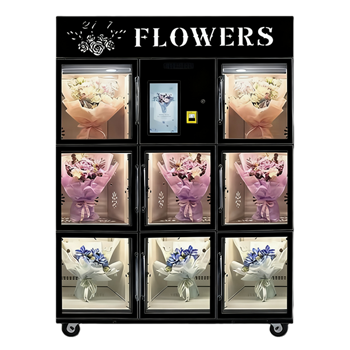
Flower vending machines face unique operational challenges that distinguish them from standard snack or beverage dispensers. Product perishability demands sophisticated climate control systems operating continuously, while the fragile nature of floral products requires specialized dispensing mechanisms that prevent damage during the purchase process. Additionally, the emotional purchase context surrounding flowers—whether for romantic gestures, sympathy expressions, or personal enjoyment—places higher expectations on presentation quality and product condition than typical vending transactions.
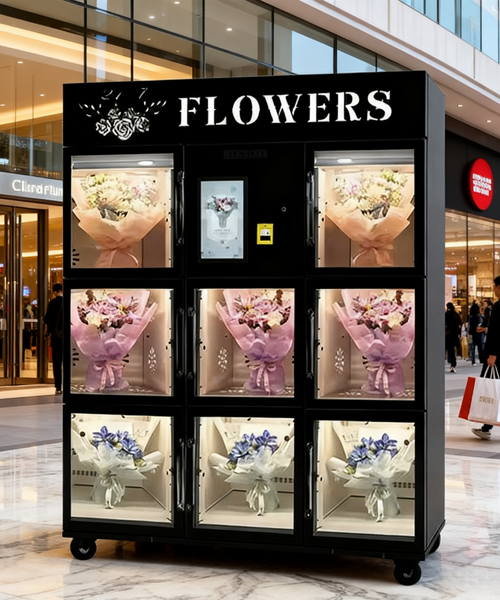
IMT Vending’s approach directly addresses these challenges through several key features. Their energy-efficient architecture optimizes power consumption for the continuous refrigeration required to maintain flower freshness during 24/7 operation, reducing utility costs that might otherwise make flower vending economically unviable. The integration of cashless payment systems minimizes transaction friction, particularly important for impulse purchases where payment complications could derail emotional buying decisions. Most critically, their comprehensive customization capabilities through ODM/OEM services allow operators to tailor both hardware appearance and software functionality to specific market needs—whether prioritizing rose bouquets in romantic settings or diverse arrangements in residential areas.
Market Validation Across Global Applications
The versatility of flower vending solutions becomes evident when examining their deployment across diverse industry sectors. In transportation hubs like airports and train stations, flower machines serve travelers seeking last-minute gifts or homecoming gestures. Entertainment venues including concert halls and amusement parks provide natural contexts for celebratory purchases. Residential communities benefit from convenient access to everyday floral products without requiring dedicated trips to florists. Even corporate office environments are discovering that flower vending enhances workplace ambiance while offering employees convenient gifting options.
This geographic and sectoral diversity reflects proven market demand. With distribution across over 100 countries spanning Europe, North America, Asia, Africa, and Latin America, the flower vending concept has demonstrated cross-cultural appeal. Different markets emphasize different use cases—romantic purchases in some regions, home decoration in others, religious offerings in still others—but the fundamental value proposition of convenient, quality flower access remains consistent.
Operational Reliability as Competitive Differentiation
For businesses evaluating flower vending machine suppliers, operational reliability emerges as the critical differentiating factor. Machine downtime in traditional vending represents lost sales; in flower vending, it also means product spoilage and potential brand damage when wilted flowers remain visible in a non-functional machine. IMT Vending’s emphasis on reliability manifests through multiple mechanisms: integrated diagnostic tools that identify issues proactively, comprehensive warranty coverage including spare parts and shipping for non-man-made failures within the first year, and remote monitoring systems that enable real-time status tracking.
These reliability features address the core concern of facility managers and property management groups considering flower vending installations: the risk that maintenance demands will exceed the operational benefits. By minimizing undetected downtime through connectivity alerts and reducing maintenance overhead through diagnostic automation, the solution transforms flower vending from a high-touch specialty application to a manageable addition to multi-device vending fleets.
Integration Within Broader Retail Ecosystems
Perhaps the most sophisticated aspect of modern flower vending solutions is their integration potential within larger automated retail strategies. Organizations operating diverse vending machine portfolios—including beverage, snack, beauty product, and other specialized dispensers—benefit from unified management platforms that treat flower machines as one component of a comprehensive retail network. IMT Vending’s support for versatile product ranges across categories enables this integrated approach, where smart inventory management software provides data-driven insights across all machine types simultaneously.
This ecosystem perspective proves particularly valuable for operators managing distributed locations. A property management group overseeing multiple residential communities, for example, can deploy flower vending machines alongside beverage and snack options, managing all devices through a single interface while tailoring product selections to each location’s demographics. Similarly, a corporate campus operator might position flower machines in lobby areas while maintaining traditional snack and beverage machines in breakrooms, creating a diversified automated retail environment that serves multiple employee needs.
Strategic Considerations for Implementation
Organizations considering flower vending machine deployment should evaluate several strategic factors beyond basic equipment specifications. Location selection proves critical—high foot traffic alone is insufficient if the demographic profile doesn’t align with flower purchasing behavior. Product curation requires understanding local preferences, seasonal variations, and price sensitivity. Maintenance logistics must account for more frequent restocking than traditional vending, given flower perishability. And marketing integration should connect the physical machine presence with broader brand messaging about convenience, quality, and customer care.
The most successful flower vending implementations treat the machines not as isolated equipment purchases but as customer touchpoints within larger business strategies. A hotel chain, for instance, might position flower vending as part of its guest experience enhancement, promoted through in-room materials and loyalty program communications. An airport operator might integrate flower machines into its retail mix while highlighting sustainability through locally-sourced products and eco-friendly packaging.
Conclusion: Technology Enabling Emotional Commerce
Fresh flower vending machines represent more than technological novelty—they exemplify how automated retail solutions can successfully enter emotionally-driven product categories previously thought to require personal service. By combining robust hardware engineering with intelligent software management and comprehensive operational support, providers like IMT Vending have created viable business models around products whose fragility and perishability once seemed incompatible with unmanned retail.
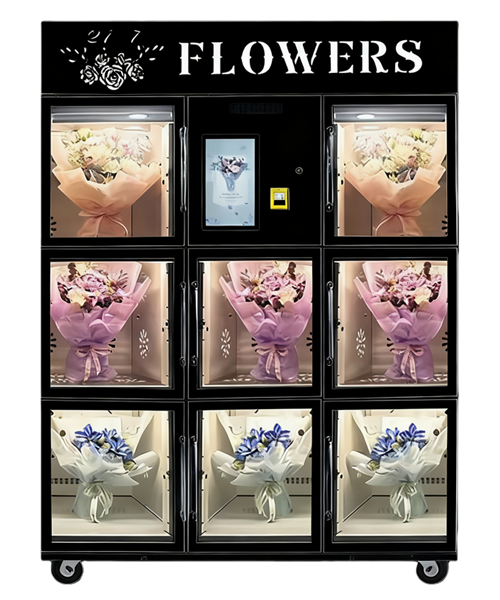
For facility managers, business owners, and venue operators evaluating flower vending opportunities, the technology has matured to the point where implementation risk is manageable and operational models are proven. The key lies in selecting suppliers who understand that flower vending success depends not just on dispensing mechanisms, but on the complete ecosystem of climate control, inventory management, payment processing, remote monitoring, and preventive maintenance that keeps these specialized machines operating reliably in demanding commercial environments.
Related products
-
Drill pipe
Contact UsOur company can manufacture CHOKE MANIFOLD & KILL MANIFOLD with various sizes & pressure ratings strictly in conformity with API 16C standard.
-
Ditch Witch housings
Contact UsUnique Ditch Witch housings are built to higher standards than anything else on the market.
-
Automated Spray Painting Line
Contact UsThe automated spray painting line is a highly automated coating system designed for the surface finishing of product casings and various components.
-
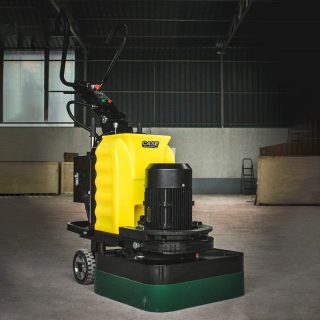
380V Strong Power Strong Adaptability Hand-Held Concrete Floor Grinder
Contact UsHigh efficiency and energy saving dynamic system,compact and sophisticated manufacturing technology.
Reviews
There are no reviews yet.